
Email marketing remains one of the most powerful ways to connect with customers and grow a business. But today’s customers expect more than generic messages-they want emails that feel personal and useful.
Thanks to artificial intelligence, marketers now have tools that make creating those emails faster and smarter. These AI-powered tools learn from customer behavior, help write better content, and send messages at just the right time.
In this blog, we will explore the top AI email marketing tools for 2025 that can help you build stronger relationships and get better results with less effort.
Why Use AI in Email Marketing?
AI brings a new level of smartness to email marketing. It helps marketers understand customer behavior better, so messages feel more personal and relevant. With AI, emails can be sent at the perfect time for each person, increasing the chances they will be opened and read. It also speeds up the process by helping write content, suggesting subject lines, and automating campaigns.
AI tools can spot trends and predict what customers want, letting businesses act before their competitors. Overall, AI makes email marketing more effective and less time-consuming, helping companies build stronger connections with their audience.
Key Features to Look For in an AI Email Marketing Tool
- Personalization Capabilities: The tool should tailor content and offers for individual customers based on data and behavior.
- Automation and Workflow Flexibility: Look for smart automation to create seamless customer journeys without manual work.
- Predictive Analytics: Useful tools predict the best times to send emails and forecast customer actions.
- Content Assistance: AI should help with writing subject lines and email copy for quicker campaign creation.
- Multi-channel Support: The ability to integrate email with SMS, push notifications, or other channels enhances reach.
Table of Contents
| 1. ActiveCampaign |
| 2. Klaviyo |
| 3. Brevo |
| 4. GetResponse |
| 5. Customer.io |
| 6. Mailmodo |
| 7. Mailchimp |
| 8. Smartwriter.ai |
| 9. Seventh Sense |
| 10. ConvertKit |
10 AI Email Marketing Tools to Use in 2025
1. ActiveCampaign
ActiveCampaign serves as a powerful all-in-one marketing and sales platform, focusing on automation that adapts to each customer’s journey. Beyond just sending emails, it integrates customer relationship management to keep marketers and sales teams aligned. The platform uses AI to analyze data and provide insights that help improve campaign performance. ActiveCampaign suits companies that want to automate complex workflows and deliver highly personalized content through multiple channels. Its strength lies in combining marketing and sales tools into one seamless experience that grows with your business.

Key Features
- Smart Automation Workflows: Build detailed step-by-step email sequences that respond to customer actions.
- Personalized Content Blocks: Dynamically change email content to fit individual user profiles.
- Built-in CRM Integration: Manage all contacts and sales pipelines directly in the same platform.
- Data-driven Campaign Insights: Leverages machine learning to predict customer responses and improve targeting.
- Multi-channel Marketing: Connects email with SMS and website messaging for a broader reach.
Pros
- Excellent for creating advanced customer journeys.
- Combines CRM and marketing for better alignment.
- Scalable for growing business complexities.
Cons
- It can be complex for beginners to master.
- Price increases with list size and features used.
2. Klaviyo
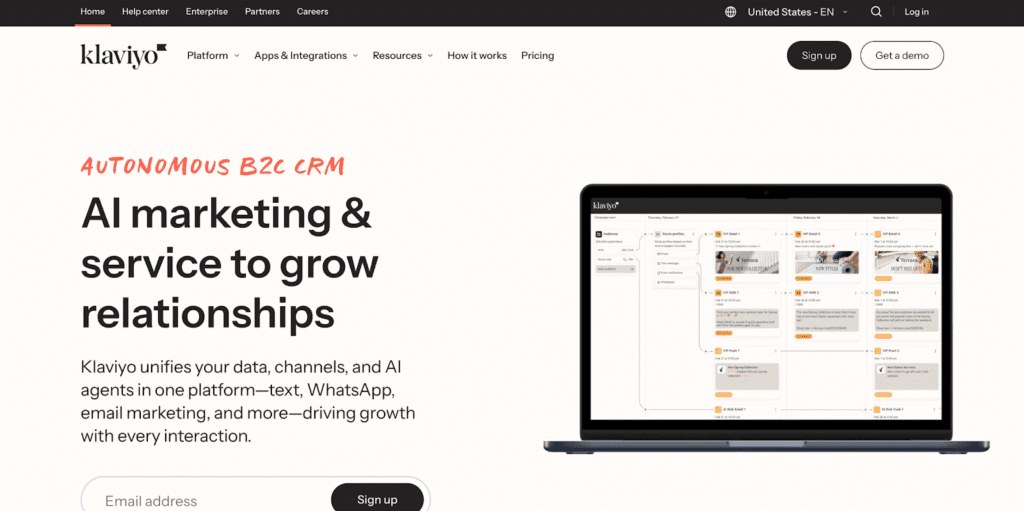
Klaviyo is designed with e-commerce businesses in mind, offering rich AI-powered features that help marketers smartly engage shoppers. It pulls deep insights from shopping behavior to predict when customers will buy and the value they offer to your business. The platform also supports creating email content with AI assistance, making campaign preparation faster. Klaviyo’s smooth integration with popular e-commerce platforms such as Shopify and Magento makes it a favorite among online retailers looking to boost sales without heavy manual work.
Key Features
- Predictive Customer Insights: Forecasts lifetime value and predicts the best times to engage customers.
- Automated Content Suggestions: AI aids in writing email subject lines and message copy.
- Behavior-based Segmentation: Groups customers based on actions like browsing, purchase history, and engagement.
- Multi-channel Messaging: Runs campaigns through email, SMS, and push notifications.
- E-commerce Platform Integration: Offers deep connections with Shopify, Magento, and others for automated data syncing.
Pros
- Highly effective for driving e-commerce growth.
- User-friendly interface with powerful AI features.
- Strong predictive analytics improves campaign timing.
Cons
- It can become pricey with large email lists.
- New users may need time to unlock all features.
3. Brevo
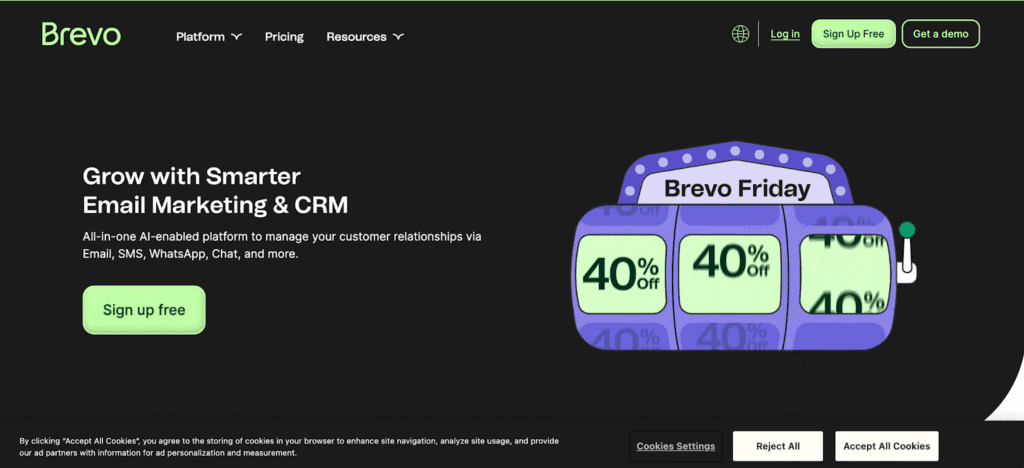
Brevo, formerly known as Sendinbule, provides a simple yet powerful AI-driven email marketing solution aimed at small and medium businesses. Its easy drag-and-drop editor helps teams quickly create attractive emails without coding skills. The platform personalizes messages using dynamic tags and behavioral triggers so emails feel tailored to each recipient. Brevo also offers multilingual support, making it a good choice for companies targeting global audiences. It balances user-friendliness with useful AI features, making it accessible for beginners while still being effective.
Key Features
- Drag-and-Drop Email Builder: Create email designs quickly and easily.
- Dynamic Personalization Tokens: Automatically insert recipient-specific content.
- Behavior-triggered Campaigns: Send emails based on customer actions and engagement.
- AI-driven Subject Line Suggestions: Offers catchy, tested subject lines to improve opens.
- Multi-language Campaign Options: Enables targeting across different languages and regions.
Pros
- Simple UI perfect for beginners and small teams.
- Affordable pricing with many core features included.
- Helpful AI tools for better engagement.
Cons
- Automation features are less advanced than those of competitors.
- Reporting may lack depth for data-driven marketers.
4. GetResponse
GetResponse positions itself as an all-in-one marketing platform, combining AI-powered email marketing with tools like webinars and sales funnels. Its AI-assisted content creation helps marketers quickly generate email text and ideas. The platform also supports building automated conversion funnels that guide users toward making a purchase. With embedded webinar and landing page features, GetResponse provides a versatile solution for businesses wanting to combine email marketing with live events and lead collection. This makes it great for marketers who want a fully integrated system to manage multiple channels.

Key Features
- AI-powered Email Writer: Quickly generates compelling email copy and creative content.
- Conversion Funnel Builder: Automates entire customer journeys from email to sale.
- Webinar and Landing Page Integration: Combines email with event marketing and lead capture.
- Advanced Segmentation: Targets customers by behavior and preferences for better relevance.
- Smart Autoresponders: Schedules emails to send at optimal times for engagement.
Pros
- Strong all-in-one marketing platform.
- Advanced automated plus webinars and landing pages.
- Flexible tools for different marketing needs.
Cons
- The interface can feel complex to new users.
- Email design tools are not as advanced as some competitors.
5. Customer.io
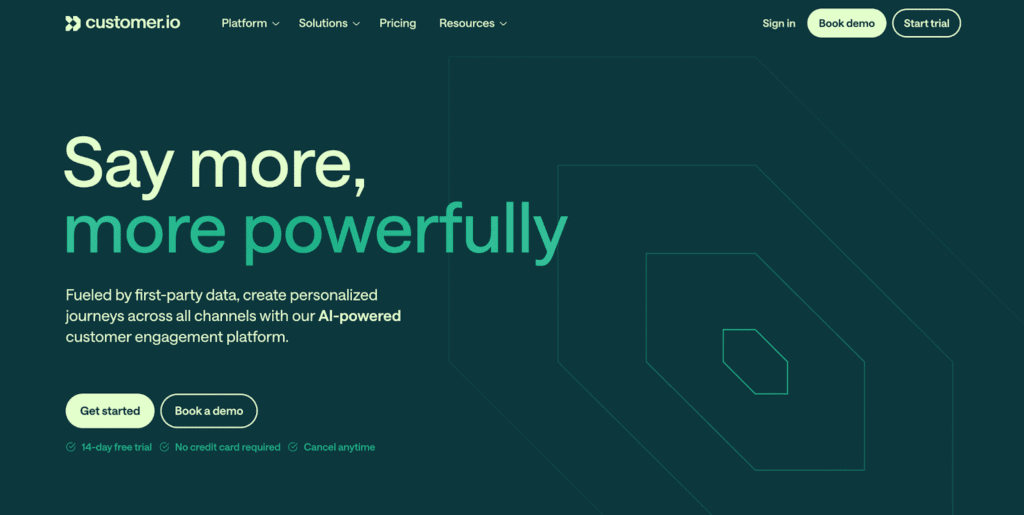
Customer.io is a powerful email marketing platform that focuses on behavioral automation. It tracks how customers interact with your website or app and uses that data to send timely, personalized email campaigns. This tool is built for marketers who want to automate complex workflows based on real customer actions and attributes. Its strength lies in letting businesses build tailored journeys with precision while maintaining control over messaging and timing. Customer.io is great for companies aiming to deepen customer engagement through triggered communications.
Key Features
- Behavioral Triggered Campaigns: Send emails triggered by specific user actions or events.
- Flexible Segmentation: Create custom audience segments based on user data and behavior.
- Multi-channel Automation: Supports email and SMS campaigns in one platform.
- Real-time Data Sync: Integrates with other tools to update customer profiles instantly.
- Detailed Analytics: Track performance, user activity, and campaign impact clearly.
Pros
- Excellent for behavior-based marketing automation.
- Offers great control over customer journeys.
- Supports multi-channel messaging.
Cons
- The setup and learning curve can be high for new users.
- May require technical skills for advanced workflows.
6. Mailmodo
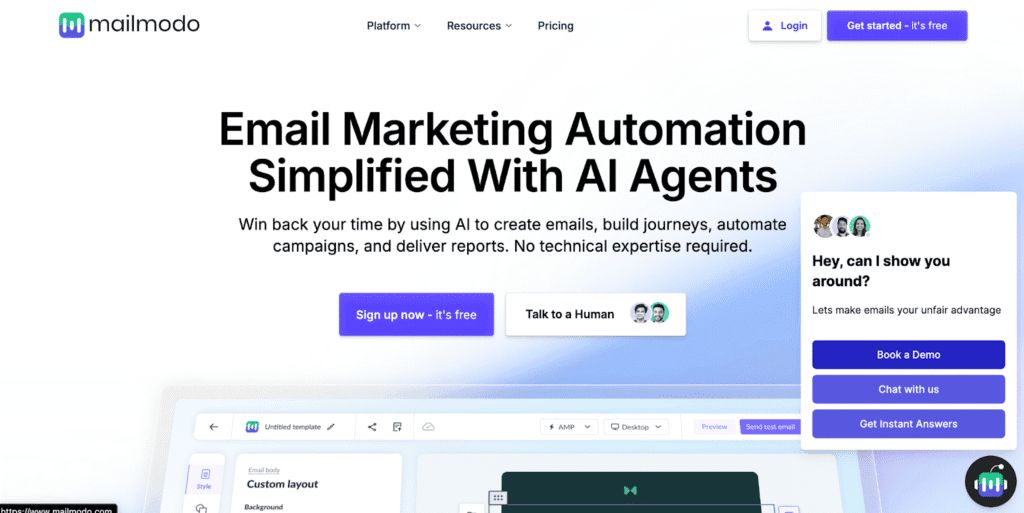
Mailmodo is an innovative email marketing platform that focuses on interactive emails. It allows businesses to create emails with forms, surveys, and even shopping carts directly inside the email itself. This reduces friction for customers, helping them take action faster without leaving their inbox. Mailmodo uses AI to optimize campaigns with personalization and automation. It is especially useful for marketers wanting to boost email engagement and conversions through rich, interactive content.
Key Features
- Interactive Email Builder: Embed forms, booking calendars, and product selectors inside emails.
- Personalized Campaigns: AI-driven content suggestions tailored to each subscriber.
- Automated Workflows: Create sequences triggered by email engagement or user actions.
- Rich Analytics Dashboard: Monitor how subscribers interact with interactive elements.
- Integration Friendly: Works with CRM and e-commerce platforms for smooth data flow.
Pros
- Encourages higher engagement with interactive content.
- Supports automation and personalization together.
- Great for sales, surveys, and customer feedback.
Cons
- Limited templates compared to traditional email tools.
- May require extra effort to design interactive elements.
7. Mailchimp
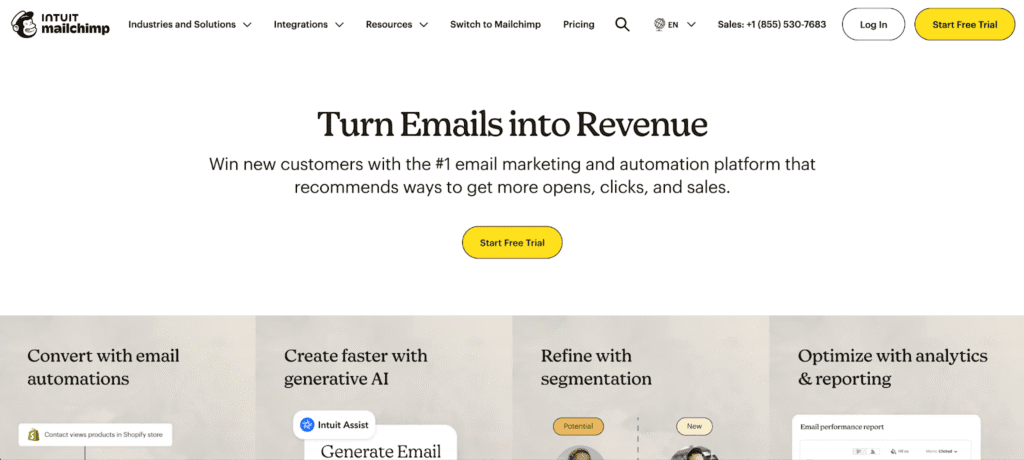
Mailchimp is one of the most well-known and widely used email marketing platforms globally. It offers easy-to-use tools for creating, sending, and automating email campaigns. In recent years, Mailchimp has added AI features to help with content creation, send-time optimization, and audience segmentation. It appeals to businesses of all sizes due to its simple interface and comprehensive marketing features beyond email, including social ads and landing pages. Mailchimp is a solid choice for marketers who want an all-in-one marketing platform with smart AI options.
Key Features
- AI Content and Design Suggestions: Helps craft subject lines and email layouts.
- Send-time Optimization: Automatically picks the best time to send emails.
- Audience Segmentation: Group users by preferences and activity for targeted messaging.
- Marketing CRM: Manage contacts and track customer journeys across channels.
- Multi-channel Campaigns: Supports email, ads, social posts, and landing pages.
Pros
- User-friendly for beginners and small businesses.
- Wide range of marketing tools in one platform.
- Powerful AI features simplify campaign creation.
Cons
- It can get expensive with large contact lists or advanced features.
- Some complex automation features have a learning curve.
8. Smartwriter.ai
Smartwriter.ai is an AI-powered content creation tool designed to help marketers produce personalized sales and marketing emails quickly. It uses artificial intelligence to generate email copy tailored to different audience segments and goals. Smartwriter.ai helps cut down time spent brainstorming and writing, making it easier to scale outreach efforts. While it doesn’t offer full campaign management like other platforms, it complements them by focusing on powerful email content creation with AI assistance.

Key Features
- AI-generated Personalized Email Copy: Writes custom email messages based on user input and audience data.
- Multiple Language Support: Creates emails in various languages for global outreach.
- A/B Testing Suggestions: Offers different versions of email copy to test effectiveness.
- Simple Integration: Works alongside popular marketing and sales platforms.
- Fast Content Production: Speeds up writing without sacrificing personalization.
Pros
- Saves time on content creation.
- Produces high-quality, tailored email copy.
- Supports international marketing efforts.
Cons
- Focused only on content, not a full email platform.
- Depends on integrating with other marketing tools for sending and automation.
9. Seventh Sense
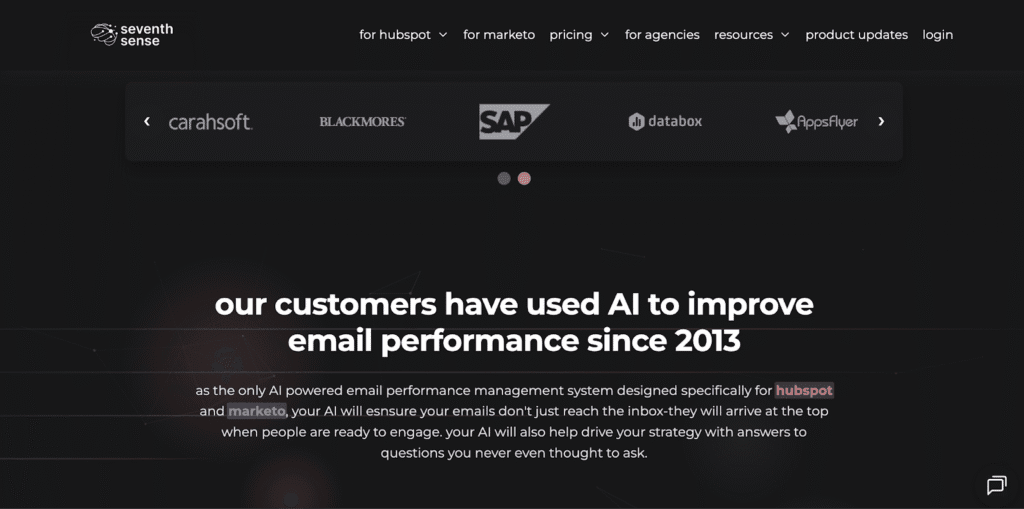
Seventh Sense focuses on optimizing email delivery to improve engagement. It’s AI analyzes when each individual subscriber is most likely to open and interact with emails. This helps marketers send messages at truly personalized times, rather than a one-size-fits-all hour. By refining send times and frequency, Seventh Sense improves open rates, reduces unsubscribes, and builds stronger connections with audiences. It is especially useful for businesses looking to get the most out of their existing email lists through better timing.
Key Features
- Send Time Optimization: Uses machine learning to determine the best time to send emails to each subscriber.
- Email Frequency Control: Automatically adjusts how often emails are sent to avoid overload.
- Audience Engagement Scoring: Identifies the most active and engaged users for targeted campaigns.
- Detailed Reporting: Provides insights on open rates, engagement, and delivery effectiveness.
- Integrations with Popular ESPs: Works alongside platforms like HubSpot, Marketo, and Pardot.
Pros
- Increases open and click rates through smarter timing.
- Reduces spam complaints and unsubscribes by managing frequency.
- Seamlessly integrates with major email platforms.
Cons
- Limited to optimizing send time, not a full email marketing solution.
- It can require time to see measurable improvements.
10. ConvertKit
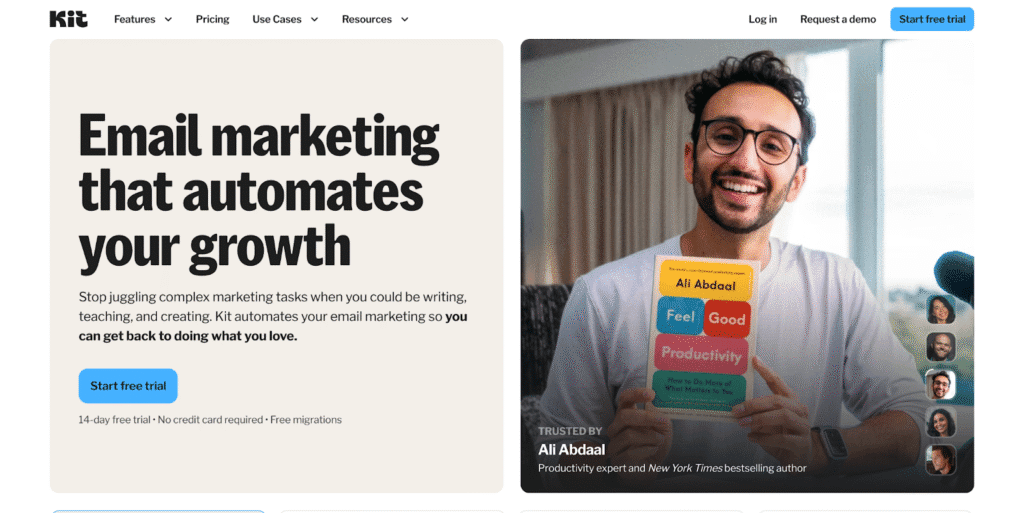
ConvertKit is a user-friendly email marketing tool designed primarily for creators like bloggers, podcasters, and small business owners. It focuses on simple automation and audience-building features to help users grow their email lists and nurture relationships. ConvertKit makes it easy to design signup forms and drip campaigns without complex setups. It also includes tagging and segmentation features to send relevant content based on subscriber interests. Its clean interface and focus on content creators make it popular among professionals seeking straightforward email marketing.
Key Features
- Easy-to-use Automation Builder: Create email sequences and workflows with a simple visual interface.
- Subscriber Tagging and Segmentation: Group subscribers for targeted emailing based on behavior or preferences.
- Landing Page and Form Creation: Build attractive signup forms and pages without coding.
- Personalized Email Content: Use dynamic content blocks to tailor messages for different segments.
- Integration with Creator Tools: Connects well with platforms like WordPress, Shopify, and Teachable.
Pros
- Simple and intuitive for beginners and creators.
- Focuses on audience growth and relationship nurturing.
- Good support and educational resources.
Cons
- Limited advanced marketing automation compared to bigger platforms.
- Pricing grows with larger subscriber lists.
Conclusion
AI is changing the way businesses connect with their customers through email marketing. BY using smart tools that learn from customer behavior, marketers can create messages that feel personal, timely, and valuable.
The right AI-powered platform saves time, increases engagement, and helps grow sales without the guesswork. As 2025 unfolds, these tools will become even more important for staying ahead in a crowded market.
Choosing the best AI email marketing tool for your business means investing in smarter marketing and stronger relationships that drive success well into the future.
Check out other blogs for more such informative content:
- Top 10 AI tools to generate AD copies
- Top AI Tools for Influencer Marketing
- 10 Creative AI Design Assistant Tools for Marketers
FAQs
Many platforms claim to work for everyone, but their strengths vary. Smaller teams often prefer simple, budget-friendly tools, while growing companies might need complex automation or deep integrations. A quick way to decide is to compare how each tool handles automation, analytics, and scalability based on your current workload.
Most reputable platforms follow strict data protection rules, but each tool handles data a little differently. It’s important to check their privacy policies, security certifications, and how they store or process customer information before committing.
AI helps speed up tasks like writing content, segmenting audiences, and choosing the right send time, but it still needs human direction. Strategy, brand voice, and creative decisions still rely heavily on human judgment. Think of AI as support, not a replacement.
Pricing ranges widely. Some tools offer generous free plans, while advanced platforms charge based on features, automation depth, and subscriber count. It’s common for costs to increase as your list grows, so it’s worth planning long-term before choosing a platform.