Making customers feel valued is key to building strong, lasting connections. Today, people want to be treated as individuals, not just another number on a list. They expect businesses to understand their needs and offer experiences that feel personal and thoughtful.
Luckily, several useful tools can help companies deliver on these expectations without complications. These tools learn what each customer likes and help brands talk to them in a way that feels natural and helpful.
In this blog, we will explore 10 AI personalization tools designed to help businesses boost customer engagement, making every interaction count, and turning one-time visitors into loyal supporters.
What is AI Personalization (and Why it Matters)
AI personalization means using smart technology to make experiences, offers, and messages fit each customer better. Instead of showing everyone the same things, it learns what each person likes and adjusts accordingly. This helps companies connect with customers more naturally, making them feel understood and valued.
Why does this matter? Because people today expect brands to know them and offer solutions that feel personal. When done right, AI personalization can boost customer happiness, increase sales, and turn visitors into loyal supporters.
Key Benefits of AI Personalization Tools
- Better Customer Experience: These tools help companies understand what each customer likes and needs. This means customers get relevant messages and offers, making their experience smoother and more enjoyable.
- High Engagement: When content feels personal, customers are more likely to respond, click, or buy. Personalization increases the chances that people will connect with the brand and stay interested.
- Saves Time for Teams: By automating how messages and offers are tailored, these tools free up time for marketing and support teams. They can focus more on big-picture tasks while the tools handle routine personalization.
- Boots Loyalty: Customers who feel understood tend to stick around longer. Personalization helps build trust and a sense of connection, encouraging repeat visits and long-term loyalty.
- Improves Sales: When the right product or offer reaches the right customer at the right time, sales tend to grow. AI personalization tools can help boost revenue by making promotions more effective.
Table of Contents
| 1. Dynamic Yield |
| 2. Optimizely |
| 3. Adobe Target |
| 4. Salesforce Marketing Cloud Personalization |
| 5. Bloomreach |
| 6. Braze |
| 7. Klaviyo |
| 8. Insider |
| 9. Nosto |
| 10. Persado |
10 Best AI Personalization Tools to Boost Customer Engagement in 2025
1. Dynamic Yield
Dynamic Yield is a popular personalization tool that helps businesses create experiences that fit each customer well. It works on websites, mobile apps, and emails to give people the right messages and offers at the right time. The tool learns from what users do and adjusts in real time. Big brands use Dynamic Yield to improve sales and build lasting customer relationships without needing lots of technical work.
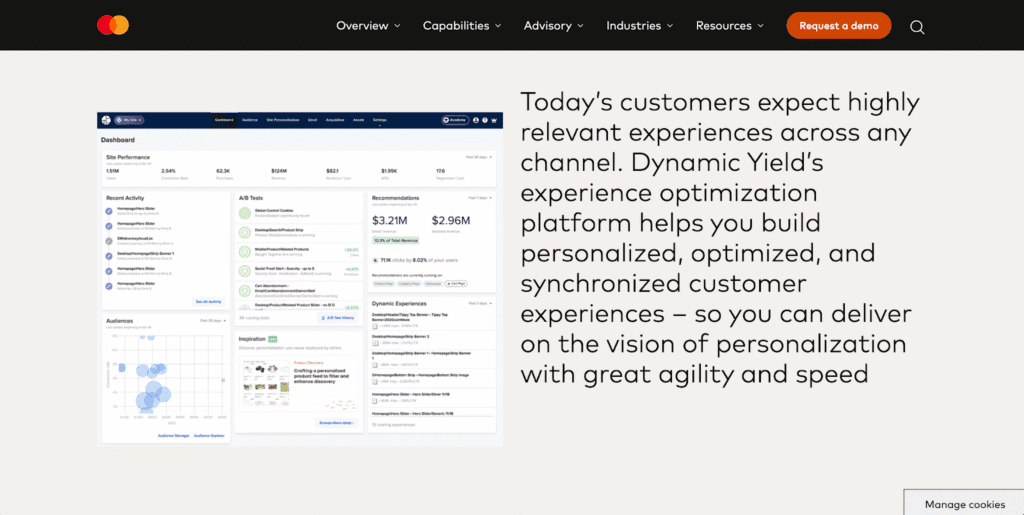
Key Features
- Personalization Across Channels: Reach customers with consistent messages on web, mobile, and email.
- Real-time Behavior Insights: See what users do and serve timely offers.
- Smart Recommendations: Suggest products based on past actions and trends.
- Simple Campaign Creation: Drag-and-drop editor to build and change campaigns easily.
- Testing Options: Try multiple versions to find what works best.
- Works with Other Platforms: Connects with tools like Adobe, Salesforce, and Shopify.
Pros
- Easy to use and scale across teams and channels.
- Strong targeting to deliver relevant experiences.
- Good support and help from the team.
- Flexible to fit many business types.
Cons
- Analytics may not be deep enough for some needs.
- The price might be too high for smaller businesses.
2. Optimizely
Optimizely helps businesses grow by testing different ideas and personalizing experiences. Marketers can try out changes on their website or app to see what customers like most. The tool then uses this information to give each visitor a more personal experience. It is easy to use, making personalization simple even without coding skills. Optimizely suits businesses that want to combine testing with smart customer targeting.
Key Features
- A/B and Multivariate Testing: Test different versions to see what works best.
- Detailed Audiences: Group users by behavior, location, device, and more.
- Live Content Changes: Adjust website content as visitors browse.
- No Coding Needed: Drag-and-drop editor for easy updates.
- Integrates Well: Works with existing marketing and analytics tools.
- Supports Developers: Tools for controlling feature releases.
Pros
- Easy for teams new to testing and personalization.
- Strong testing and targeting features.
- Good fit with existing marketing tools.
- Helpful for both marketers and developers.
Cons
- It can be expensive for small teams.
- Advanced features might need more technical skills.
- Customizing and tracking events may take time to learn.
3. Adobe Target
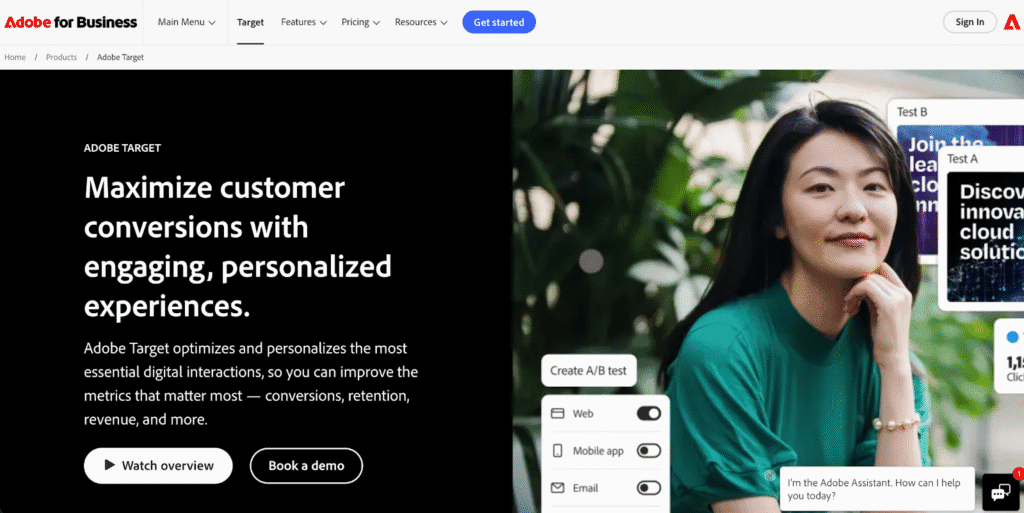
Adobe Target is made for large companies using Adobe products. It uses artificial intelligence to show the best content to each user automatically. It works on websites, apps, and emails, offering smooth and connected experiences. The tool also supports detailed testing and targeting to help brands deliver the right message at the right moment. Because it fits well with Adobe’s other tools, it gives businesses strong power to improve how customers feel about their brand.
Key Features
- AI-driven Auto-Targeting: Automatically shows the best content to each visitor.
- Personalization Across Channels: Keep experiences smooth on websites, apps, and emails.
- Advanced Testing: Run A/B and multivariate tests with strong accuracy.
- Good Adobe Integration: Works perfectly with Adobe Analytics and Experience Cloud.
- Built-in AI Help: Get help with content ideas and test plans.
- Rich Customer Data: Use detailed profiles to personalize better.
Pros
- Highly flexible and fits large companies well.
- Powerful testing and personalization tools.
- Works smoothly with other Adobe products.
- AI features reduce manual effort.
Cons
- It can be hard to learn and set up for smaller teams.
- The setup may need expert help.
- Pricing is not clear and is not designed for a small business.
- It may feel too complex for companies not using Adobe.
4. Salesforce Marketing Cloud Personalization
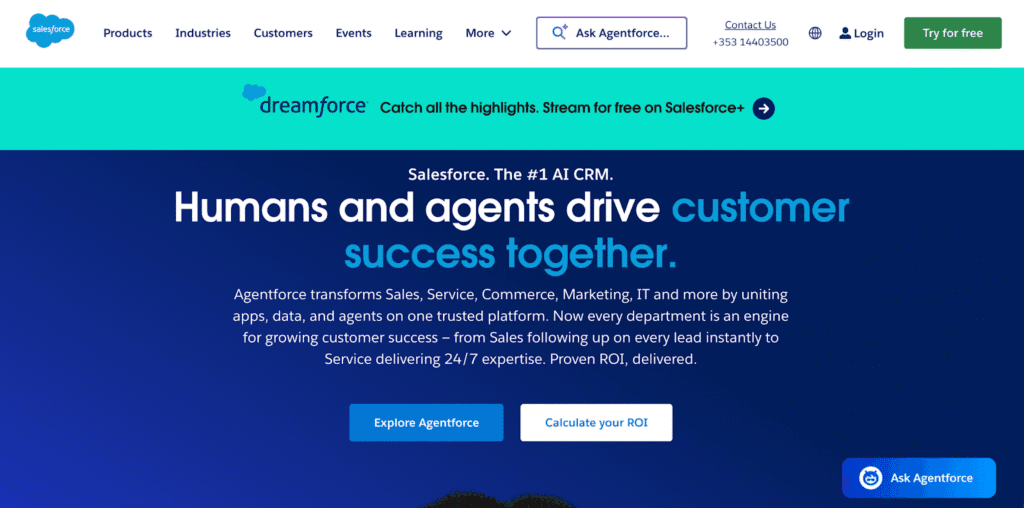
Salesforce Marketing Cloud Personalization helps businesses deliver real-time, tailored experiences to each customer. It collects data from various touchpoints and combines it into one profile. This gives a full picture of each person’s behavior, preferences, and past interactions. With this, companies can send the right message at the right time across email, web, mobile, and ads. It mainly suits companies using Salesforce products and looking for smooth integration between marketing, sales, and service.
Key Features
- Real-time Customer Tracking: Follows customer actions instantly to offer timely content.
- Unified Customer Profiles: Combines data from sales, service, and marketing for a single view.
- AI-powered Recommendations: Uses machine learning to suggest products and offers.
- Cross-channel Campaigns: Works across email, mobile, web, and advertising.
- Easy Journey Building: Create customer paths with drag-and-drop tools.
- Integration with Salesforce: Seamless data flow with Salesforce CRM and other clouds.
Pros
- Works very well with Salesforce tools and CRM.
- Delivers highly timely and relevant content.
- Strengthens customer relationships with unified data.
- Good for large businesses with complex needs.
Cons
- Setup can be complex for smaller teams.
- Limited personalization outside the Salesforce ecosystem.
- Pricing and packages can be confusing.
5. Bloomreach
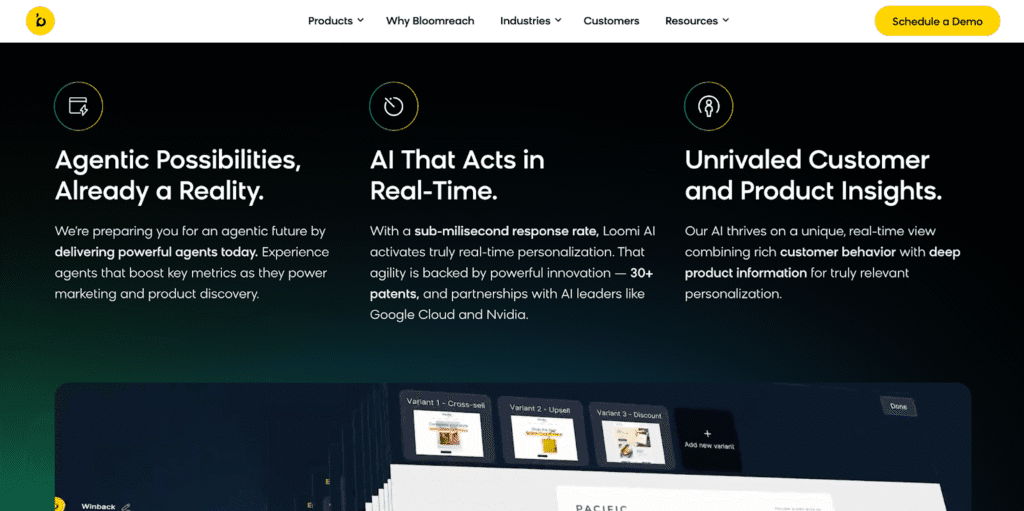
Bloomreach is an AI-powered platform built to improve e-commerce and digital experiences. It helps brands deliver relevant content, search results, and product recommendations based on real-time customer behavior. The platform supports many channels like email, SMS, web, and mobile apps. Bloomreach is favored by retailers and brands who want to make shopping easier and more personal. It also offers tools to build marketing campaigns faster with AI assistance.
Key Features
- Real-time Personalization: Adjust recommendations and content instantly.
- Search Triggered Conversations: Personalized shopping helps from the search bar.
- Automated Campaigns: AI builds and runs campaigns based on customer journeys.
- Multi-language Support: Works in over 30 languages for global reach.
- Personalization Studio: Let teams control strategies and optimize in real time.
- Product Ranking Tools: Prioritize products using business goals like profit margins.
Pros
- Excellent for e-commerce and retail brands.
- Strong AI-driven personalization and search.
- Saves time on campaign creation with AI.
- Supports a wide range of digital channels.
Cons
- It may be too advanced for small businesses.
- Reporting can have some limits for very large data sets.
- Pricing details are not publicly available.
6. Braze
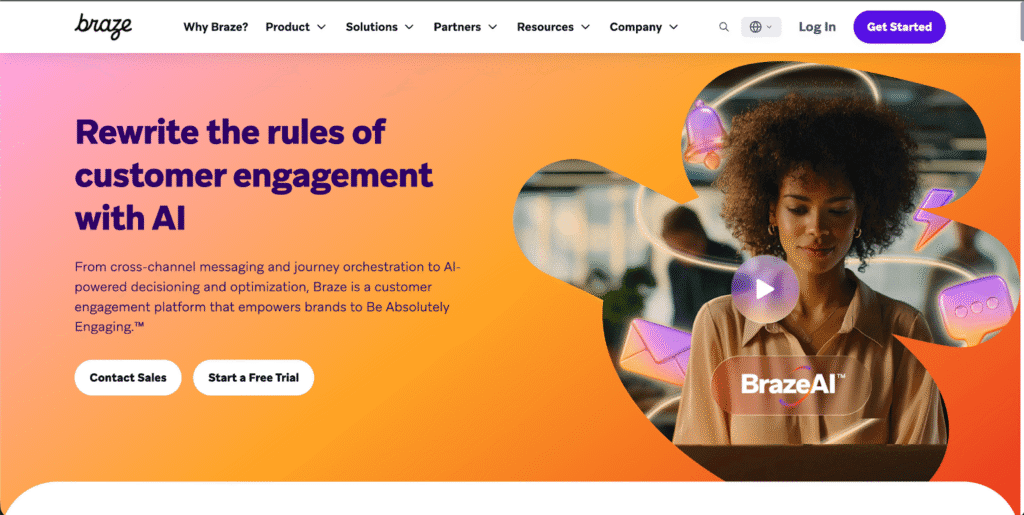
Braze is a messaging and engagement platform that uses AI to create personalized customer journeys. It focuses on sending the right message through email, push notifications, and in-app messages. Braze lets marketers build detailed journeys using a visual editor. It allows real-time user segmentation and dynamic content changes. This tool is popular for brands aiming to engage customers on multiple channels with timely, personal communication.
Key features
- Customer Journey Orchestration: Map messages across channels with a visual builder.
- Real-time User Segmentation: Target users based on live behavior and events.
- Dynamic Content Personalization: Change messages like subject lines or offers on the fly.
- Strong Integration Ecosystem: Connects with over 140 partner tools and platforms.
- AI-powered Recommendations: Offers smart insights and message optimization.
- Developer Support: Advanced features with coding and customization options.
Pros
- Great for cross-channel customer engagement.
- Real-time personalization and targeting.
- Extensive integration options.
- Trusted by many large brands.
Cons
- Setup may need developer support.
- Interface can be complex for beginners.
- Pricing is not transparent.
- Lacks in-built team collaboration features.
7. Klaviyo
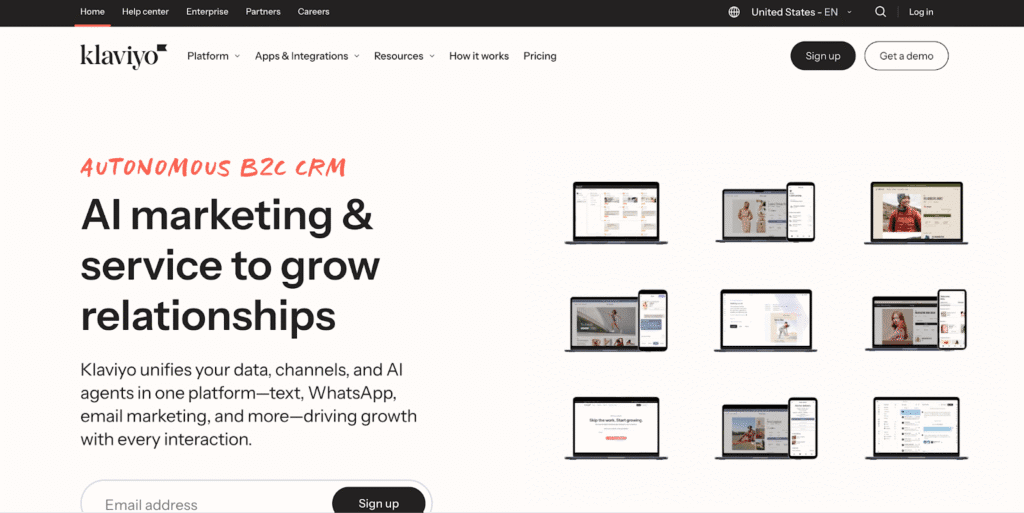
Klaviyo is a popular marketing platform that helps businesses create personal experiences across email, SMS, and more. It uses AI to predict customer actions and automate campaigns that feel tailored to each person. The platform continuously tests and improves messages to make sure they get the best response. Klaviyo is a great fit for businesses wanting strong automation mixed with smart personalization on multiple channels.
Key Features
- Predictive Customer Insights: Forecasts customer lifetime value and next purchase dates.
- AI-powered Content Creation: Automatically writes email and SMS copy tailored to users.
- Smart Sending Times: Sends messages at the best time for each customer.
- Full Channel Control: Manage personalization across email, SMS, and push notifications.
- Automated A/B Testing: AI continuously tests and applies winning message versions.
Pros
- Easy to use with powerful AI features.
- Great for growing e-commerce and direct-to-consumer brands.
- Saves time with automatic optimization.
- Supports many communication channels.
Cons
- It can become expensive as contact lists grow.
- Initially, some features may require a learning curve.
8. Insider
Insider is a real-time personalization platform focused on creating smooth and relevant customer experiences across web, mobile apps, email, and more. It stands out for its ability to track users on the go and deliver offers that feel right in the moment. This tool is suitable for brands that want a broad approach to customer engagement with capabilities from messaging to data management.

Key Features
- Live Content Personalization: Changes site and app content instantly based on behavior.
- Next Best Channel Suggestions: Predicts the best channel to reach customers.
- Send Time Optimization: Chooses the perfect time to send messages.
- Guided Onboarding: Helps teams get set up without fuss.
- Data Integration: Combines data from many sources for a full customer view.
Pros
- Strong capabilities for large organizations.
- Covers many channels for unified experiences.
- Good support and easy migration options.
- No setup fees and fast onboarding.
Cons
- It can be costly, especially with add-ons.
- A learning curve due to the wide feature set.
- Real-time personalization is not as fast as leaders.
9. Nosto
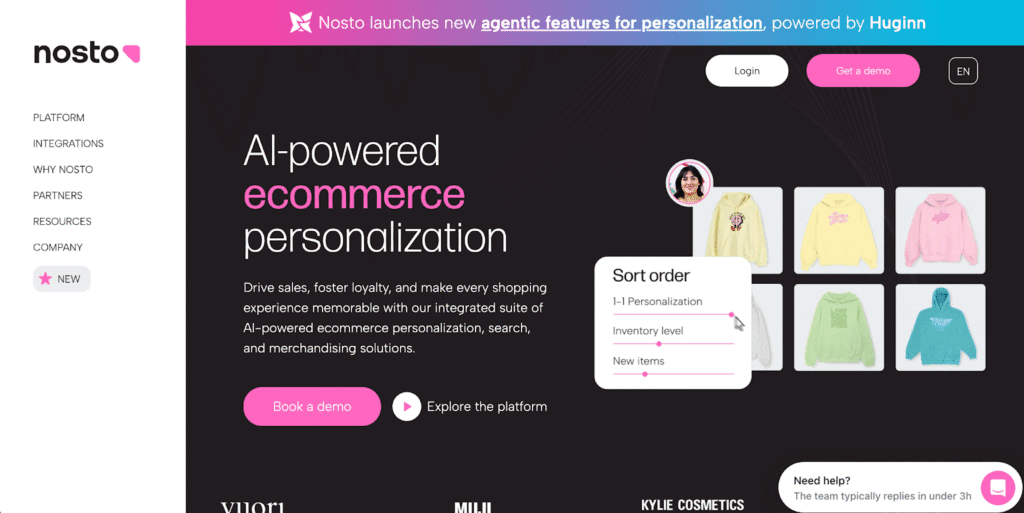
Nosto is built for commerce brands wanting quick and smart personalization. It focuses on showing the right products and offers to shoppers using AI that learns from browsing and purchase patterns. Nosto is easy to implement, especially for shops using platforms like Shopify or Magento. It covers many use cases from product recommendations to homepage customization.
Key Features
- AI Product Recommendations: Suggests what customers are likely to buy.
- Homepage and Product Page Personalization: Tailors content to buyer habits.
- Shopping Cart Suggestions: Recommends items to increase order size.
- Real-time Reporting: Offers insights to improve personalization strategies.
- Easy Platform Integration: Works well with Shopify and Magento.
Pros
- Simple for marketers to deploy.
- Strong e-commerce focus with relevant tools.
- Covers many personalization needs in one platform.
- Fast results without heavy tech setup.
Cons
- Less customizable than developer-focused tools.
- Pricing may be high for smaller shops.
10. Persado
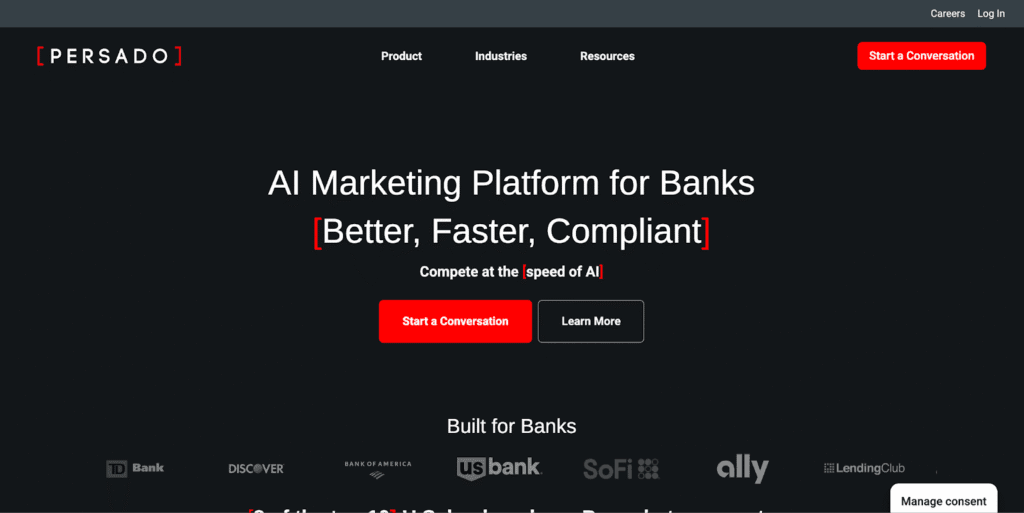
Persado uses AI to create marketing language that connects emotionally with customers. It helps brands optimize messages across email, SMS, web, and more by testing different language styles and tones. The platform focuses on finding the right words to motivate action, going beyond simple personalization to emotional engagement. Persado suits companies needing deep content optimization at scale.
Key Features
- Emotion-driven Messaging: Creates content that aims to trigger emotional responses.
- Large-scale Content Testing: Runs thousands of micro-experiments to find top messages.
- Cross-channel Optimization: Ensures messaging stays consistent across all channels.
- Compliance and Regulation Support: Helpful for strict industries like finance and healthcare.
- CRM Efficiency: Automates message optimization for large customer lists.
Pros
- Delivers strong emotional engagement.
- Powerful language optimization at scale.
- Supports regulated industries well.
- Boosts campaign performance significantly.
Cons
- Not plug-and-play, needs setup time.
- More suited for enterprises than small businesses.
- Pricing and complexity can be barriers.
How to Get the Most Out of AI Personalization
- Start with Clear Goals: Know what you want to achieve with personalization. Whether it is more sales, better engagement, or stronger loyalty, clear goals help you use the right features and measure success.
- Use Data Wisely: Collect and connect data from all customer touchpoints. The more complete and clean your data, the better the AI can learn and deliver tailored experiences.
- Test and Learn Regularly: Use A/B testing and other experiments to see what messages and offers work best. Personalization improves over time as you keep measuring and adjusting.
- Keep it Natura: Make sure personalized messages and offers feel genuine and helpful, not pushy or robotic. Personal touches build trust and encourage customers to come back.
- Combine Automation with Human Insight: Let AI handle routine personalization but use your team’s knowledge to shape strategy, provide creative ideas, and ensure quality experiences.
Conclusion
Personalization has become essential for businesses that want to truly connect with their customers. AI tools make it easier to understand what each person needs and prefers. This way, businesses can offer helpful and relevant messages that make customers feel seen and valued.
Personalization is more than just showing the right product; it creates meaningful moments that encourage loyalty and trust. It takes ongoing effort to test, learn, and improve the experience.
With the right approach and tools, brands can create lasting relationships that grow over time and stand out in a busy market. Personalization is not just a step forward; it is a new way to build stronger connections with the people who matter most.
Check out other blogs for more such informative content:
- Best AI Productivity Tools in 2024
- Top AI Workflow Creation Tools
- Top 15 AI Logo Design Tools
- 10 Creative AI Design Assistant Tools for Marketers
- 20 Best AI Marketing Tools to Improve Marketing ROI
FAQs
Choosing the right tool depends on your goals, budget, and technical skills. Look for platforms that are easy to use and offer features that fit your needs, like email personalization or product recommendations. Start with free trials or demos to test how well the tool works for you before committing.
Data privacy is very important when using these tools. Make sure the platform complies with laws like GDPR or CCPA. Use tools that protect customer information by encrypting data and allowing customers to control their preferences. Always be clear with customers about how their data is used.
Many tools are designed for marketers with little technical background. They offer easy drag-and-drop editors and automated features. But for advanced personalization or integration with other systems, some technical help might be needed. You can also get support from the tool’s customer service.
Yes, many AI personalization tools offer scalable pricing and free plans for small users. Some focus on essential features like email marketing or basic recommendations that can deliver value without a big investment. Start with simple tools and upgrade as your business grows.