Every time someone searches or asks a question online today, AI behind the scenes pieces that question apart to cover every angle.
Instead of finding just one answer, it gathers details, side topics, and likely next steps, then presents a full, clear reply. This is query fan-out.
For marketers, knowing how this works means knowing how to put your content in front of people as they explore, compare, and decide. It is about meeting curiosity, not just matching keywords.
When you understand query fan-out, you can shape your content to cover more ground and stay visible at every point in a buyer’s search.
What is Query Fan-Out?
Query fan-out is a technique used by AI search engines to break down a complex question into simpler, related parts.
Instead of giving one simple answer, the system looks for many details and angles about the topic. It studies what the user wants, makes a list of follow-up questions, and finds information for each smaller part.
It gathers content from different sources and brings all these bits together in a clear reply. This makes the final answer fuller, easier to understand, and helpful for anyone searching for more than just a quick fact.
Why Query Fan-Out Matters for Marketers
- Meet Many User Needs: Covers every part of a topic so your content shows up for more searches and user questions.
- Boost Your Visibility: Gives your brand more chances to appear in results by matching with different angles of a search.
- Stay Ahead of Competitors: Helps your information beat simple answers and stand out when users dig deeper.
- Win Featured Spots: Makes it likely your content is picked in helpful answers and overviews by AI-powered search.
- Create Content That Connects: Let’s you build pages that answer real questions, drawing in users looking for clear advice.
How to Optimize for Query Fan-Out
1. Think Like Your Audience
Imagine all the questions your users might ask around your main topic. For example, if your main topic is “running shoes,” think about related questions like “best shoes for flat feet,” “shoes for trail running,” and “how to pick shoe size.” Including answers to these helps catch more search intents. To do this:
- Research common user questions and answer them clearly within your content.
- List these questions and answer them clearly within your content.
- This ensures your content matches multiple related user intents, increasing your visibility in AI-driven search results.
2. Build Topic Clusters
Organize your website content around main themes supported by smaller pages that dive into subtopics.
For instance, a pillar page on “healthy eating” can link to pages on “meal planning,” “nutrients for energy,” and “common diet mistakes.” This lets search engines and AI understand your depth on a topic.
For example:
- Main page: “Healthy Vegan Diet”
- Cluster pages: “Vegan Nutrients,” “Meal Plans,” “Common Mistakes”
- To apply this strategy: Interlink pages within the cluster for search engines to easily recognize topical authority.
- Regularly audit your clusters for search engines to easily recognize topical authority.
- Clustering helps AI understand to ensure all relevant subtopics are covered.
3. Use Clear Sections & Headings
Break content into simple sections with straightforward headings. Put the most important answer right below a heading so AI can quickly pick it to show users.
For example, a heading like “What is a Vegan Diet?” followed by a short, clear explanation.
Tips include:
- Use question-based headings like “What is a Vegan Diet?”
- Provide a concise, direct answer immediately after headings.
- Avoid stuffing multiple ideas in one section; each should focus on a single sub-question.
- This makes content easy to scan and improves the chances that AI pulls relevant snippets
4. Add Real Examples & How-Tos
Give practical examples, pros and cons, and step-by-step instructions.
For “starting yoga,” show beginner workouts, benefits, and tips. This covers many questions users might explore related to your main topic.
For instance:
- When writing about “Starting Yoga,” include sample beginner routines.
- Provide pros and cons lists for products or methods.
- Offer clear instructions to solve related problems.
5. Answer Common Related Questions
Use keyword tools or search suggestions to find questions people often ask. Add these as FAQs or within your text. Incorporate those answers naturally:
- Add an FAQ section.
- Sprinkle answers throughout relevant content sections.
- Example: Answer “How long should running shoes last?” within a buying guide.
- This matches multiple user intents and expands your search reach.
6. Link Internally & Externally
Link to other relevant pages on your site and trusted external sources.
For example, linking a page on “vitamins” to a reputable health website builds trust and helps AI gather better information for answers.
To do this:
- Link cluster pages to the main topic and vice versa.
- Reference credible sites when citing facts.
- Use descriptive anchor text to help AI and users. Internal linking strengthens site structure, external links boost credibility.
7. Keep Content Fresh & Updated
Regularly update content with new information and add new subtopics as they arise.
For example, add the latest heart-healthy foods or trending diet plans to keep your page relevant.
- Schedule content audits every 3-6 months.
- Add sections addressing recent trends.
- Remove outdated information. Fresh content signals relevance to search engines and AI algorithms, adapting query fan-outs.
8. Monitor What Ranks & What AI Features
Track which pages or content sections appear in AI answers, featured snippets, or search. Use this data to improve or expand areas your users care most about.
For example, if a guide on “best laptops” is showing up in answers, add more details about battery life and warranty.
- Use tools to monitor keyword rankings and snippet appearances.
- Analyze which subtopics perform well and expand them.
- Identify gaps where your content can improve.
- Continuously optimize based on these insights to maximize visibility across fan-out queries.
Real-World Examples of Query Fan-Out in Action
1. Bluetooth Headphones Search
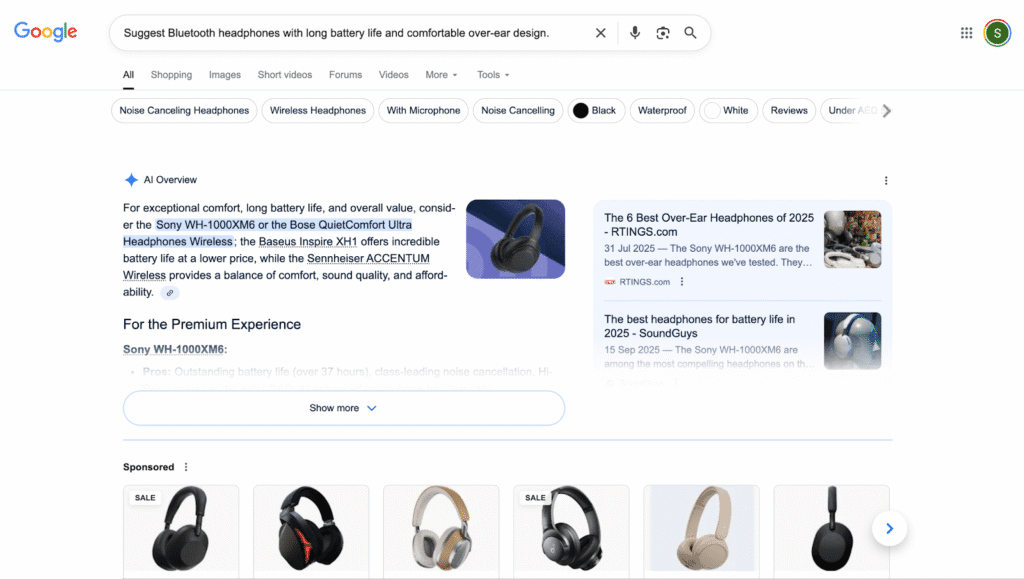
Imagine a user types, “Suggest Bluetooth headphones with long battery life and comfortable over-ear design.” Instead of showing only one list, Google’s AI breaks this into parts like “top battery life headphones,” “comfortable over-ear brands,” ‘Bluetooth features to look for,” and “reviews and ratings.” The AI pulls answers from multiple sources and combines them into a detailed response covering comfort, battery, tech specs, and popularity, all around one search.
2. Vegan Diet Benefits
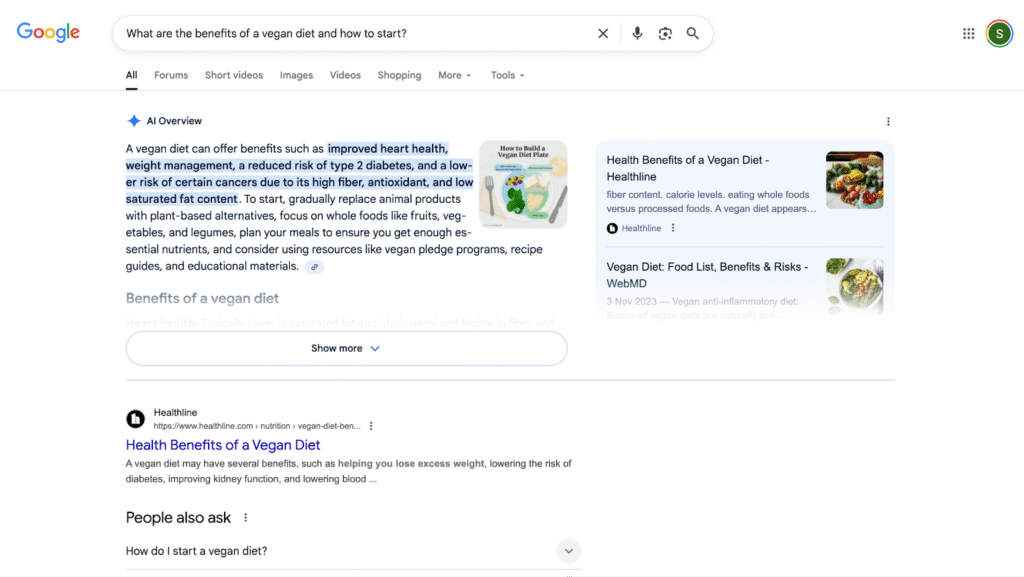
A query such as “What are the benefits of a vegan diet and how to start?” fans out into sub-questions like “heart health benefits,” “weight loss tips for vegans,” “essential nutrients in vegan diets,” and “easy vegan meal plans for beginners.” Google collects data from health blogs, nutrition guides, and meal plan sites, then weaves these pieces together to provide a rich, well-rounded answer.
3. Travel Planning for Europe
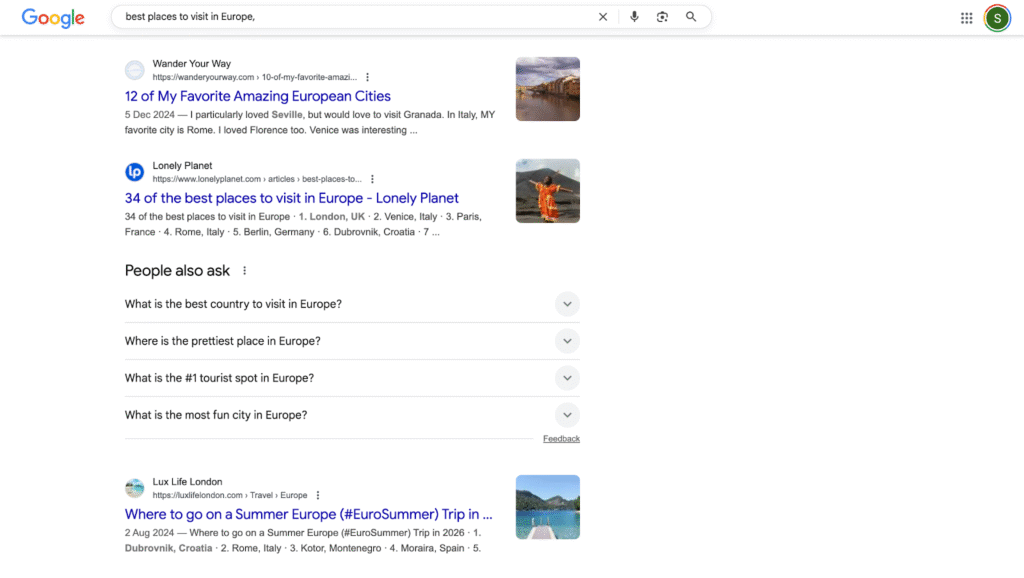
When someone searches “best places to visit in Europe,” the query fan-out shapes the answer by exploring “best cities for art lovers in Europe,” “top family-friendly destinations,” “affordable travel spots,” and “Europe’s top beaches.” Each sub-topic may come from a different travel website or guide, but AI presents them as one clear, categorized answer, helping users find exactly what they want in one view.
Future of Query Fan-Outs in Marketing
- Deeper User Intent Understanding: AI will get better at predicting not just the main question but all possible follow-ups and nuances. Marketers will need to cover these layers to stay relevant and visible.
- More Personalized Responses: Query fan-out will allow AI to tailor answers more closely to user preferences and history, pushing marketers to create highly customized content to rank.
- Integration with Voice & Chat Assistants: As voice search and chatbots grow, query fan-out will power richer, conversational answers, meaning marketers must optimize content for multi-turn queries and dialogues.
- Increased Need for Topic Authority: Content strategies will shift toward building clusters that show deep expertise, helping AI trust the brand to answer complex or broad questions.
- Growing Use of Advanced Tools: Marketers will rely more on AI-driven tools that uncover fan-out subqueries and user intent patterns, helping them create content that matches evolving search behavior.
Conclusion
Query fan-out is changing how people search and how marketing content gets found. It breaks complex questions into smaller parts, making answers more complete and user-friendly.
Marketers who embrace this change by creating broad, well-structured content will be able to speak to users at every step of their search journey.
The future belongs to those who understand that one query is no longer one answer, but a web of connected questions ready to be explored.
Master query fan-out and unlock new levels of visibility and engagement in 2025 and beyond.
Check out other blogs for more such informative content.
- Skills Needed for a Marketing Team to Effectively Leverage AI
- How to Use Predictive Analytics in Data-Driven Marketing
- Best AI Marketing Tools Your Teams Should Be Using in 2025
FAQs
Marketers should focus on query fan-out because it changes how content is found and ranked. Addressing multiple related questions and subtopics helps content appear in richer AI-powered search results, boosting visibility and engagement across a wide range of search intents.
No, while Google AI Mode popularizes query fan-out, other AI search systems and large language models like ChatGPT also use similar techniques to break down questions and gather information from multiple sources to generate smart answers.
Query fan-out breaks a single search into multiple related sub-questions to provide a richer answer, while traditional keyword targeting focuses on matching exact or close keyword phrases in content.
Small businesses can focus on very specific long-tail subqueries and local topics within their niche, creating detailed content clusters that answer precise user questions better than broad, generic content.