Studies show that companies using AI agents report smoother operations, while seeing a noticeable increase in employee satisfaction. So what does that mean for you as an e-commerce brand?
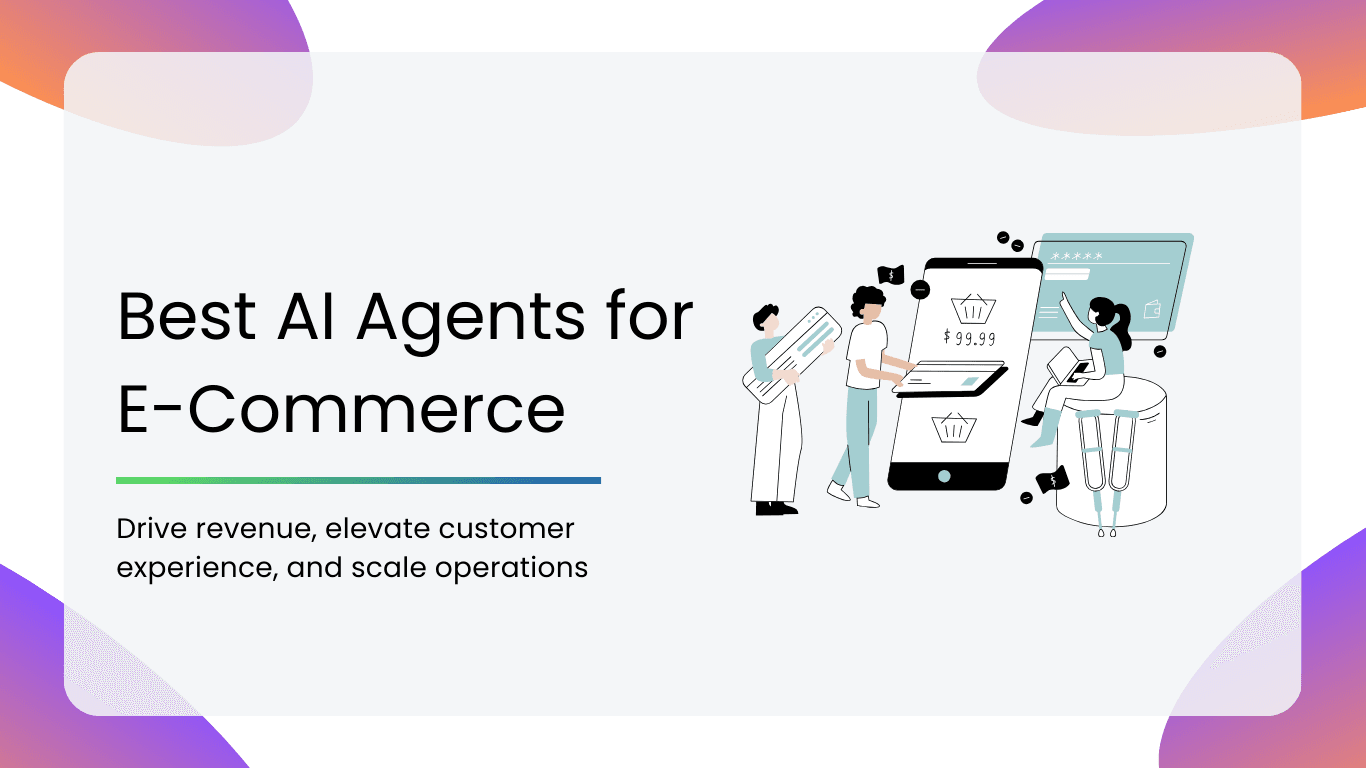
Simply put, AI agents are no longer about experimentation. They’re about results. In this article, we’ll discuss the best AI agents for e-commerce that actually bring impact. These are tools that help drive revenue, elevate customer experience, and scale operations without adding complexity.
What Makes a Good AI Agent for E-Commerce?
| Evaluation Criteria | Why It Matters for E-Commerce |
| Ability to Take Action (Not Just Respond) | A good AI agent can place orders, update carts, initiate refunds, or trigger workflows instead of only answering questions. |
| Sales + Support Coverage | The best agents handle pre-purchase queries, upselling, post-purchase support, and returns in one flow. |
| Personalization Using Customer Data | Using browser history, purchase behavior, and preferences allows AI agents to deliver highly relevant product recommendations & responses. |
| Multi-Channel Support | Shoppers move across platforms. Strong AI agents work seamlessly on web chat, WhatsApp, voice, and email without breaking the experience. |
| Scalability During Peak Seasons | During sales and festive spikes, AI agents should scale instantly without slower response times or breakdowns. |
| Integration with E-commerce Stack | Native or easy integration with platforms like Shopify, CRMs, payment systems, and logistics tools is critical for smooth operations. |
| Observability, Safety & Performance Tracking | Businesses need visibility into conversations, success rates, failures, and guardrails to ensure accuracy and brand-safe interactions. |
Comparison Table of Best AI Agents for E-Commerce
| AI Agent | Personalization | E-Commerce Integrations | Best Use Case |
| TechMonk | 4/5 | 4/5 | Full-stack revenue + support automation |
| Agentforce | 4/5 | 4/5 | Salesforce-centric enterprise AI |
| Relevance AI | 4/5 | 3/5 | Custom role-specific AI workforce |
| OneAI | 3/5 | 3/5 | Voice + messaging outreach automation |
| Cognify | 4/5 | 4/5 | Enterprise conversational automation |
| Moveo AI | 4/5 | 3/5 | Intelligent conversational agents |
| Ada | 3/5 | 3/5 | Automated supported workflows |
| Gorgias | 3/5 | 4/5 | Support-centric AI automation |
| Voiceflow | 3/5 | 3/5 | Voice + custom conversational UX |
Best AI Agents for E-Commerce
| Table of Contents |
| 1. TechMonk |
| 2. Agentforce |
| 3. Relevance AI |
| 4. OneAI |
| 5. Cognigy |
| 6. Moveo AI |
| 7. Ada |
| 8. Gorgias |
| 9. Voiceflow |
1. TechMonk
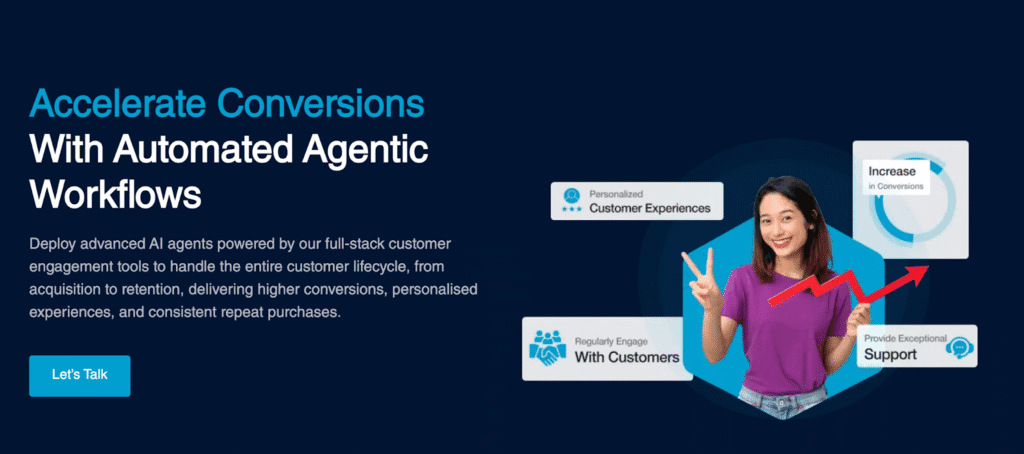
What makes TechMonk relevant for e-commerce brands is its strong focus on agentic workflows. They actively help customers discover products, recover abandoned carts, resolve support issues, and even handle voice-based interactions. It’s built around the idea of AI Capital that learns, decides, and takes action across the entire e-commerce journey.
Why It Stands Out
TechMonk goes far beyond chat into action-oriented, agentic workflows. It is especially designed end-to-end for e-commerce sales, support, and engagement.
Key AI Agents
- AI Sales Agent: Handles product discovery, abandonment cart recovery, and incentive-driven conversions.
- AI Support Agent: Resolves customer queries and escalates tickets when needed.
- Voice AI Agent: Conducts human-like calls via PSTN and WhatsApp.
- Custom Agents: Built using the Agent Builder for brand-specific workflows.
Best Suited For
It suits e-commerce brands that want one unified platform instead of multiple tools. Also, businesses aiming to automate both revenue generation and customer support at scale.
Review: TechMonk stands out as a true action-driven AI platform, not just a chatbot tool. Its agent actively handles sales, support, and engagement, making it ideal for e-commerce brands looking to automate real workflows. Best for businesses that want one scalable AI system instead of juggling multiple tools.
2. Agentforce
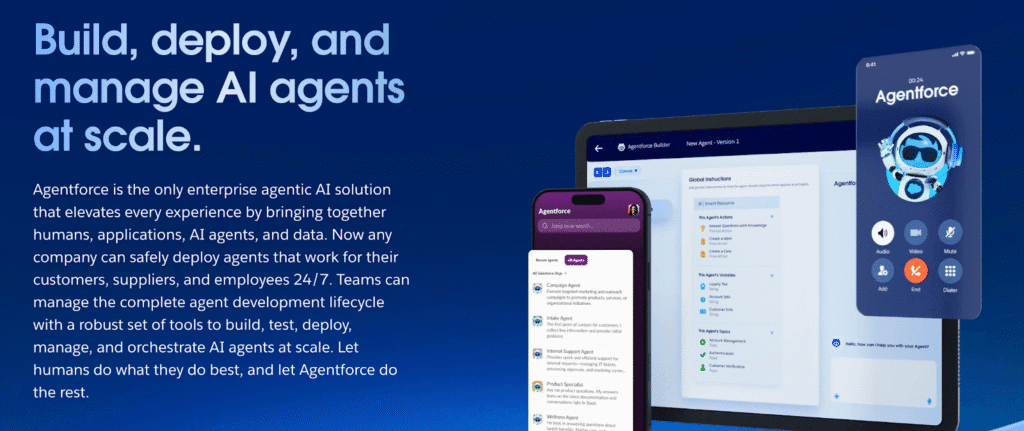
Agentforce is Salesforce’s native AI agent framework designed to work seamlessly within the Salesforce ecosystem. For e-commerce teams already using the Salesforce ecosystem. For e-commerce teams already using Salesforce for CRM, support, and data management, it brings AI-driven automation without disrupting existing workflows.
Why It Stands Out
What truly differentiates Agentforce is its deep, native integration with Salesforce Data Cloud, allowing AI agents to operate using real-time, allowing AI agents to operate using real-time, unified customer data. This enables more unified customer responses, better personalization, and smoother handoffs between sales and support teams.
Key AI Agents
- AI Service Agents: Manages customer queries, cases, and escalations directly inside Salesforce.
- Sales Development Agents: Assists with lead qualification, follow-ups, and pipeline movement.
- Workflow-Embedded Agents: Triggers actions within Salesforce processes rather than acting as external bots.
Best Suited For
Agentforce is best for enterprise e-commerce brands already committed to Salesforce and looking to layer AI on top of their existing CRM looking to layer AI on top of their existing CRM and service infrastructure. It’s particularly effective for teams that value governance, compliance, and data consistency.
Review: Agentforce delivers strong value for Salesforce-first teams by turning existing data into actionable AI-driven interactions. While it’s less flexible outside the Salesforce ecosystem, it shines when used at scale by enterprises that want AI tightly woven into their core operations.
3. Relevance AI
Relevance AI is a flexible platform built to help businesses create custom AI workforces rather than one unified chatbots. Instead of offering siloed features, it empowers teams to build, train, and deploy role-based AI agents for sales, marketing, analytics, and lifecycle management.
Why It Stands Out
What sets it apart is its focus on role specialization and customization. You’re not limited to a generic assistant; you can create agents specifically for sales outreach, marketing personalization, customer segmentation, or strategic planning. Its no-code training and customization interface lowers the barrier for non-technical teams, while still allowing powerful data-driven behavior.
Key AI Agents
- Sales AI Agents: Helps with outreach, lead nurturing, and personalized recommendations.
- Lifecycle Agents: Designed to automate engagement across different stages of the customer journey.
- Planning & Insights Agents: Analyzes data, identify trends, and support marketing strategies.
- Custom AI Workflows: Combines multiple agents into coordinated workflows.
Best Suited For
E-commerce teams looking to build custom, data-aware AI agents tailored to specific business functions. It’s ideal for brands that want granular control over agent behavior without heavy engineering resources.
Review: Relevance AI is a powerful choice for teams that want to go beyond basic tools and build purpose-built AI agents for distinct roles. Its no-code flexibility and strong data foundation make it great for experimentation and scaling, though you’ll want to keep an eye on credit-based pricing as your agent usage grows.
4. OneAI
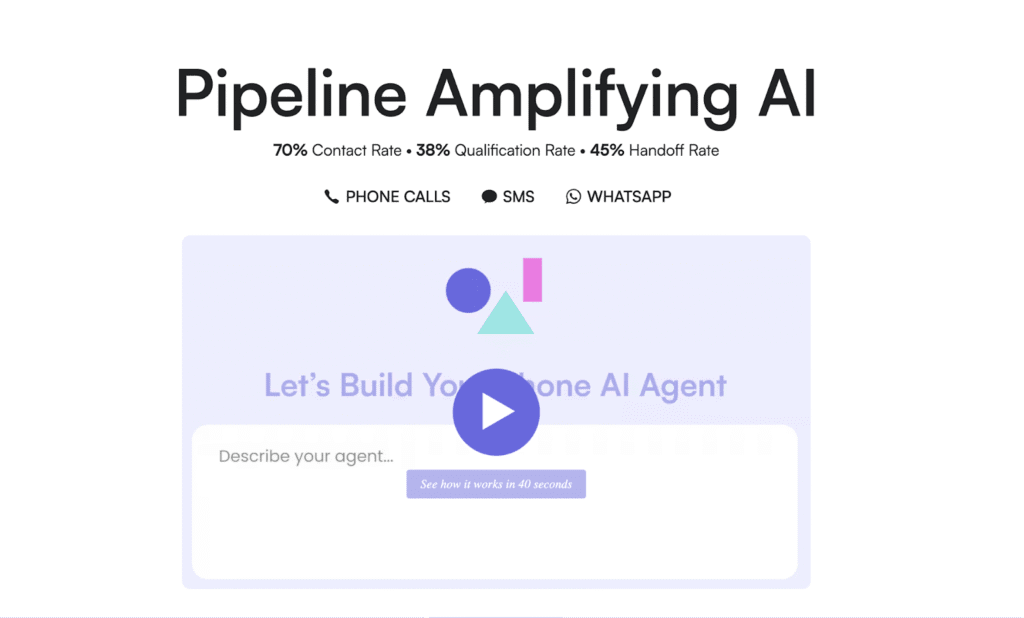
OneAI is a versatile AI agent platform built to automate engagement and outreach across voice, messaging, and web channels. It’s known for powering natural AI phone calling, SMS, and WhatsApp automation that feels closer to human conversations than stale scripts.
Why It Stands Out
OneAI shines by combining AI-driven voice interactions with traditional messaging channels, allowing your e-commerce brand to reach and qualify customers where they’re most active, whether that’s browsing your site, replying to WhatsApp, or answering a phone call. Its agents can trigger calls automatically within seconds of a form submission, lead event, or CRM update, helping you capture interest while it’s still hot.
Key AI Agents
- AI Phone Agents: Make realistic outbound calls, qualify leads, and book meetings or demos.
- Inbound AI Agents: Answer calls 24/7 with warm handoffs to human reps.
- Multi-Channels Outreach Agents: Combine voice, SMS, and WhatsApp touchpoints into cohesive engagement flows.
- Conversion Optimization Agents: Tailor scripts, follow-up timings, and escalation rules based on performance data.
Best Suited For
Brands with high-touch sales funnels or support needs that span beyond simple chat widgets, especially teams that want to automate lead qualification, appointment setting, and real-time outreach without adding manual workload to sales reps.
Review: OneAI stands out for its real-time voice and messaging automation, bridging gaps between sales and support channels in a way many chat-first tools don’t. It’s a great fit for e-commerce teams looking to scale engagement and lead conversion, but the focus on phone and messaging means it’s most valuable when paired with voice-heavy outreach strategies.
5. Cognigy
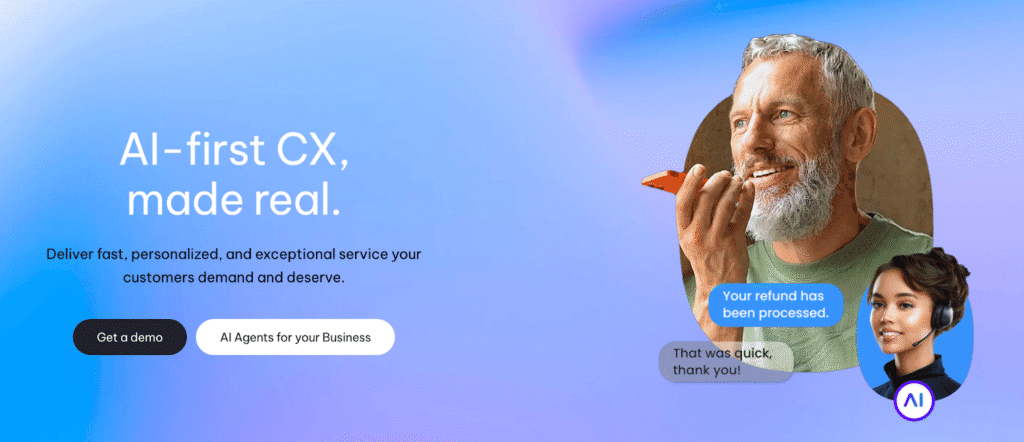
Cognigy is a mature conversational AI platform focused on building robust AI agent workforces for customer-facing operations, including e-commerce support and engagement. Its agents are designed to automate high-volume interactions across chat, voice, and messaging channels while integrating with enterprise systems.
Why It Stands Out
Cognigy’s strength lies in its enterprise-grade conversational agents that act more like digital team members than simple bots. These agents provide personalized support, automate common e-commerce tasks, and deliver 24/7 engagement across channels.
Key AI Agents
- Self-Service AI Agents: Handle customer inquiries autonomously via text or voice.
- Voice & Chat Agents: Provide seamless support across web, mobile, and messaging.
- Agents Copilot Assistants: Support human agents with real-time insights and suggested responses.
- Multilingual Conversational Agents: Engage customers in their preferred language 24/7.
Best Suited For
Larger e-commerce brands or retailers that need enterprise-level AI engagement and support automation. Its scalability and multichannel flexibility make it ideal for teams looking to automate tasks without fragmenting customer experience.
Review: Cogigy is a strong choice for e-commerce operations that want sophisticated, scalable AI agents rather than simple chat widgets. Its deep conversational intelligence and omnichannel capabilities help elevate customer support and engagement.
6. Moveo AI
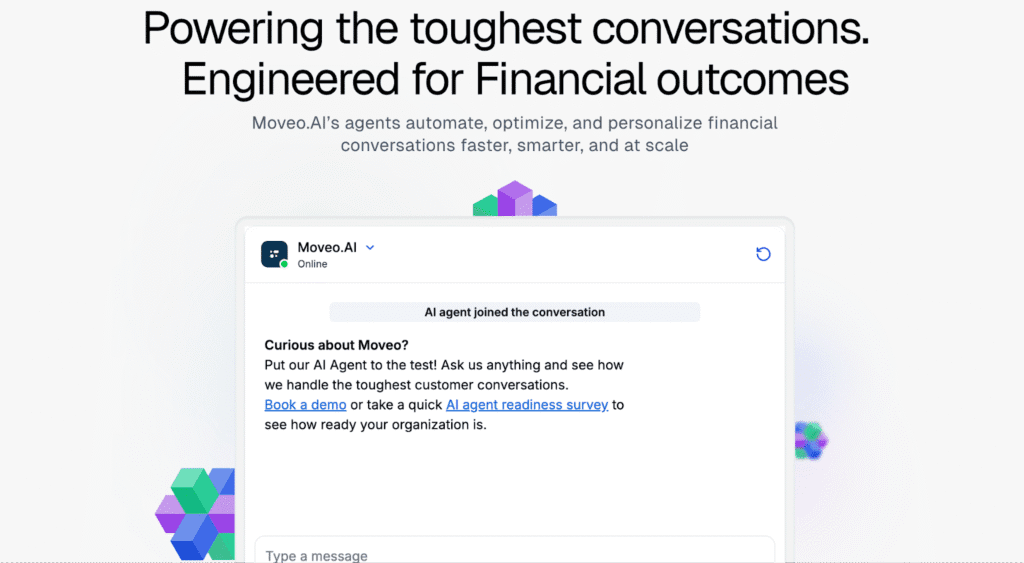
Moveo AI is a conversational AI platform that helps businesses build self-improving virtual agents designed to automate customer interactions at scale. Its agents focus on delivering personalized, context-aware engagement across channels, making support, lead qualification, and customer journeys feel more human and less robotic.
Why It Stands Out
The strength lies in enterprise-grade conversational capabilities that blend generative AI and dialogue automation. The platform uses proprietary large language models to power agents that resolve, pulling from structured and unstructured data sources to understand user intent and deliver relevant outcomes.
Key Agents
- Customer Support Agents: Provide 24/7 personalized support across web, chat, and messaging platforms.
- Proactive Engagement Agents: Trigger outreach and follow-ups based on user behavior and workflows.
- Omnichannel Conversational Agents: Seamlessly handle interactions over WhatsApp, web chat, SMS, and more.
- Auto-Builder Agents: Create workflow-specific agents quickly with drag-and-drop or guided automation tools.
Best Suited For
Moveo AI is best for intelligent conversational automation that feels native to customer interactions, not scripted. It’s particularly useful for companies looking to blend high-quality support with proactive engagement without needing heavy engineering resources.
Review: Moveo AI delivers smart, self-learning agents that handle real customer tasks rather than simple Q&A. Its omnichannel support and proactive engagement features help drive smoother experiences and operational efficiency, best for teams ready to invest in deeper conversational automation.
7. Ada
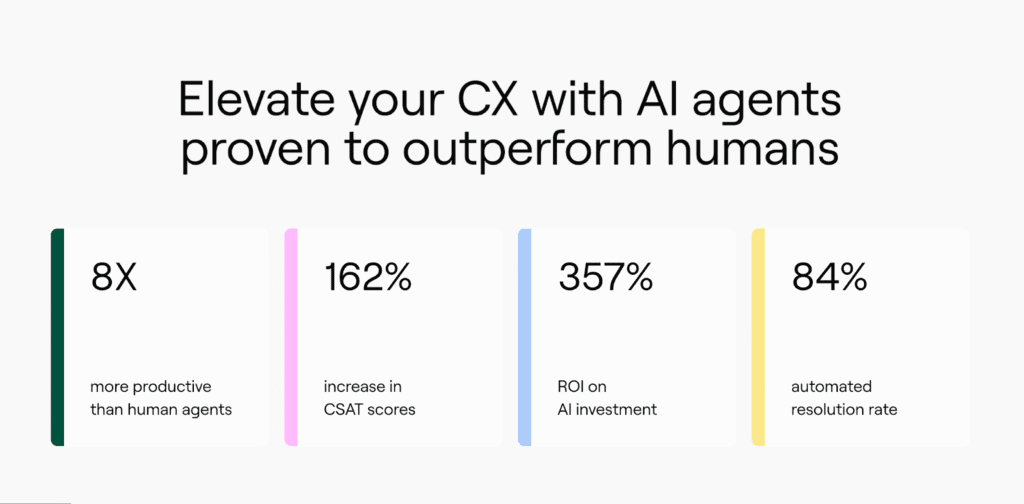
Ada is an AI-powered customer service platform built to automate support and engagement conversations for e-commerce brands and digital businesses. Rather than being a simple FAQ bot, Ada’s agents help resolve inquiries and recommend products, and guide customers through common journeys.
Why It Stands Out
Ada’s core strength lies in its adaptive conversational engine that learns from interactions and becomes smarter over time. It combines natural language understanding with rule-based workflows, making it effective at handling both common queries and edge-case scenarios. Brands can deploy Ada on web chat, mobile apps, and messaging channels.
Key AI Agents
- Customer Support Agents: Resolve inquiries, process returns, and guide users via automated paths.
- Product Recommendation Agents: Suggest relevant products based on browsing behavior.
- Self-Service Workflows: Automate tasks like order status checks, refund initiation, and account queries.
- Multichannel Engagement Agents: Operate across web chat, in-app support, and messaging interfaces.
Best Suited For
E-commerce teams that want robust automated support with the flexibility to customize conversational flows. It’s especially appealing for brands aiming to reduce support load while maintaining quality customer experiences.
Review: Ada is a dependable choice for automating customer support with intelligent conversational agents that feel natural and helpful. It’s particularly strong for brands focusing on support automation, though it may require some tuning to get the most out of its workflows.
8. Gorgias
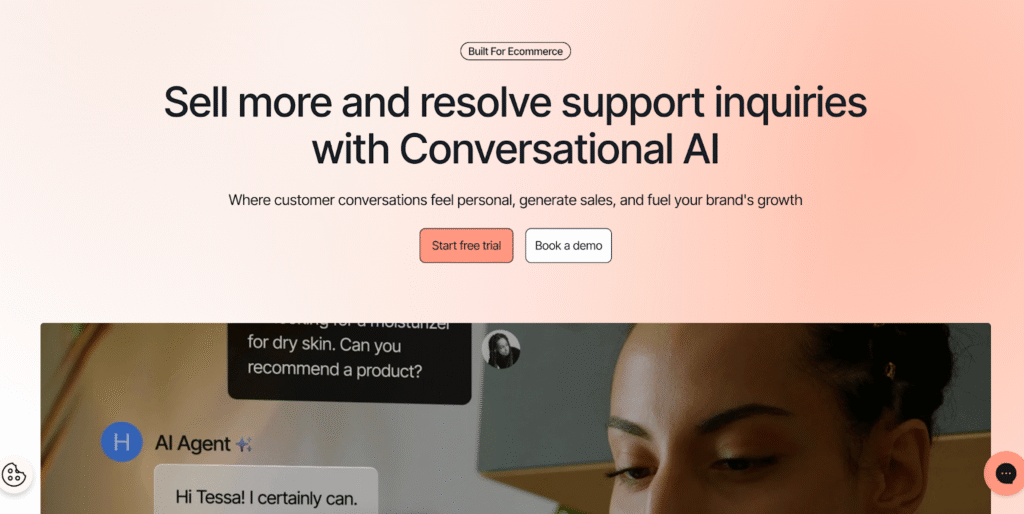
Gorgias is a helpdesk-centric AI platform built specifically for e-commerce support teams. While it’s known first as a customer support system, its AI-powered automation and response capabilities turn repetitive queries into instant resolutions, helping brands deliver faster service without ballooning headcount.
Why It Stands Out
Its AI is tightly woven into order, shipping, and customer data, allowing it to resolve tickets with context rather than generic replies. It also integrates deeply with commerce platforms like Shopify, making setup and data access truly seamless.
Key AI Agents
- AI Support Responders: Auto-reply to common inquiries like order status, returns, and tracking.
- Contextual Action Agents: Perform tasks directly from conversation.
- Workflow Automation Agents: Trigger macros, tagging, or escalation rules based on customer intent.
- Multi-Platform Agents: Support communication via email, chat widgets, and social comments.
Best Suited For
E-commerce brands that prioritized support automation tied directly to order and customer data. It’s ideal for stores with high support volume that want to reduce manual ticket load while improving responsiveness.
Review: Gorgias is an e-commerce support powerhouse, turning AI responses into real actions rooted in order and customer context. It’s less about sales automation and more about streamlining service, making it perfect for stores that want to take support off human plates without losing quality or speed.
9. Voiceflow
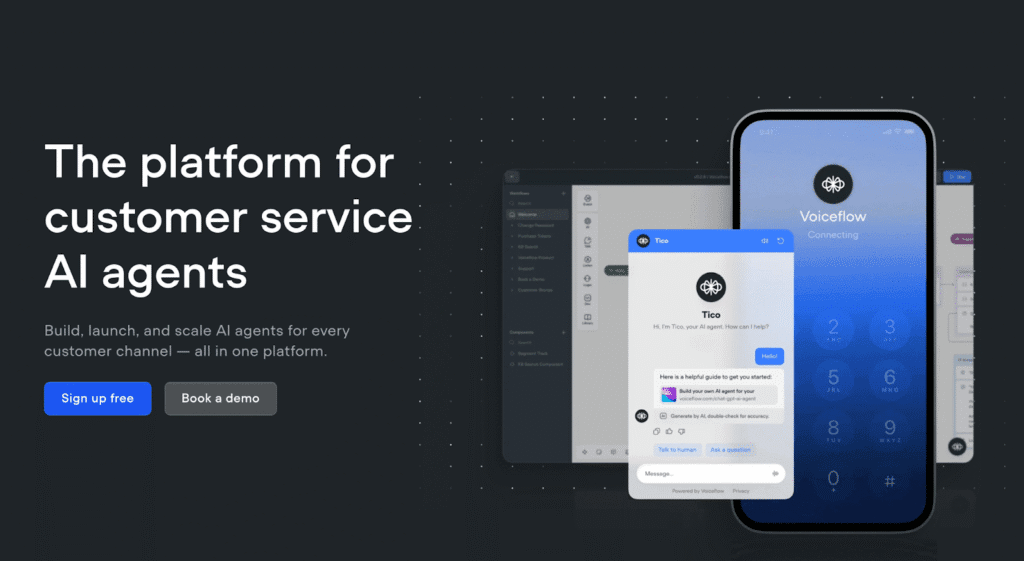
Voiceflow lets teams build sophisticated voice and chat experiences without heavy coding. Originally focused on voice assistants, it has expanded into multi-channel AI channel agents that can handle customer conversations on web, voice, and messaging interfaces.
Why It Stands Out
Voiceflow’s strength lies in its visual, drag-and-drop agent builder, which makes it easy for non-technical teams to design and iterate conversational flows. Voiceflow lets you create personalized, brand-specific experieneces that can span voice calls, IVR systems, SMS, and web chat.
Key AI Agents
- Voice Interaction Agents: Handle voice conversations for support, FAQs, and guided assistance.
- Web & Messaging Agents: Automate chat on sites and messaging channels like WhatsApp.
- Custom Conversational Workflows: Build tailored journeys for discovery, onboarding, and conversions.
- Multichannel Coordinated Agents: Link voice and digital chat experiences into unified engagement flows.
Best Suited For
Brands that want AI agents not just for text responses, but to include voice-based engagement as part of their customer experience. It’s ideal for e-commerce operations that see value in voice support, automated helplines, or richer conversational interfaces beyond typical web chat.
Review: Voiceflow shines when it comes to building custom, voice-enabled and multi-channel AI experiences without the heavy developer reliance. It’s great if you want to experiment with voice and advanced conversational design.
There’s no one perfect AI agent. The right choice depends on your scale, sales motion, and tech stack. Start where your biggest bottleneck is today, and choose an AI agent that helps you remove it, not just add another tool to your workflow.
Want to know more? Check out our other AI expert guides:
FAQs
Implementation can range from a few days to a few weeks, depending on the tool and complexity. Plug-and-play platforms deploy faster, while enterprise or custom agents take longer to configure and integrate.
Most AI agents are designed to assist and augment teams, not fully replace them. They handle repetitive, high-volume tasks so human teams can focus on complex issues and strategy.
Common mistakes include trying to automate everything at once, choosing tools that don’t fit their scale, and not clearly defining success metrics before deployment.
ROI can be measured through metrics like reduced support tickets, faster response times, increased conversion rates, and cost savings from automation over time.
Disclosure – This post contains some sponsored links and some affiliate links, and we may earn a commission when you click on the links at no additional cost to you.