In today’s fast-changing world, understanding how people feel about products, brands, or ideas has never been more important. AI sentiment analysis tools help businesses and creators tap into the emotions behind customer words with ease and accuracy.
As these tools evolve, they become smarter and more accessible, making it easier than ever to get clear insights from vast amounts of data.
Let’s explore the best AI sentiment analysis tools available in 2025, designed to help you understand your audience better and make decisions that truly connect.
What Is an AI Sentiment Analysis Tool (and Why It Matters)
An AI sentiment analysis tool is a software program that uses artificial intelligence to understand how people feel about something by looking at their words. It reads text from sources like reviews, social media posts, emails, or customer feedback and tells if the feelings expressed are positive, negative, or neutral. Some tools can also find more specific emotions like happiness, anger, or sadness.
This matters because understanding customer feelings helps businesses make better decisions. Instead of guessing what people think, companies get clear insights instantly. They can improve products, offer better service, and fix issues before they become bigger problems. In a world where customer opinions spread fast online, knowing the mood behind the words gives companies a real edge to stay connected and trusted.
Key Benefits of AI Sentiment Analysis Tools
- Quick Understanding: These tools process large amounts of text fast, giving instant insight into customer feelings without spending hours reading.
- Better Decisions: By knowing what customers like or dislike, businesses can improve products, services, and marketing strategies more accurately.
- Real-Time Alerts: Many tools track opinions as they happen, helping companies respond quickly to positive trends or fix issues before they grow.
- Deeper Insights: AI can detect not just positive or negative feelings but also emotions like frustration or joy, which helps to understand customer needs better.
- Cost-Effective: Automating sentiment analysis saves time and money compared to manual analysis, making it easier for businesses of all sizes to use.
Table of Contents
Best AI Sentiment Analysis Tools in 2025
1. Google Cloud Natural Language API
Google Cloud Natural Language API is a powerful tool that helps businesses understand text by using artificial intelligence. It reads documents, reviews, or messages and tells whether the overall feeling is positive, negative, or neutral. The tool also identifies important names, places, and things within the text. Many companies like it because it works smoothly with other Google Cloud products, making it easy to use in apps and websites. It supports many languages, which is great for global businesses. The tool can handle small tasks or big projects with the same effectiveness.
Key Features
- Simple Sentiment Analysis: Quickly finds if the text shows happy, unhappy, or neutral feelings.
- Entity Extraction: Spots and labels names of people, places, or products mentioned in the text.
- Languages Supports: Works with a wide range of world languages to help businesses reach global audiences.
- Integration Friendly: Fits well with Google Cloud tools, making it easy to add sentiment analysis in apps or workflows.
- Syntax Analysis: Understands the grammar and structure of sentences, improving the accuracy of text understanding.
Pros
- Very accurate with reliable results.
- Can handle large amounts of text fast.
- Supports many languages for global use.
Cons
- Costs can add up for heavy usage.
- Focuses mostly on basic positive, negative, or neutral feelings without deep emotion detection.
2. Amazon Comprehend
Amazon Comprehend is an AI tool that finds meaning in written text. It reads customer feedback, social media posts, or emails to identify the general mood people express. It also finds key topics and phrases people talk about. The tool uses machine learning to improve its understanding over time. It works best for companies already using Amazon Web Services because it fits right into their existing systems. Amazon Comprehend can even be trained to spot special phrases or categories specific to a business’s needs, making it flexible for different industries.
Key Features
- Sentiment Detection: Tells if the text is positive, negative, neutral, or mixed in feeling.
- Key Phrase Extraction: Identifies important words and phrases in text to highlight main points.
- Topic Modelling: Automatically groups similar pieces of text together by subject.
- Custom Training: Allows businesses to train the tool to recognise unique words or topics important to them.
- Language Detection: Spots the language of the text to better understand the meaning.
Pros
- Works well with other Amazon Web Services.
- Offers options to customise for specific business needs.
- Can process lots of text quickly for large projects.
Cons
- It can be hard to set up for beginners.
- Some features might need extra manual setup or training to work best.
3. Azure Text Analysis
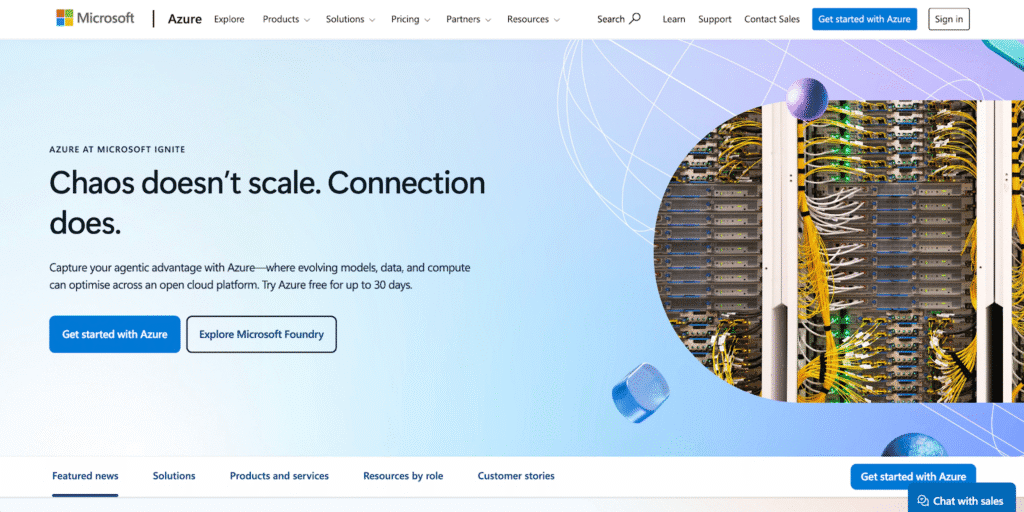
Azure Text Analysis by Microsoft is a user-friendly tool that helps analyse text for meaning and feeling. It is often used by businesses that want quick and clear reports on customer opinions. The tool does more than just positive or negative feelings-it can look deeper to find opinions about specific parts of a product or service. It also detects the language automatically, which makes it useful for companies with international customers. It fits perfectly with other Microsoft services, making it easy to add to existing workflows while keeping data safe and private.
Key Features
- Detailed Sentiment Scoring: Gives scores that show how positive or negative the text really is.
- Opinion Mining: Finds feelings about specific product features or service parts within longer text.
- Automatic Language Detection: Recognises the language of the text without manual input.
- Key Phrase Extraction: Pulls out important words and topics from the text.
- Security and Compliance: Keeps data safe with strong privacy controls suitable for businesses.
Pros
- Offers detailed and easy-to-understand insights.
- Strong security features for business use.
- Smooth integration with Microsoft cloud products.
Cons
- Some languages may not have full support yet.
- Advanced features could require additional costs.
4. OpenAI GPT Models (LLM Sentiment)
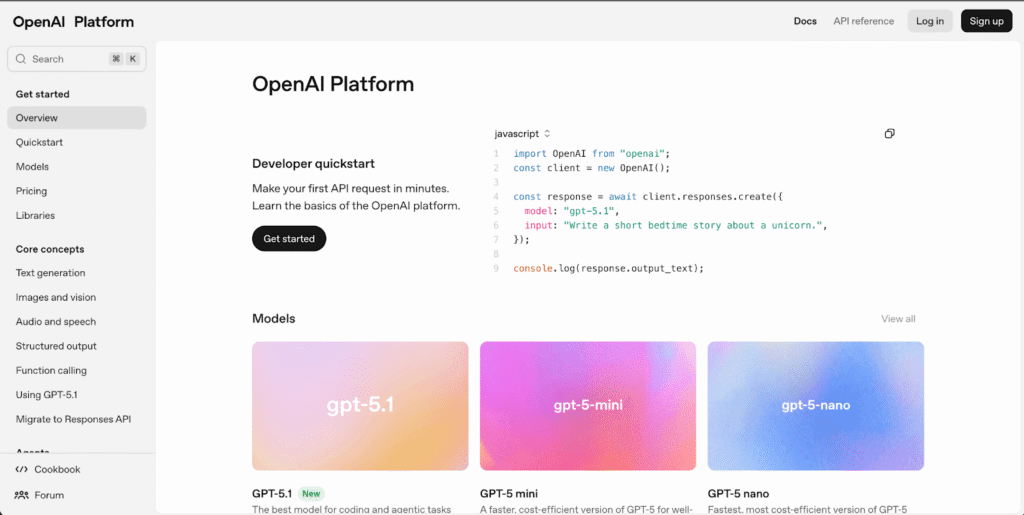
OpenAI’s GPT models are large, flexible AI systems that understand and generate human-like text. Unlike basic sentiment tools that just rate text as positive or negative, GPT models read between the lines to catch subtle emotions and context. Businesses use these models to analyse feedback, respond in chatbots, or summarise customer messages. The models keep learning from huge amounts of internet text, which helps them understand many topics deeply. This makes GPT-based sentiment analysis very smart and adaptable for different needs. However, using it well requires clear instructions, and sometimes the results need human review.
Key Features
- Deep Understanding: Captures complex feelings and nuances in customer messages.
- Flexible Custom Prompts: Let users tailor the way the AI analyses text based on specific questions or goals.
- Multi-Purpose Use: Can handle many tasks beyond sentiment, including writing, summarising, and answering questions.
- Large Knowledge Base: Learns from billions of examples, making it good with many topics.
- Continuous Improvement: Regular updates make the models smarter and more reliable over time.
Pros
- Produces nuanced and natural-sounding analysis.
- Very flexible for different types of text and uses.
- Constantly improving with new updates.
Cons
- Needs good prompt design to get consistent results.
- It can be slower and costlier compared to simpler tools.
- Sometimes, it yields variable results unless carefully checked.
5. Hugging Face
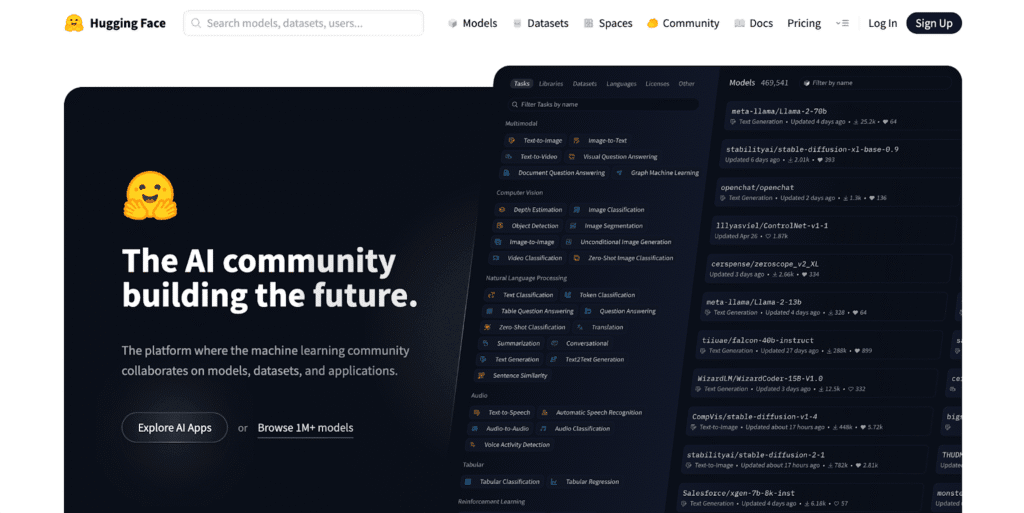
Hugging Face is known for its open library of artificial intelligence models, including many for sentiment analysis. It offers powerful AI tools that anyone can use to analyse text emotions, from simple opinions to complex feelings. Hugging Face supports many languages and allows easy experimentation with different models. It is popular with developers and researchers because it provides flexibility to choose or fine-tune models based on what a project needs. This makes it ideal for businesses wanting custom solutions or researchers exploring new ideas.
Key Features
- Wide Model Library: Access to many pre-built AI models made by both Hugging Face and its community.
- Custom Model Training: Users can train their own sentiment models to fit specific industry or language needs.
- Support for Many Languages: Models available for diverse languages, helping global applications.
- Simple API Access: Cloud and local deployment options with easy integration into apps.
Pros
- Great flexibility for custom needs.
- A large collection of models for different tasks.
- Open source and cost-effective for many users.
Cons
- Requires some technical skills to pick or tune models.
- Support and documentation can be uneven depending on the model.
6. Medallia
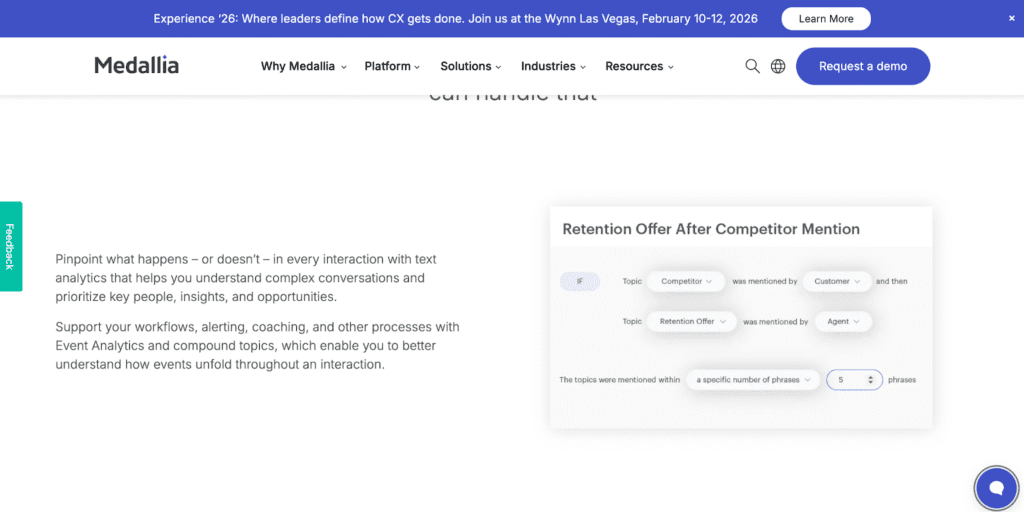
Medallia is a no-code AI platform designed to make text analysis easy for everyone. It offers straightforward tools for sentiment analysis, keyword extraction, and more without needing to write code. Businesses use Medallia to analyse reviews, social media comments, and customer feedback quickly. The platform also allows custom training so users can improve results based on data specific to their business. This tool is friendly for small teams, marketers, and anyone wanting fast insights without technical hassles.
Key Features
- No-Code Platform: User-friendly design that works without any programming.
- Customisable Models: Train sentiment analysis models tailored to your own data.
- Multi-Channel Analysis: Works with social media, emails, surveys, and more.
- Pre-Built Templates: Ready-to-use sentiment and text analysis models for common needs.
- Easy Integration: Connects to apps via API or automated workflows with tools like Zapier.
Pros
- Accessible for users with no coding knowledge.
- Fast setup with templates to get started quickly.
- Flexible customisation for better accuracy.
Cons
- Pricing can grow with larger data needs.
- It may not offer as deep emotional insights as advanced AI models.
7. Enterpret
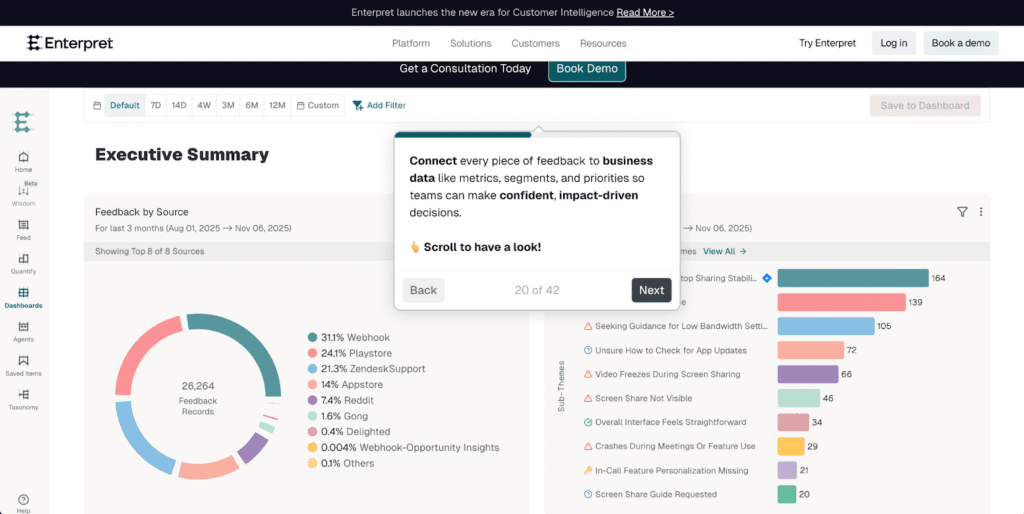
Enterpret is an AI-powered tool focused on analyzing customer feedback from many sources like reviews, surveys, and support calls. It uses customizable AI models tailored to each business, which helps detect not only sentiment but also a wide range of emotions such as joy, frustration, or sadness. This aspect makes it especially useful for companies wanting deep emotional insights beyond simple positive or negative labels. Enterpret also identifies trends over time and scores sentiment related to different aspects or topics, helping companies find specific areas to improve. With multilingual support and a cloud-based platform, Enterpret serves businesses of varying sizes looking for clear, actionable feedback insights.
Key Features
- Custom AI Models: Customizable AI models tuned to each business’s unique vocabulary and needs
- Broad Emotion Detection: Emotion detection that goes beyond basic sentiment, spotting joy, frustration, and more
- Trend Analysis Over Time: Trend analysis over time to monitor shifts in customer feelings
- Aspect-Based Sentiment Scoring: Aspect-based sentiment scoring to focus on specific product or service elements
- Multilingual & Scalable Cloud Platform: Multilingual processing and scalable cloud deployment
Pros
- Highly personalized and precise sentiment analysis
- Clear, actionable insights with an easy-to-use interface
- Responsive customer support and regular updates
Cons
- Learning curve for new users with some complexity
- Pricing details are not publicly available and tend to be customized
8. Lexalytics (Semantria/Salience)
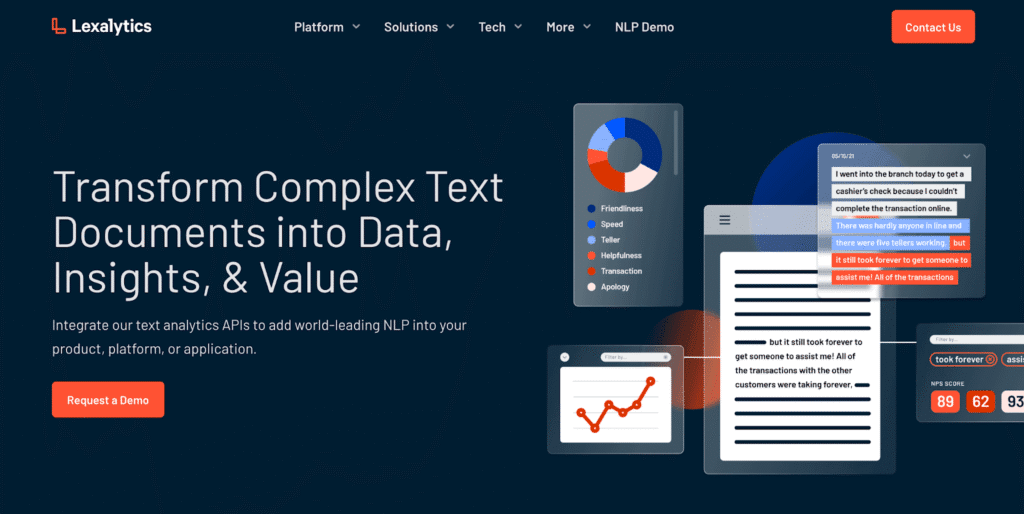
Lexalytics offers powerful text analytics through its Semantria and Salience platforms. These tools help businesses make sense of large amounts of text by finding sentiment, themes, and important details. Lexalytics is known for its flexibility, allowing users to analyse social media, customer feedback, surveys, and more. The software can dive deep into the text to find opinions about specific topics, offering detailed insights. It supports multiple languages and can be customised to fit different industries.
Key Features
- Multiple-Channel Text Analysis: Works with social media, emails, surveys, and documents.
- Aspect-Based Sentiment: Understands feelings about specific parts or features mentioned.
- Theme and Topic Extraction: Finds the main subjects people talk about automatically.
- Customisable Taxonomy: Let businesses define their own categories to fit their needs.
- Multi-Language Support: Supports many languages for global data analysis.
Pros
- Strong detail in understanding specific opinions.
- Flexible for different data sources and industries.
- Good language support for international use.
Cons
- Might require some setup to customise properly.
- Pricing and plans may be complex for smaller businesses.
9. Brandwatch
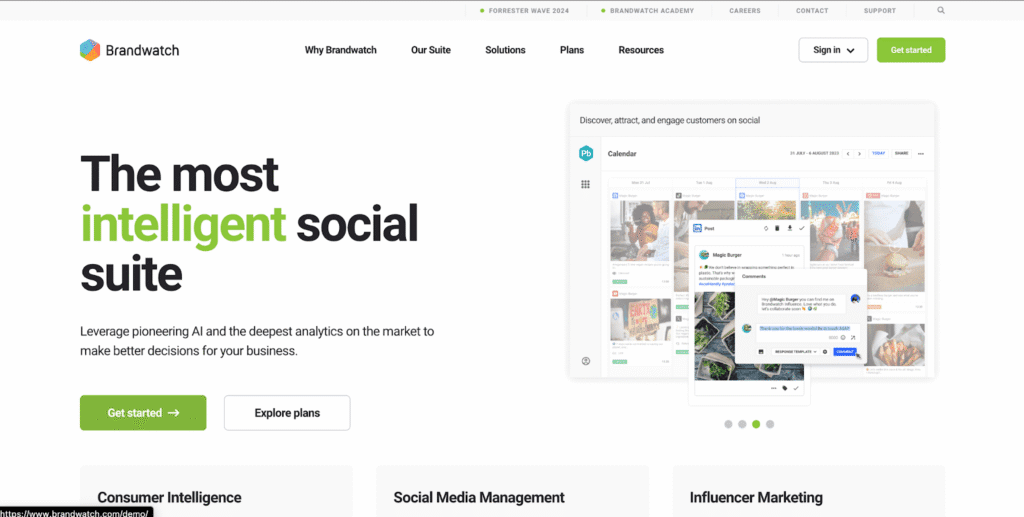
Brandwatch is a robust platform that helps companies track and analyse online conversations and brand sentiment. It scans millions of posts, reviews, and comments from social media, forums, blogs, and news sites. Brandwatch shows how people feel about brands and topics in real time, giving marketers tools to spot trends and understand the public deeply. It supports multiple languages and provides user-friendly reports for better decision-making.
Key Features
- Real-Time Social Listening: Monitors online mentions and conversations instantly.
- Sentiment and Emotion Analysis: Detects positive, negative, and neutral feelings and specific emotions.
- Trend Spotting: Finds emerging topics and changing opinions early.
- Competitive Analysis: Compares brand sentiment against competitors easily.
- Multi-Language Capability: Works with many languages worldwide.
Pros
- Excellent for social media and brand monitoring.
- Fast insights with real-time data updates.
- Easy-to-understand dashboards and reports.
Cons
- It can be expensive for smaller teams or budgets.
- Primarily focused on public online data rather than private data sources.
10. CallMiner Eureka
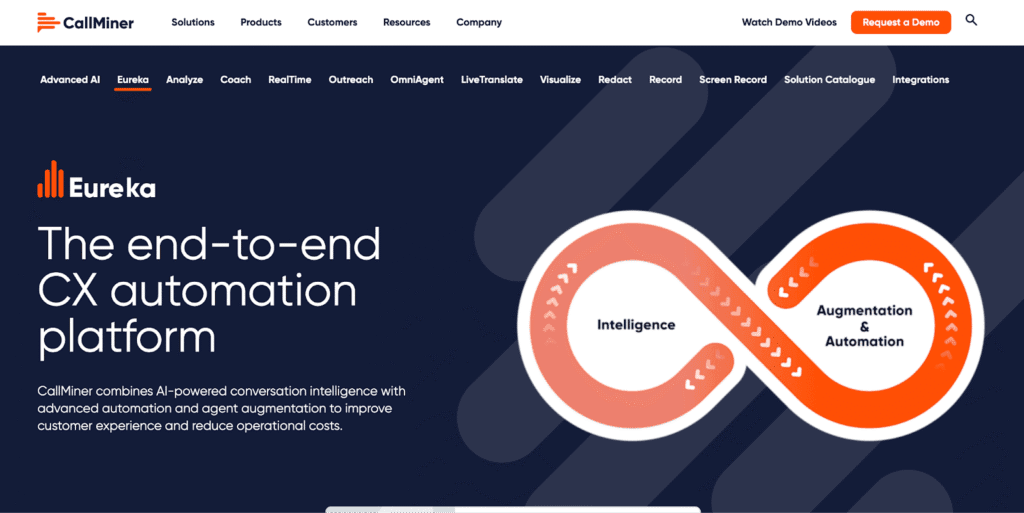
CallMiner Eureka is designed to analyse customer conversations across many channels, such as phone calls, chats, and emails. It uses AI to detect sentiment, emotions, and important topics during customer interactions. This tool helps businesses improve customer service and sales by giving clear insights into how customers feel and what they want. It is widely used in call centres and customer experience teams to drive better results and agent performance.
Key Features
- Conversation Analytics: Analyses spoken and written customer interactions.
- Emotion and Sentiment Detection: Spots feelings like frustration, happiness, or dissatisfaction.
- Topic and Trend Identification: Highlights key issues and common customer requests.
- Agent Performance Metrics: Measures how well customer service reps are handling calls.
- Multi-Channel Analysis: Supports calls, chats, emails, and social interactions.
Pros
- Deep insights into customer conversations in real-time.
- Helps improve customer support and sales quality.
- Tracks agent performance with clear analytics.
Cons
- Best suited for customer service environments, less for marketing.
- It can require training for users to get the most from the features.
How to Get the Most Out of AI Sentiment Analysis Tools
- Pick the Tool That Fits You: Every business is different. Look for tools that match your size, language needs, and the way you collect feedback. Don’t go for the fanciest one if it feels too complicated.
- Feed the Tool Real Talk: The more real and varied your text is, like reviews, social posts, or emails, the smarter the AI gets. Give it a good mix so it can catch the real feelings.
- Make It Your Own: If the tool lets you, teach it your own words and phrases. This makes it easier to understand your customers better and gives clearer answers.
- Look Beyond Feelings: Don’t just stop at knowing if words are positive or negative. Pair those feelings with sales reports, customer questions, or return rates to see the whole story.
- Act on What You Learn Fast: When you see a trend, good or bad, jump on it. Reply to unhappy customers quickly and celebrate the happy moments loudly to build trust.
Conclusion
AI sentiment analysis tools give businesses a new way to really understand what customers feel. These tools read through reviews, social media posts, and messages to find out if people are happy, upset, or just plain neutral. This helps companies see the bigger picture without spending hours on manual work.
The key is to pick a tool that fits your needs and to give it a wide range of real feedback. When businesses pay attention and act quickly based on what they learn, they can build stronger relationships, fix issues early, and create better experiences.
In 2025, using AI to listen to customers’ feelings is no longer just an option but a smart way to grow and stay ahead in a busy market.
Check out other blogs for more such informative content.
- Skills Needed for a Marketing Team to Effectively Leverage AI
- How to Use Predictive Analytics in Data-Driven Marketing
- Best AI Marketing Tools Your Teams Should Be Using in 2025
FAQs
Choosing the right tool depends on the kind of text you analyze (e.g., social media, reviews, emails), the language support you need, and the depth of emotion detection required. Consider industry-specific vocabulary and whether the tool allows custom training or fine-tuning to improve accuracy for your needs. Testing several options with your own data can also help find the best fit.
Handling customer text data involves privacy rules like GDPR and CCPA. It is important to use tools that encrypt data, allow consent management, and ensure compliance with data protection laws. Always review the tool’s privacy policies and ensure you have clear permissions before analyzing customer content.
Handling slang, sarcasm, or cultural nuances is still a challenge for AI. Some advanced tools improve accuracy with context and custom training, but no tool is perfect. Combining AI analysis with human review is often necessary to capture subtleties, especially in critical or sensitive feedback.
Models should be updated regularly to stay accurate, especially if customer language or product offerings change. For rapidly evolving markets or topics, retraining every few months or after major events can help the AI stay aligned with current sentiment. Monitoring tool performance and feedback quality helps decide when to update.