In a world where AI can summarize entire topics in seconds, knowing how your pages appear from search has become really important. With this, rank tracking comes in. So, it’s crucial to understand how AI Overviews are affecting your visibility, or simply keep up with algorithm changes, as having the right rank-tracking tool can make a huge difference.
Below is a practical, use-case-driven guide to the best options in 2025 to give you the clearest picture of your search visibility in the age of AI.
What to Look for In An AI-Overview Rank Tracker
Here are the must-haves to keep you on your radar:
1. LLM Coverage
Does the tool actually track results from modern, AI-powered engines like ChatGPT, Google Gemini, Perplexity AI, Claude, Meta AI, DeepSeek, and others? If it only tracks classic search rankings like regular Google or Bing SERPs, you might miss where AI-Overviews are actually reshaping visibility.
2. Prompt & Journey Tracking
Traditional rank tools tend to focus on isolated keywords. But AI Overview thrive on full queries, natural language prompts, and user jobs to be done. A useful tracker should let you monitor whole queries or user intents, not just single keywords. That way, you get a sense of how your content fares in real-world conversational searches.
3. Citation Intelligence
AI Overviews tend to cite sources when they present answers. This insight is gold if you want to know whether your domain gets credit or if someone else’s content is being favored.
4. GEO & Personalization Support
AI-powered search results can vary by region, language, and even user context. Your ideal rank tracker should support different countries, languages, and locations, so you can see how your content performs around the world, or just in your target market.
5. Alerts & Reporting
You don’t want to manually check rank changes every day. A good tool should offer daily/weekly movement reports, alerts for sudden drops or gains, notifications when you lose or gain citations, and even competitor tracking.
6. Integrations
Look for tools that integrate with platforms like SEMrush, Google Analytics (GA4), BigQuery, Looker, or offer API access so you can plug data into internal BI systems.
7. Pricing
Some tools are perfect for solo bloggers or small marketing teams, while others are built for agencies or enterprises. Check whether the pricing and feature set match your size and needs before you commit.
Comparison Table of Best Rank Tracking Tools for AI Overviews in 2025
| Tool | Core Strength | Best for | Pricing |
| SE Ranking | Multi-LLM tracking, keyword and competitor research in AI Overviews + traditional SEO toolkit. | Marketers and agencies that need SEO & GEO rank tracking and competitor analysis. | Starts at $129/month |
| Wellows | Multi-LLM AI brand visibility tracking (Visibility Score, citations, sentiment) with prompt-level insights, content + outreach opportunity discovery, and performance history across ChatGPT, Gemini, Perplexity, Google AI Overviews, and AI Mode. | Brands and agencies that want to measure, manage, and grow AI search visibility with a single dashboard—plus workflows for content creation and earning citations. | Starts at $37 / domain/month (7-day free trial; credit card required). Plans go up to $497 / domain/month. |
| Rankscale | Multi-LLM & AI-engine visibility + prompt-based tracking, visibility & citation analytics across AI Overviews, LLMs | Brands/marketers wanting to monitor AI-search presence + benchmark vs competitors | Starts at $20/month |
| Otterly.ai | Brand & content visibility on LLMs/AI-search platforms | Content/brand teams, especially those already using content-marketing workflows or SEO tools | Starts at $29/month |
| Nightwatch | Traditional SEO + keyword rank tracking + AI/LLM visibility layer | SEO-heavy businesses, enterprises needing both classic SERP data and emerging AI-search insights | Starts at $39/month |
| RankRaven | Daily prompt-based tracking of AI-model answers and how brand/content appears in them | Brands/marketers aiming for regular monitor of AI-search output without heavy SEO output | Starts at $49/month |
| Knowatoa | AI-search visibility + content-gap analysis + brand monitoring across LLMs & AI Overviews | Content or growth teams wanting to spot content gaps & improve AI presence strategically | Starts at $59/month |
| ZipTie.dev | Developer-friendly AI-search tracking + AI-success scoring + content-optimization insights | Tech-savvy teams, agencies, or content networks with many pages wanting deep AI visibility data + actionable recommendations | Starts at $69/month |
| Hall | AI visibility & brand-citation analytics across major LLMs + agent-behavior and AI-crawl tracking | Mid-to-large-size brands/enterprises that care about how AI, not just users, see their site/brand | Starts at $239/month |
| Geostar | Generative Engine Optimization (GEO)/AI visibility + citation-source tracking + geo & multi-engine AI search coverage | Brands aiming for large-scale AI visibility across engines/geographies; ideal for international or enterprise-level content strategies | Starts at $299/month |
| Peec AI | Brand and answer-monitoring across AI search engines with EU-friendly compliance + citation tracking & sentiment analysis | European brands/GDPR-conscious orgs wanting AI-search visibility + brand reputation monitoring | Starts at €89/month |
Best Rank Tracking Tools for AI Overviews in 2025
| Table of Contents |
| 1. SE Ranking |
| 2. Wellows |
| 3. Rankscale |
| 4. Otterly.ai |
| 5. Nightwatch |
| 6. RankRaven |
| 7. Knowatoa |
| 8. ZipTie.dev |
| 9. Hall |
| 10. Geostar |
| 11. Peec AI |
1. SE Ranking
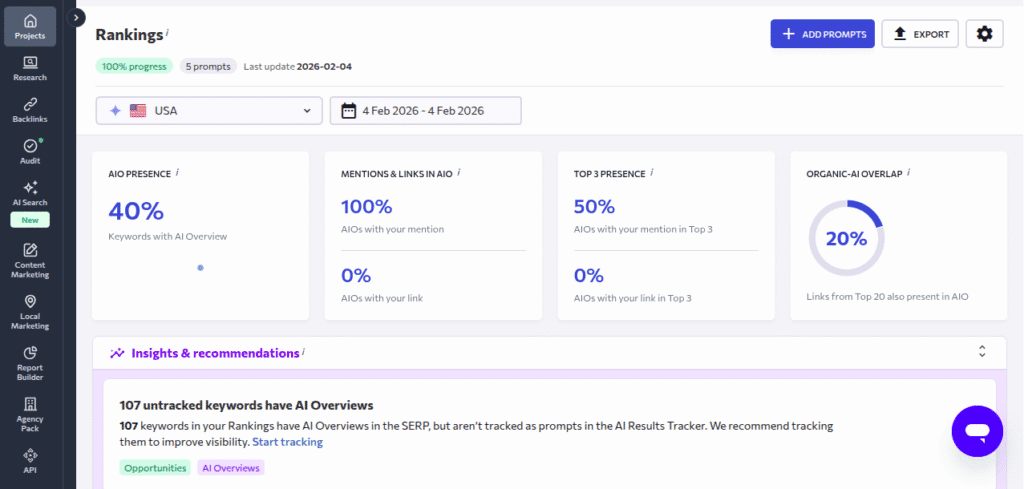
SE Ranking provides traditional SEO research and AI search rank tracking tools. The AI Search Toolkit allows users to track how often their brand is mentioned or linked to in AI Overviews and several other AI search engines.
Key Features:
- Dashboard With Historical Data And Regular Updates: Access data on historical trends in your brand’s core AIO visibility metrics and receive frequent updates.
- AI Search Competitors: View the list of competing links for each prompt you track.
- AI Search Sources: View the list of sources AI answers cite to analyze and improve GEO strategy.
- Cached AI Answers: View saved answers for tracked prompts to analyze the context your brand appears in.
- Competitor Analysis: Analyze competitors’ AI visibility and view the prompts they rank for, alongside wtih traditional SEO metrics.
- Multiple AI Engines: SE Ranking tracks AI Overviews, AI Mode, ChatGPT, Perplexity, and Gemini.
Cons:
- Limited Reporting Features: SE Ranking provides few reporting features. For now, users can export AI rank tracking data and share dashboards with guest links.
- Lack of Sentiment Analysis: The only way to understand the context in which your brand appears is to go through cached responses manually.
Review: SE Ranking is a good choice for teams that need deep AI search tracking and tracking combined with traditional SEO capabilities. It provides visibility tracking in all aspects of modern search and gives access to competitor analytics.
2. Wellows
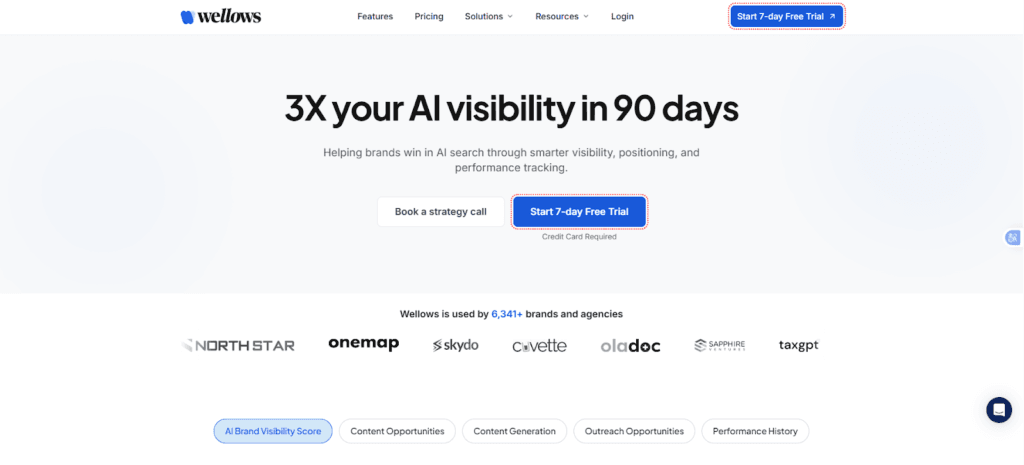
Wellows helps brands win in AI search through smarter visibility, positioning, and performance tracking. It uses the AI Brand Visibility Score to show how often clients, brands, and products appear in AI responses across ChatGPT, Gemini, Perplexity, AI Overviews, and AI Mode. From there, Wellows turns insights into action with Prompt-Level Competitive Insights, Content Opportunities, Content Generation, and Outreach Opportunities. Progress is tracked over time with Performance History and Daily Monitoring, making it easier to measure wins and scale what works.
Key Features:
- AI Brand Visibility Score: See how often clients, brands, and products appear in AI responses and compare presence over time.
- Unified Client Visibility Tracking: Track AI Visibility Score, citations, and Brand Sentiment Analysis across AI platforms from one dashboard.
- Prompt-Level Competitive Insights: See which prompts mention clients, where competitors appear, and how positioning shifts over time.
- Content Opportunities: Turn visibility gaps into actionable content creation workflows for AI search.
- Content Generation: Create AI-optimized content from opportunities in minutes (plan-based limits).
- Outreach Opportunities: Discover and execute data-driven outreach for AI citations with Unlimited Outreach (Implicit) Opportunities and Unlimited Explicit (Content) Opportunities.
- Performance History + Daily Monitoring: Monitor daily performance, keep all-time history, and scale AI visibility wins with confidence.
- GSC Integration: Connect Google Search Console to strengthen measurement and reporting.
Cons:
- Plan-based limits: Prompts Tracked, Responses Analyzed, and Content Generation increase by tier (Lite → Pro).
- Credit Card Required: The 7-day free trial requires payment details.
Review:
Wellows is best for teams that want a clear system for improving AI visibility, not just checking metrics. It makes visibility easy to understand with the AI Brand Visibility Score, then supports execution using Content Opportunities, Content Generation, and Outreach Opportunities focused on earning AI citations. The combination of Performance History, Daily Monitoring, and Brand Sentiment Analysis helps teams validate what changed and why. For agencies, Unified Client Visibility Tracking and Client-Ready Reporting make it easier to communicate progress and retain clients with confidence.
3. Rankscale
Rankscale positions itself as a GEO (Generative Engine Optimization) platform built for today’s AI-driven search reality. Instead of focusing only on traditional SERP rankings, it tracks where and how often your domain (and competitor domains) appear across multiple AI-powered engines and AI Overviews.

Key Features:
- Dashboards for AI Visibility Over Time: You get a consolidated brand dashboard with visibility KPIs, trend lines, performance over time, and breakdown by engine/topic.
- Citation/Domain Analysis: It shows which domains are being cited, which is essential when you care about being credited by AI Overviews.
- Competitor Benchmarking: You can compare your brand’s AI visibility against competitors, and use AI-readiness audits to identify areas to improve.
- Multi-Engine Coverage: Because it tracks AI Overviews, plus major LLM-based engines, it gives a broader view of where your content may appear in AI answers.
Cons:
- Low Credit: It’s wise to test with a smaller set first, to gauge real usage/cost before scaling.
- Basic Plan: If you need complex reporting, Rankscale’s lower tiers might feel a bit basic.
Review: Rankscale stands out as one of the first tools tailored for the AI-search era. If you accept that AI outputs are fluid and treat your data as visibility signals, it gives you a much clearer window into AI-powered search presence than any traditional SEO tracker.
4. Otterly.AI
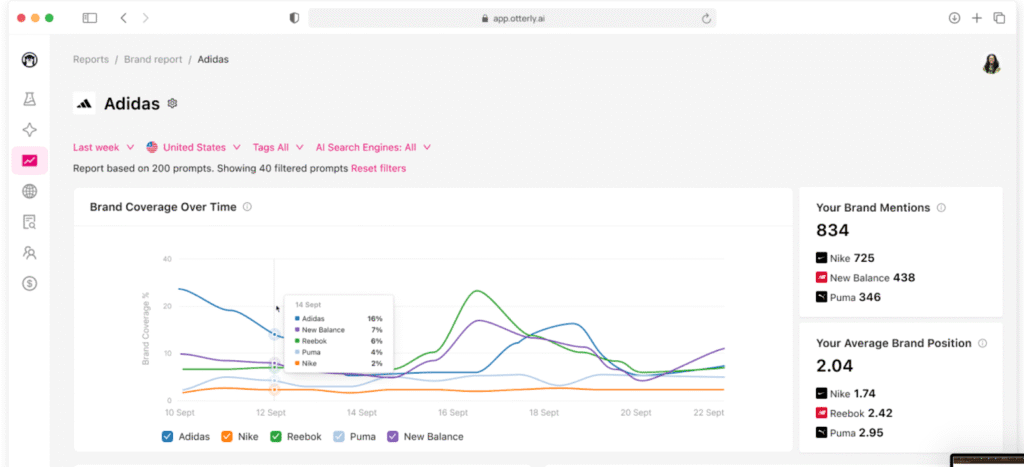
If Rankscale is more SEO-oriented, Otterly.AI is very much built for brand and content teams. Instead of only tracking whether your website appears in AI assistant answers, Otterly goes deeper into how your brand is being talked about. For teams managing brand reputation across multiple platforms, this kind of sentiment-level visibility can be a game-changer.
Key Features:
- Tracks Prompts, Brand Mentions: Otterly doesn’t just track appearances; it tells you tone, sentiment, and context.
- Citations & Mapping: Helpful for content teams who want to know who’s dominating the AI narrative and why.
- Automated Dashboards & Reporting: You get clean, executive-friendly dashboards showing brand visibility across multiple LLMs.
- Deep Semrush Integration: If you already use Semrush for keyword tracking, audits, and reporting, Otterly gives you AI visibility as a natural extension of your current workflow.
Cons:
- Not Designed for Hardcore SEO: If your primary focus is keyword ranking, SERP movement or technical SEO visibility, Otterly might feel too brand-focused.
- Pricing Scales Quickly: The pricing suits mid-sized or enterprise teams more than solo SEOs.
Review: Otterly.AI is one of the best tools for brand teams that treat AI assistants as a new digital touchpoint. If your marketing stack already revolves around Semrush, Otterly becomes a no-brainer. But if you’re a technical SEO looking for deep ranking metrics, you may prefer a more SEO-heavy AI tracker.
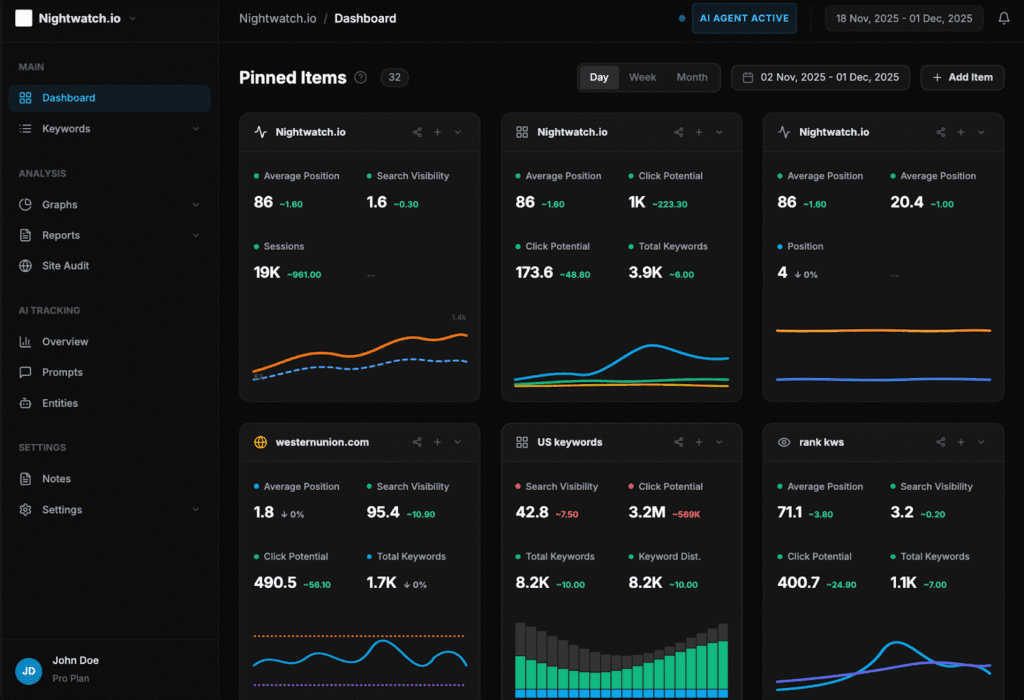
5. Nightwatch
Nightwatch brings together traditional rank tracking and cutting-edge AI visibility under one roof. Its core strength lies in its robust, highly granular tracking across geographies, devices, search engines, paired with newer “AI-layer” insights that help you monitor how you might be showing up in AI-powered results.
Key Features:
- Comprehensive, Precise Rank Tracking: You can track keyword rankings across multiple search engines, devices, and literally down to city/ZIP-code or geo location level.
- SERP-Feature & Multi-Engine Support: Not just organic rank positions, Nightwatch tracks SERP features, which gives more context to visibility beyond basic ranking data.
- AI-Ready Layer: Nightwatch also offers AI/LLM tracking, combining both classic and modern SEO visibility metrics side by side.
- Reporting & Auditing Tools: Built-in site audits, competitor tracking, keyword discovery, and reporting features make it an all-in-one suite, not just for rank tracking but for full SEO monitoring.
Cons:
- Not a Full-Content or Ad-Suite: While great for SEO/ranking, it doesn’t replace full content planning, paid-ads management, or deep keyword-research suites.
- Complexity & Learning Curve: Because the tool is feature-rich, beginners or solo bloggers may find it overwhelming to set up and interpret data properly.
Review: If you’re serious about SEO, especially across multiple regions, devices, and search engines, and want a single tool that grows with your needs, Nightwatch is among the best choices in 2025.
6. RankRaven
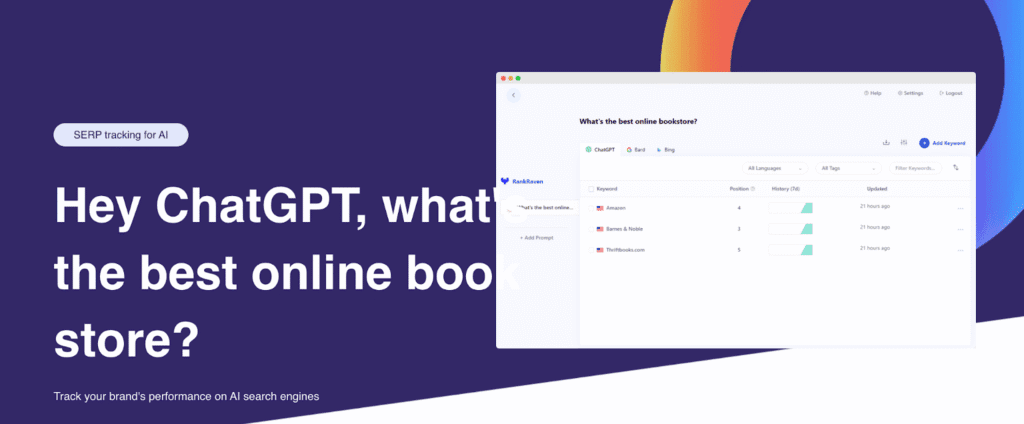
If you want a tool dedicated to AI-search visibility, not traditional SERPs, RankRaven does exactly that. It runs your prompts daily, checks AI model answers, and tracks whether your brand, keywords or competitor names show up. This makes it ideal for content/marketing teams who want consistent, automated monitoring of how they appear inside AI-powered search/answer engines.
Key Features:
- Daily AI-Model Checks: RankRaven automatically reruns all your saved prompts every day and sends notifications if there are changes in ranking/mentions.
- Support for Multiple AI Models: Instead of being limited to one engine, you can track across several, giving broader coverage of AI-search behavior.
- Unlimited Keywords: Even basic plans allow unlimited monitored keywords, which is good for tracking multiple brand names, products, or competitors.
- Competitive Insights & Trend Analysis: You get visual charts of rank history, visibility trends over time, and the ability to compare against competitor keywords.
Cons:
- Dependent on AI Model Volatility: Since AI outputs can change, rankings or mentions may fluctuate day to day.
- Prompt-Based Tracking May Miss Context: Because tracking depends on your exact prompts/workflows, slight variations in phrasing or user query different may yield different AI-search results.
Review: RankRaven is one of the strongest picks for 2025 if your main goal is visibility inside AI-powered search/generative answer engines. It works especially well for brands, agencies, or marketers focused on prompt-based performance, brand mentions, and daily tracking across multiple AI models.
7. Knowatoa
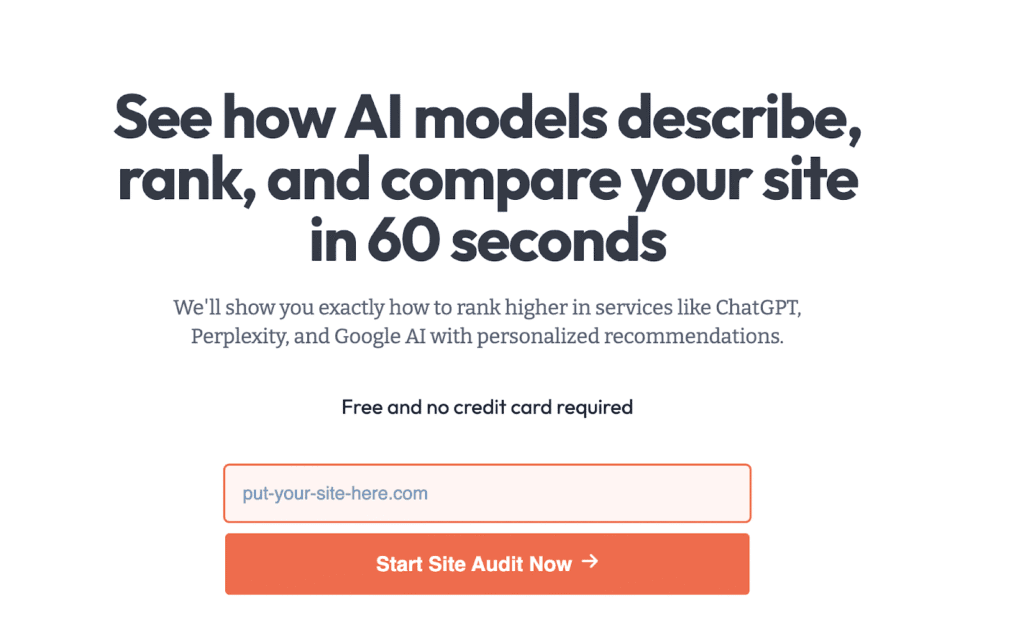
Knowatoa is built for brand visibility, content-gap detection, and strategic positioning inside AI-driven search. If you want to know how AI engines mention your brand, Knowatoa gives you that broader perspective.
Key Features:
- Daily Automated Tracking Across AI Platforms: Knowtoa runs daily checks across multiple AI search engines and gives you real-time visibility of when and how your brand/content gets surfaced.
- Content Gap Analysis: You can spot where competitors show up for questions you don’t, and which questions or prompts trigger AI responses with competitor content.
- Citation & Source-Opportunity Mapping: Knowatoa surfaces which sources or domains get cited frequently by AI engines. That helps you understand what kind of content tends to get picked up by AI.
- Brand & Sentiment Monitoring: Given AI outputs can sometimes misrepresent or describe brands incorrectly, Knowatoa helps you track how your brand is being described, its sentiment, and whether descriptions remain accurate.
Cons:
- May Lack Deep Technical SEO Features: If you want traditional SEO metrics, Knowtoa doesn’t replace a full SEO suite.
- Potential Variability Due to AI Model Instability: AI search engines’ results may shift unpredictably, which means mentions/visibility can fluctuate.
Review: Knowatoa stands out in 2025 as one of the more balanced, forward-looking AI-search monitoring tools. If you want to understand how AI models view your brand, which content gaps to fill, and how to optimize for AI-driven visibility, Knowatoa is a strong, strategic choice.
8. ZipTie.dev
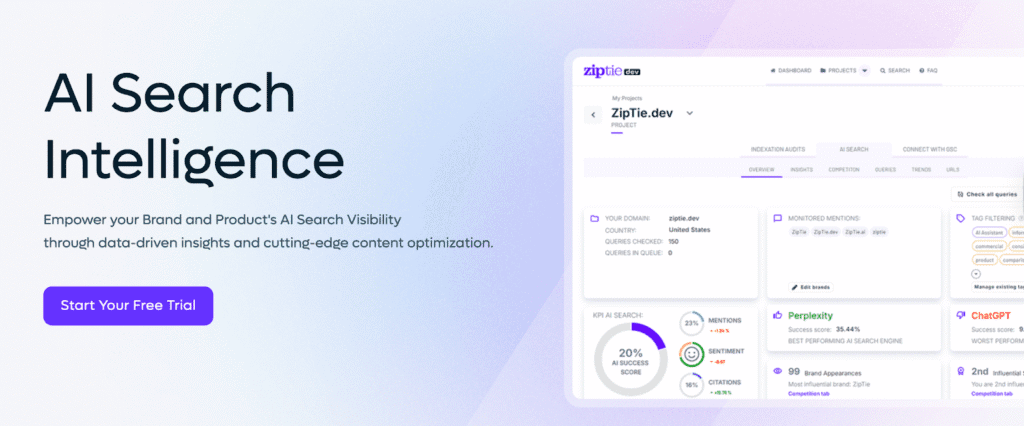
ZipTie.dev was built with a more “technical/developer-first” mindset, which means it doesn’t just track whether you show up in AI outputs, but offers granular analytics, automated query management, and content-level insight that helps you understand why AI shows what it shows.
Key Features:
- Comprehensive AI-Search Monitoring: ZipTie tracks across multiple AI platforms and assigns you an “AI Success Score,” a metric that reflects mentions, citations, and overall AI visibility.
- Flexible Query/Prompt Generator: You can paste in your own list of queries or let ZipTie auto-generate queries based on your site or niche.
- Deep, Query-Level & URL-Level Analytics: You get per-query data, which of your pages are used as sources, and which URLs perform the best.
- Content Optimization Module: ZipTie also suggests what to do next based on gaps or weak visibility. It flags queries/pages for optimization accordingly.
Cons:
- Limited to Certain AI Platforms: If you want coverage for every emerging AI engine, you might need to supplement with other tools.
- Potential Complex: Because of its depth, it might feel heavy for small sites or solo bloggers who just need quick visibility checks.
Review: ZipTie.dev is a developer-first, deeply analytical AI visibility tool. If your website or brand has lots of content, a complex structure, or you care about long-term AI visibility, ZipTie is one of the most powerful tools in 2025.
9. Hall
Hall is built as a full-fledged AI-visibility and monitoring platform. It’s especially useful if you want visibility across many AI platforms and need a tool that scales with your business and brand needs. The tool is about tracking brand presence, citations, sentiment and how AI agents refer to your site.

Key Features:
- Agent Analytics: Hall tracks how autonomous AI agents or crawlers are interacting with your website, giving you visibility into AI crawling behavior.
- Conversational Commerce: For businesses with products/services, Hall claims to track when your products are being recommended by AI in commerce-related queries.
- Cross-AI Coverage: Because it supports almost all major AI engines, you get a broad view of how different AI systems treat your brand.
- Free Trial: Hall offers a free run, so you can test AI visibility without heavy upfront cost.
Cons:
- Can Feel Overwhelming: Hall’s feature set can be an overkill if your site is small or you only care about a few keywords.
- May Require Active Monitoring: To get benefit, you’ll need to track reports, update content, optimize structure, and possibly coordinate dev, content and marketing teams.
Review: Hall is especially valuable if you run a brand, product-based business, or agency that needs to monitor how your presence evolves in AI-driven search. It is ideal if you treat AI search as a key channel, care about brand citations, reputation, product recommendations, and want full coverage across multiple AI engines.
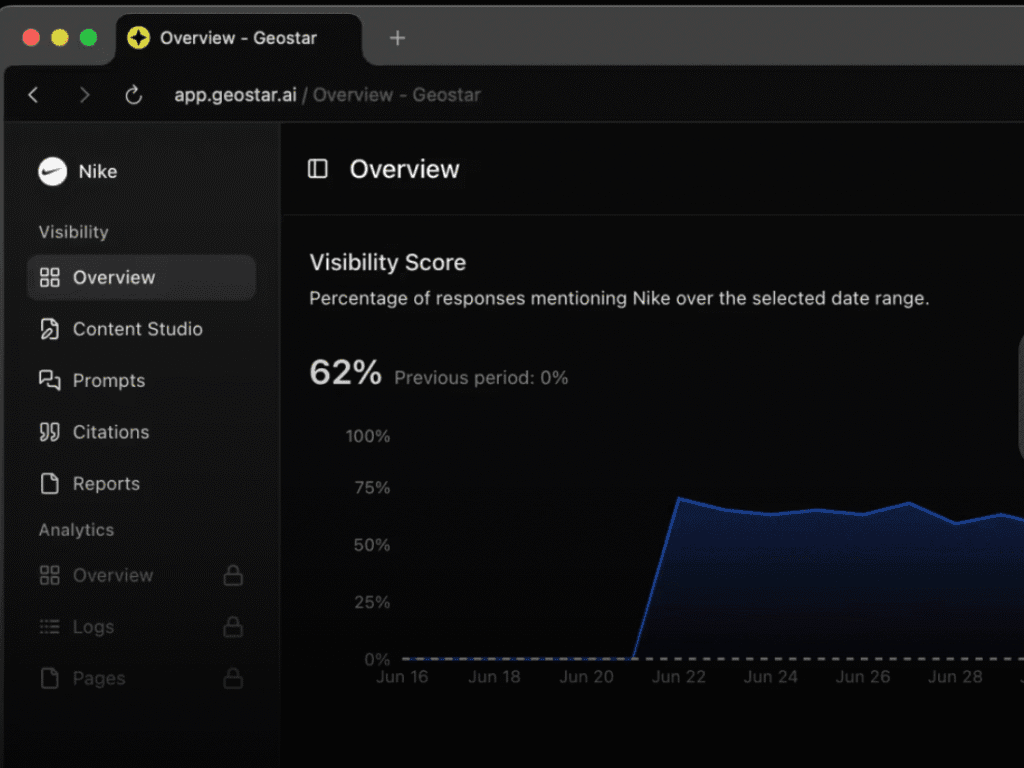
10. Geostar
Geostar is built around the modern reality of generative search, aiming to give brands actionable insights on how AI engines and bots see, crawl, and cite your content. It treats AI visibility as a first-class metric and gives tools to optimize for it.
Key Features:
- Citation Source Tracking: Geostar shows which specific URLs, studies or sources AI models draw from when they mention your brand.
- Competitor-Visibility: You can see where competitors get cited when you don’t, identifying missed opportunities.
- Sentiment & Context Analysis: Geostar also tracks how your brand is being mentioned in terms of tone, context, and framing.
- GEO-First Focus: Geostar positions itself squarely as a player in the emerging paradigm of Generative Engine Optimization.
Cons:
- Pricing is High: Cost may feel steep if you don’t operate at enterprise scale.
- Value Proportionate to Scale: If your site is small or the content is limited, you might not extract the full ROI.
Review: Geostar is one of the strongest, most complete GEO platforms available in 2025. It isn’t cheap, but it delivers data-driven AI visibility intelligence that can help brands not just appear in AI-search results, but get cited and trusted by generative engines.
11. Peec AI
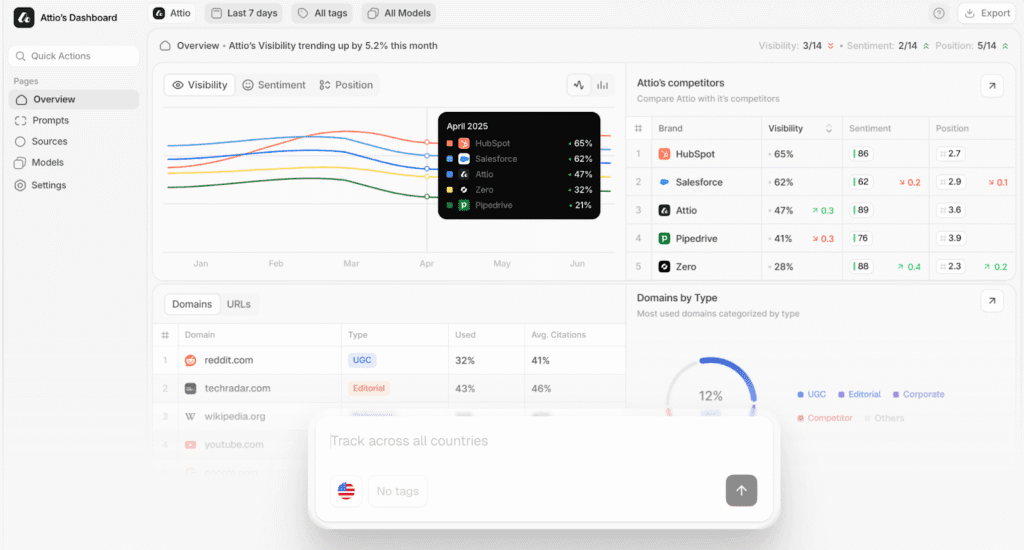
Peec AI is one of the strongest brands & AI-visibility trackers available in 2025, especially if you run a site with some existing presence, want to see how AI engines treat you, and care about brand perception and citations in generative search.
Key Features:
- Prompt-Based Tracking: You can monitor a curated set of prompts across multiple AI engines.
- Citation & Brand-Mention Analytics: Peec AI surfaces which content is being cited by AI engines, how often, and allows you to see how you stack up against competitors.
- Growing Credibility: Peec AI takes compliance and privacy seriously, useful when operating in GDPR regions.
- AI-Perception Tracking: Peec AI gives you data on tone, sentiment, and context of mentions.
Cons:
- No Built-In Content Improvement: Peec AI shows where you stand, but it doesn’t automatically tell you how to improve rankings or citations.
- Potentially Limited Prompt: Starter plans track a limited number of prompts/AI answers.
Review: Peec AI works best as a complement to classic SEO, giving the how AI sees us dimension alongside backlinks, SERPs, and traffic data. Peec AI gives you the map and compass, but you have to chart the route and walk it.
Whether you choose a lightweight tracker like Rankscale or RankRaven, a brand-focused platform like Otterly or Peec AI, or a full GEO suite like Geostar or Hall, the goal is the same: to make sure AI engines understand your brand the way you want your customers to understand it.
If you use these tools well, AI search stops being a black box and starts becoming a competitive advantage. Because once you know how AI describes you, you can start shaping that narrative intentionally.
And in 2025 and beyond, that might be the most important ranking factor of all.
If you want more AI-driven insights, read our other blogs:
- Best AI Sentiment Analysis Tools in 2025
- 10 AI Email Marketing Tools to Use in 2025
- Best AI Tools for UX Design
FAQs
Classic SEO tracks where your pages rank in SERPs (positions, snippets, traffic). AI visibility tracks how AI engines describe, cite, and reference your brand inside AI Overviews, ChatGPT answers, Perplexity responses, and other LLM outputs.
Most brands start with 25-50 prompts covering problem queries, category queries, and brand/competitor prompts. Larger sites or enterprises often track 100-300 prompts for full coverage.
The most useful AI-visibility KPIs are:
– Citation Share (how often you’re linked vs competitors)
– AI Share of Voice (visibility across engines)
– Primary vs Secondary Citation Position
– Sentiment/Tone of Mentions
– Prompt Coverage (how many key prompts you appear in)
– Page-Level Citations (which URLs get referenced)
A strong footprint means:
– You appear in most of your key prompts
– You are cited as a primary source
– Your pages are referenced consistently across multiple AI engines
– Sentiment and tone are positive
– Competitors aren’t dominating category prompts
– Your content shows up in both broad and long-tail queries
Disclosure – This post contains some sponsored links and some affiliate links, and we may earn a commission when you click on the links at no additional cost to you.