As social media platforms get more crowded and attention spans get shorter, creating authentic, scroll-stopping ads consistently can feel overwhelming. That’s where AI UGC ad generators come in.
These tools help brands produce realistic, creator-style video ads in minutes. In this article, we’ll explore the best AI UGC ad generators, how they work, and how to choose the right one for your marketing goals.
What is an AI UGC Ads Generator?
An AI UGC ads generator is a tool that helps brands create user-generated content-style video ads without relying on real creators or time-consuming shoots. These platforms use artificial intelligence to produce ad-ready videos in minutes.
Most AI UGC ad generators combine a few key capabilities:
- AI Avatars or AI Actors: These are realistic, human-like presenters who deliver your message on camera.
- Script Generation: The tool helps write ad scripts designed to grab attention, highlight problems, and present your product as the solution.
- Native Vertical Formats: Videos are created in social-first formats, optimized for platforms like Instagram Reels, TikTok, and YouTube Shorts.
- Ad-Optimized Voice, Captions, & Pacing: From voiceovers to on-screen text, everything is structured to match how high-performing ads are typically consumed.
What Makes AI UGC Ads Work in 2026?
Here’s what makes AI-generated UGC ads effective right now:
- Creator-First: High-performing ads look like something a real creator would post, not a scripted commercial.
- Scripts Designed for Native Platforms: AI tools now generate scripts that follow the natural flow of platforms like TikTok, Reels, and Shorts.
- Human-Like: Advances in AI avatars and voice technology mean expressions, tone, and timing feel natural, making ads easier to watch and relate to.
- Fast Variant Generation for Testing: Instead of relying on one “perfect” creative, marketers can generate multiple versions quickly and test what actually works.
- Speed Over Perfection: Getting content live and iterating fast matters more than endlessly polishing a single asset.
Who Uses AI UGC Ad Tools?
Here are some of the most common users:
DTC and E-Commerce Brands
These brands rely heavily on fresh ad creatives to drive conversions. AI UGC tools help them produce multiple product-focused videos without constant creator sourcing.
Performance Marketers & Growth Teams
For teams focused on ROAS and experimentation, the ability to generate and test ad variations quickly is a major advantage.
Agencies Managing Paid Social for Multiple Clients
AI UGC platforms allow agencies to scale creative production across accounts without increasing production costs or turnaround times.
SaaS Brands Exploring Short-Form Ads
Many SaaS companies are now testing TikTok and Reels-style ads. AI UGC tools make it easier to experiment without investing in full video shoots.
Founders Testing MVP Messaging
Early-stage founders use these tools to validate positioning, hooks, and value propositions before committing to larger marketing spends.
Comparison Table of Best AI UGC Ads Generators
| Tool | Best For | UGC-Focused Features | Ease of Use |
| Creatify | Fast product-to-ad automation | URL-to-video, batch variants, avatars, trend insights | 4/5 |
| AdCreative.ai | All-around ad generation | UGC videos + banners, predictive scoring | 4/5 |
| HeyGen | Realistic AI avatars & multi-language videos | Strong avatar library, text-to-video | 4/5 |
| Synthesia | Professional presentations & talking heads | Large avatar library, localization | 4/5 |
| Veed | Flexible editing + AI UGC clips | Smart captions, templates, text-to-speech | 4/5 |
| CapCut | Free tool with wide accessibility | Instant AI videos, templates, captions | 3/5 |
Best AI UGC Ads Generators
1. Creatify
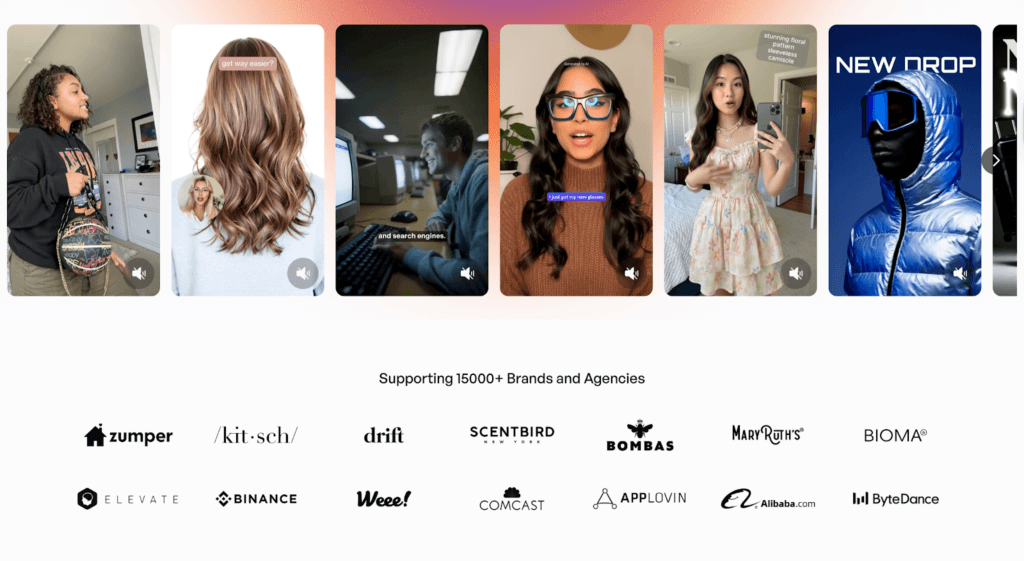
If you’re a marketer or brand that wants scroll-stopping UGC-style ads without repeatedly setting up shoots or recruiting creators, Creatofy is one of the most popular AI UGC ad generators in 2026. What sets it apart is how quickly you can go from product link to ready-to-run video creatives, often in just minutes.
Key Features:
- URL-to-Video Automation: Simply paste a product page link, and Creatify uses AI to generate multiple video ad variations you can export or post.
- AI Avatars & Script Generation: Choose from hundreds of realistic AI avatars and let the platform write and deliver on-screen scripts tailored for social formats.
- Batch & Variation Mode: Create 50+ ad variants at once for rapid A/B testing across TikTok, Reels, Shorts, and more.
- Multilingual Support: Generate video ads in multiple languages with voiceovers and captions built in.
- Creative Insights & Trends: Some plans include trend libraries and ad intelligence to help you spot formats that are currently performing well.
Cons:
- Credit Limits: The free tier gives you limited credits and ads per month, so you may need a paid plan to scale.
- Customization Can Feel Basic: While it’s fast, deep custom edits aren’t as flexible as manual editing tools.
Review: Creatify is easy, fast, and efficient, making UGC ad creation a go-to thing. Even non-designers can produce quality ads without huge budgets. However, there can be occasional rendering glitches and credit-based limitations on the free plan.
2. AdCreative.ai
AdCreative.ai is one of the more established AI ad creative platforms in 2026, known for helping marketers generate not just banners and display ads but also UGC-style videos from simple inputs like product images and prompts. It gives teams a fast, data-powered way to produce ad assets that are ready to test across social platforms.

Key Features:
- UGC-Style Video Generation: Upload product photos, choose an avatar and prompt, and the AI produces your video.
- Multi-Format Ad Support: Beyond UGC videos, the platform creates ad banners, social videos, and conversion-focused visuals.
- Predictive Creative Scoring: The AI evaluates and predicts how well your creatives might perform, giving you a head start on test optimization.
- BrandKit & Templates: You can upload logos, brand colors, and fonts once, and the system applies them automatically to maintain visual identity across assets.
- Competitor Insights & Analytics: Some plans provide insights into what’s working in your niche, helping guide creative decisions.
Cons:
- Needs Strong Inputs for Great Outputs: The output quality may lean heavily on the prompts and images you provide.
- Credit-Based Exports: You can generate unlimited creatives, but downloading or exporting them often uses monthly credits.
Review: AdCreative.ai streamlines the end-to-end creative process without needing design expertise. The best bit is that it combines script/copy generation, visuals, and predictive scoring in one place. At the same time, there can also be an associated learning curve around scripting prompts and managing credits for high-volume usage.
3. HeyGen
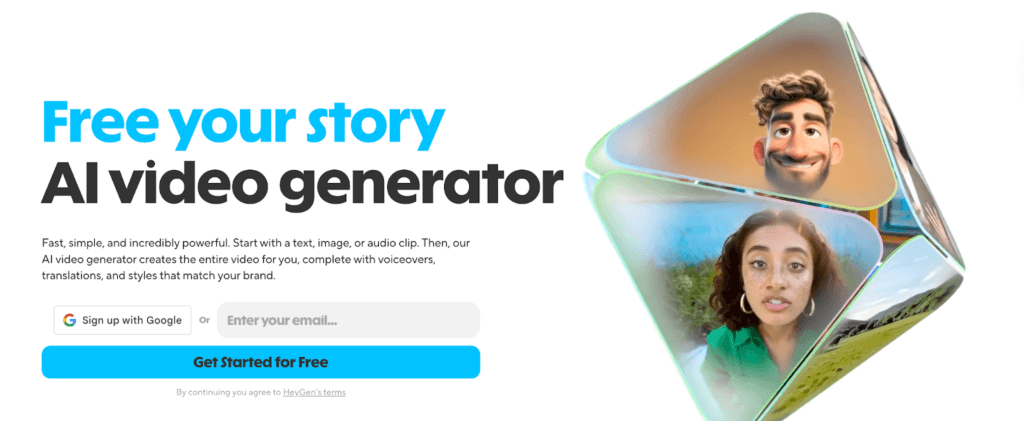
HeyGen is an all-purpose AI video generator that brands increasingly use to create UGC-style ad clips, testimonial videos, product explainers, and social content without cameras, actors, or traditional editing workflows. It’s built around realistic AI avatars, multilingual voiceovers, and text-to-video creation.
Key Features:
- AI UGC & Testimonial Video Creation: Generate native-looking UGC ads, product demos, and testimonial clips using likelike AI avatars that speak yor script.
- Text-to-Video Workflow: Simply paste your script, pick an avatar and voice, and HeyGen produces a complete video.
- Rich Avatar Library & Customization: Choose from hundreds of avatars or upload your own, customize voices, facial expressions, and even gestures to match your creative vision.
- Multilingual Voiceovers & Translation: Create videos in many languages or translate existing content while preserving lip sync and pacing.
- Ad-Ready Outputs with Captions: Export videos with auto-generated captions, pacing, and formats primed for platforms like TikTok, Reels, and Shorts.
Cons:
- Voice & Avatar Quirks: Speech patterns or lip sync can feel unnatural in certain languages or longer scripts.
- Broad Toolset, Less UGC-Focused: HeyGen aims to be a multipurpose video engine, which can make it feel more genralized than specialized for social-native ads.
Review: HeyGen makes video creation fast and accessible, especially for teams without production experience. The intuitive interface, diverse avatar options, and multilingual support stand out. At the same time, there can be limitations in deep social-native ad customization and occasional unnatural voice moments in certain languages.
4. Synthesia
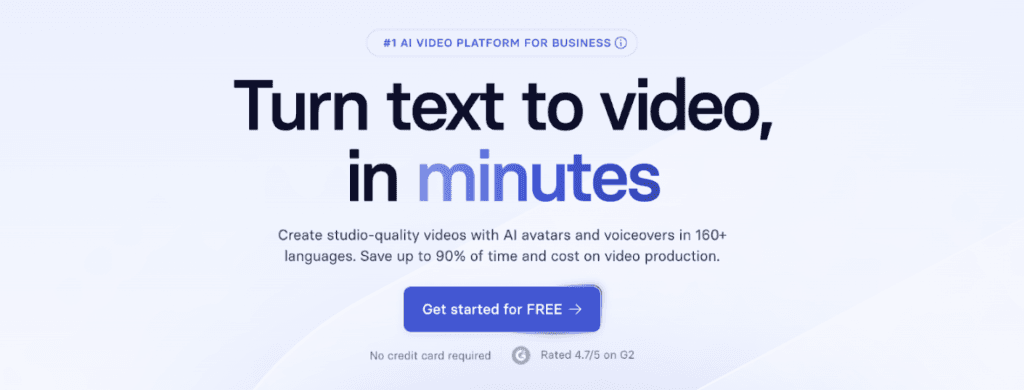
Synthesia is used by thousands of teams to turn text, scripts, or prompts into professional videos with lifelike AI avatars and voiceovers. While it isn’t exclusively built as a UGC-specific tool, marketers can use it to create UGC-style ads, thanks to its flexible text-to-video workflow and realistic avatar capabilities.
Key Features:
- Text-to-Video Creation: Turn simple scripts, documents, or text prompts into full videos.
- 240+ AI Avatars in 160+ Languages: Pick from a large library of diverse AI presenters to match your brand’s voice or audience style.
- Custom Digital Avatars: You can even create a digital version of yourself from a few short clips and use it repeatedly in videos.
- Auto Captions: Videos can auto-generate captions and be localized to different languages with consistent lip sync.
- Templates and Simple Editor: It includes templates and an intuitive editor that makes tweaking layouts, backgrounds and visuals easier.
Cons:
- Less UGC-Specialized: Synthesia doesn’t automatically generate native TikTok-style UGC ads as some dedicated tools do.
- Avatar Realism Varies: The avatar delivery can still feel a bit artificial compared with real creator footage.
Review: Synthesia makes video creation dramatically faster than traditional production. The platform is relatively easy to learn and powerful for scripted ads, onboarding videos, or explanatory clips. However, it can be more expensive and less specialized for scroll-native UGC formats.
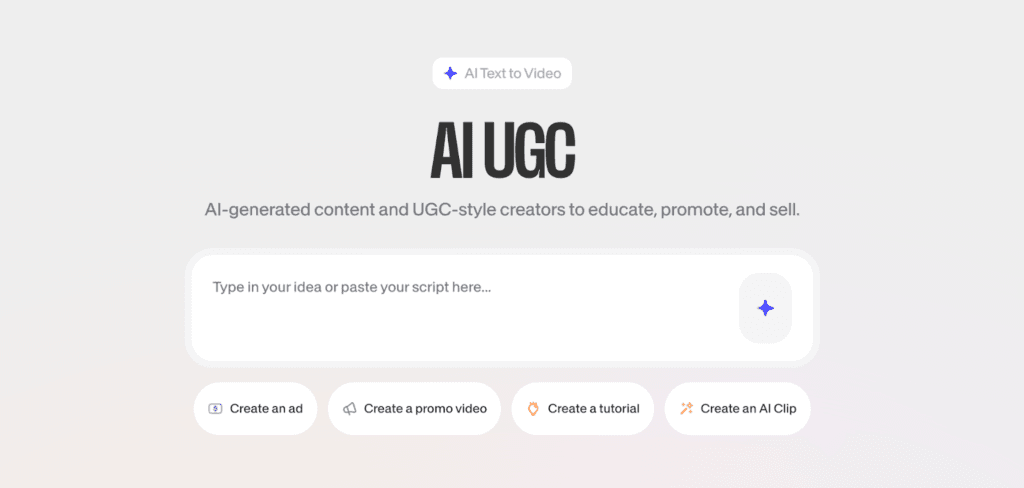
5. Veed
Veed has grown into a full-featured AI video creation platform. While it’s known for editing, captioning, and social-friendly templates, Veed also offers AI-powered UGC ad creation tools that help marketers produce native-looking social videos quickly.
Key Features:
- AI-UGC-Focused Video Generation: Turn scripts, briefs, or product details into scroll-ready UGC-style clips.
- Smart Captioning and Subtitles: Auto-generated captions with easy editing help your ads stay on point even when people watch without sound.
- Template Library for Social Formats: Choose from vertical-first templates optimized for engagement, with drag-and-drop editing if needed.
- AI Text-to-Speech and Voiceovers: Add voice-narrated scripts using built-in AI voices, choose accents or tones to match your audience.
- Easy Export & Platform Presets: Download finished videos in sizes and formats ready for paid social, organic, feeds, or ad testing.
Cons:
- Free Plan Limitations: The free tier includes Veed branding on exports and caps on export length.
- Advanced Editing Can Be Manual: Deeper tweaks sometimes require manual editing in the editor.
Review: The UGC video features, combined with strong captioning and templates, make it a go-to choice for marketers who want both creative content and automation. Dedicated UGC ad tools can still outpace Veed when it comes to native performance-focused generation, but Veed’s flexibility and all-in-one editor are major pluses.
6. CapCut
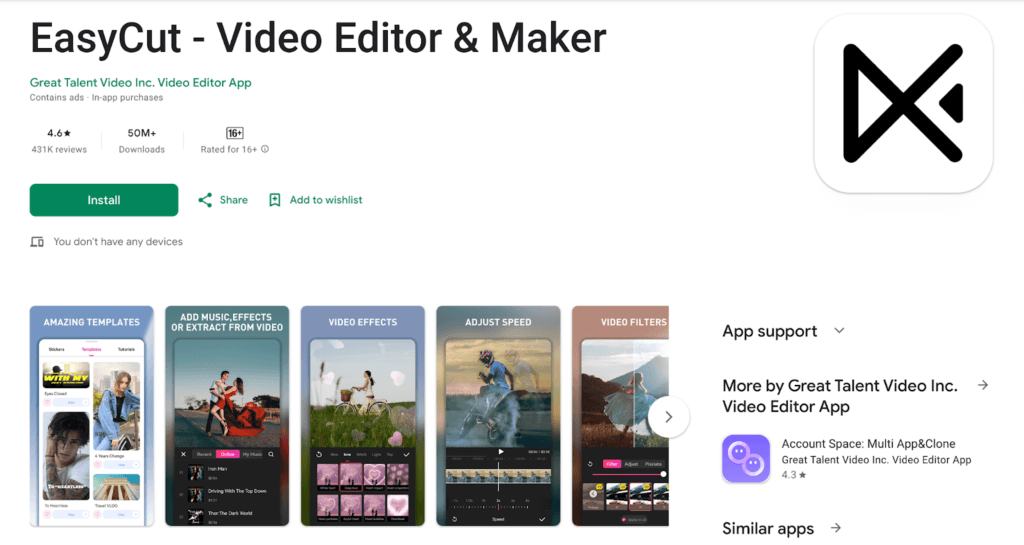
CapCut started out as a simple video editor, but in 2026, it’s also widely used by marketers and creators to generate AI-enhanced UGC-style videos and ad content without a traditional production workflow. CapCut’s AI tools make video production more accessible, especially if you’re on a budget.
Key Features:
- Instant AI Video Generation: CapCut can turn your text prompts and scripts into complete videos in minutes, handling visuals, pacing, and transitions automatically.
- AI Avatars & Templates: Choose from a library of avatars and ready-made templates.
- Smart AI Scripting Tools: Built-in AI can help brainstorm topics, write scripts, and suggest story structures.
- Voiceovers, Captions, and Translation: Automatically generate voice narration, subtitles, and multilingual captions to make your ads more accessible and engaging.
- Free and Cross-Platform: Available on mobile, desktop, and web, CapCut gives you the flexibility to design, edit, and export.
Cons:
- Not Solely Focused on Ads: While it can produce UGC ads, it’s not as tailor-made for ad generation as some dedicated platforms.
- Manual Tweaks May Still Be Needed: Deeper edits or creative refinements often require hands-on work within the editor.
Review: CapCut removes the need for expensive production tools or editing skills, making it easy to generate engaging vertical-first UGC videos quickly. You’ll enjoy the built-in AI brainstorming, scripts, and captions, though hybrid workflows (AI + manual editing) often yield the best results.
How to Choose the Right AI UGC Ads Generator
| Questions to Ask | If Your Answer Is… | What to Look For in a Tool |
| Do you want raw UGC or polished creator-style ads? | Raw, organic, creator-shot feel | Casual avatars, minimal editing, TikTok-native pacing |
| Polished but still human | Structured scripts, clean visuals, brand controls | |
| Are you testing hooks or scaling winners? | Testing hooks & angles | Structured scripts, clean visuals, brand controls |
| Scaling proven ads | Fast script generation, bulk variants, quick exports | |
| Is this for e-commerce, SaaS, or services? | E-commerce | Product-first visuals, URL-to-video, multiple CTAs |
| SaaS | Talking-head explainers, clarity-driven scripts | |
| Services | Testimonial-style videos, trust-focused delivery | |
| Do you need avatars, or just structure and editing? | Need on-screen faces | Realistic AI avatars, voice sync, expressions |
| Editing + structure only | Strong templates, captions, pacing tools | |
| How many variants do you need per week? | A few high-quality creatives | Deeper customization, manual fine-tuning |
| Dozens of test creatives | Bulk generation, automation, credit efficiency |
AI UGC Ads: What Actually Converts in 2026
| Ad Element | What It Looks Like in Practice | Why It Converts |
| Hook in the first 1.5 seconds | A bold statement, question, or visual interrupt right at the start | Stops the scroll before attention is lost |
| Problem-first storytelling | The ad opens with a pain point that the audience instantly relates to | Builds relevance and emotional connection |
| Casual, imperfect delivery | Slight pauses, natural tone, non-polished expressions | Feels creator-led and trustworthy, not “salesy” |
| Native captions | Large, on-screen text that highlights key phrases | Matches platform behavior where sound is often off |
| Clear but soft CTA | Simple prompts like “Try this,” “Check this out,” or “Here’s what worked for me” | Encourages action without breaking authenticity |
The real advantage of AI UGC ad generators isn’t perfection. It’s speed, flexibility, and the ability to iterate quickly. These tools help you stay agile in an increasingly competitive ad landscape.
The best results come from choosing a tool that matches your goals and using it to support strong storytelling fundamentals. When the hook is clear, the problem is relatable, and the delivery feels human, AI-generated UGC ads can convert just as effectively as creator-shot content.
Wanna read more about AI and its advancements in various industries? Check out these blogs:
- Best AI Tools for UX Design
- 10 AI Personalization Tools to Boost Customer Engagement
- Best AI Blogging Tools
FAQs
AI UGC ads can replace creators for testing, scaling, and performance-driven campaigns. However, many brands use a hybrid approach, combining AI-generated ads for experimentation with real content for brand-building and community trust.
A typical workflow starts with generating multiple hooks, turning them into short scripts, creating several AI UGC variants, and testing them quickly on paid platforms. Winning creatives are then refined, scaled, or recreated with real creators if needed.
Yes, as long as they follow standard ad policies. The key is to avoid misleading claims, deceptive practices, or impersonation, and to ensure the content feels transparent and authentic.
Performance often depends on execution. Well-made AI UGC ads can match or even outperform real UGC in early testing and iteration phases. Real creator content may still perform better for long-term trust and brand affinity, which is why many teams use AI for speed and creators for depth.
Disclosure – This post contains some sponsored links and some affiliate links, and we may earn a commission when you click on the links at no additional cost to you.