AI models need large and diverse datasets to learn patterns, understand information, and improve their performance. For some AI applications, web data can be an important source of this training material.
Collecting web data at scale can create challenges around IP restrictions, geographic access, request limits, and maintaining consistent sessions. Proxies can help address some of these challenges by routing collection requests through different IP addresses and locations.
The right proxy depends on the type of training data being collected, the websites being accessed, geographic requirements, and the scale of the data collection. Different proxy types and providers offer different levels of speed, location coverage, session control, and reliability.
In this guide, we’ll look at some of the best proxies for AI model training data and compare them based on their features, use cases, and suitability for large-scale data collection.
Quick Answer: Best Proxies for AI Model Training Data
| If you need… | Consider… |
| Cost-efficient proxy infrastructure | DataImpulse |
| Enterprise-scale data collection | Bright Data |
| High-volume, reliability-focused pipelines | Oxylabs |
| Multilingual and region-specific datasets | Decodo |
| Flexibility across different data sources | SOAX |
What Makes a Good Proxy for AI Model Training Data?
The right proxy for AI model training data depends on the scale, geography, and the type of websites being accessed. Key factors to consider include:
- Large IP pool: A larger pool of IP addresses can help support data collection at scale and reduce reliance on a small number of IPs.
- Geographic coverage: Broad location coverage is useful when building multilingual or region-specific datasets and collecting data from different markets.
- Residential/ISP options: Residential and ISP proxies can be useful when target websites restrict, rate-limit, or challenge requests coming from datacenter IPs.
- Rotation and sticky sessions: IP rotation can help with broad collection across large datasets, while sticky sessions are useful for workflows that require the same IP across multiple pages or requests.
- Scalability and concurrency: Providers should be able to handle a large number of simultaneous requests without significantly affecting performance.
- Pricing: Proxy costs can add up quickly when collecting large amounts of data, so bandwidth limits, per-request pricing, and overall usage costs are important to consider.
- Reliability: High success rates and stable connections matter when running large collection jobs, as failed requests can increase both processing time and proxy costs.
How We Compared These Model Training Data Proxies
| Criteria | What We Looked For |
| IP pool size | The size and diversity of the provider’s IP pool, particularly for large-scale data collection. |
| Geographic coverage | The number of countries, cities, and regions available for collecting location-specific or multilingual data. |
| Proxy types | Availability of residential, ISP, datacenter, and other proxy types for different collection requirements. |
| Rotation and sessions | Whether the provider supports automatic IP rotation, configurable rotations, and sticky sessions for session-dependent workflows. |
| Scalability and concurrency | The provider’s ability to handle high request volumes and concurrent connections during large-scale connection. |
| Reliability | Connection stability, success rates, uptime, and the provider’s ability to handle sustained collection workloads. |
| Data collection features | Tools and features that support web data collection, such as APIs, proxy management, targeting options, and usage controls. |
Best Proxies for AI Model Training Data: Comparison
| Provider | Best for | Geographic coverage | Key strength |
| DataImpulse | Cost-efficient large-scale collection | 195+ countries | Low pay-as-you-go pricing |
| Bright Data | Enterprise-scale data collection | Global | Large IP pool and data collection infrastructure |
| Oxylabs | Enterprise reliability | Global | Large-scale proxy infrastructure |
| Decodo | Multilingual datasets | 195+ countries | Geo-targeting and flexible sessions |
| SOAX | Mixed proxy requirements | Global | Broad proxy type selection |
Best Proxies for AI Model Training Data
| Table of Contents |
| 1. DataImpulse |
| 2. Bright Data |
| 3. Oxylabs |
| 4. Decodo |
| 5. SOAX |
1. DataImpulse
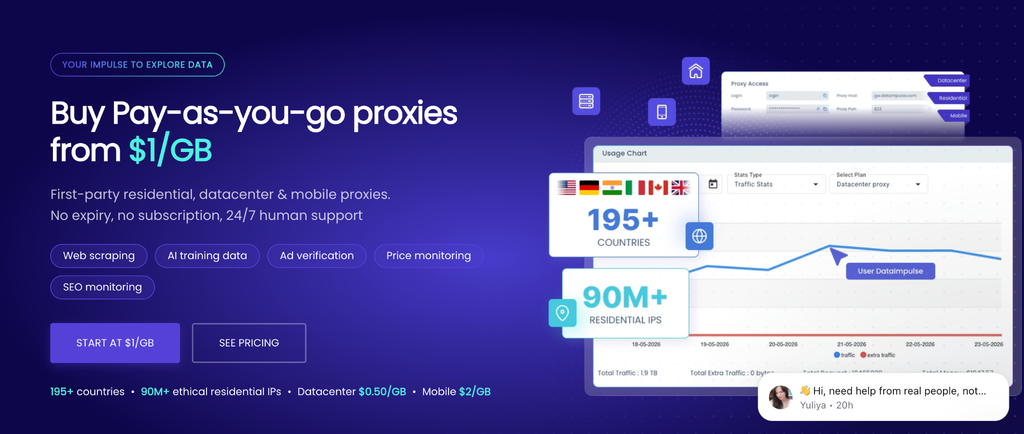
DataImpulse is a proxy provider suited to teams that want to build and manage their own AI training-data collection infrastructure. It offers residential, mobile, and datacenter proxies, with broad country coverage and flexible session controls. Its pay-as-you-go pricing can also make it useful for teams that want to scale proxy usage based on their actual data collection needs.
Key Features:
- DataImpulse offers different proxy types for teams with varying data collection requirements, from residential IPs to datacenter connections.
- Its residential network provides access to a broad pool of IP addresses across multiple countries, which can support large and geographically diverse datasets.
- Teams can use rotating IPs for broader collection or sticky sessions when multiple requests need to come from the same IP.
- The provider uses a PAYG pricing model, allowing teams to scale proxy usage based on their collection requirements rather than committing to a fixed volume.
- Support for multiple proxy protocols makes it easier to integrate DataImpulse with different scraping tools, crawlers, and custom data collection setups.
Why Choose DataImpulse?
DataImpulse can be a practical option for teams handling their own AI training-data collection workflows and looking for flexible proxy infrastructure. Its residential network and broad geographic coverage can support datasets that require requests from different countries or locations, while rotating and sticky sessions give teams more control over how connections are maintained.
The pay-as-you-go model is another advantage for teams whose proxy requirements change between projects or collection volumes. They can increase or reduce usage as their data collection needs change without relying on a fixed proxy allocation.
Its support for multiple proxy protocols also gives development teams flexibility when integrating proxies into their own crawlers, scrapers, or data pipelines.
The main limitation is that DataImpulse is primarily proxy infrastructure rather than a managed training-data or scraping platform. Teams looking for ready-made datasets or a fully managed collection workflow may need additional tools alongside the proxy network.
2. Bright Data
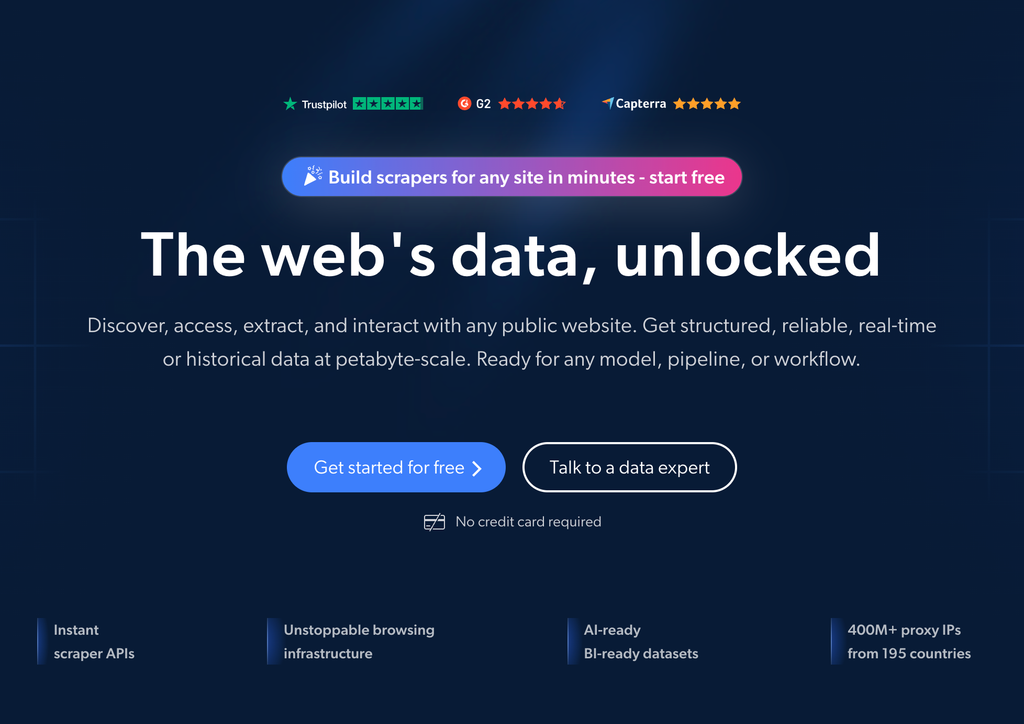
Bright Data is a proxy and web data infrastructure provider suited to teams that need more than basic proxy access. Its offering combines a large residential network with ISP, mobile, and datacenter proxies, along with tools for managing and automating large-scale data collection. This makes it particularly relevant for enterprise teams building complex AI training-data workflows.
Key Features:
- Bright Data provides access to a large pool of residential IPs, supporting high-volume collection across different websites and locations.
- Teams can choose from residential, ISP, mobile, and datacenter proxies depending on their collection requirements and target websites.
- Its network supports location-based targeting, which can be useful when building datasets that require country, region, or city-specific data.
- Users can rotate IPs for broader collection or maintain sticky sessions when workflows require a consistent connection across multiple requests.
- Bright Data also provides APIs and scraping infrastructure for teams that want to move beyond managing proxy connections themselves.
- Its platform includes infrastructure and compliance features designed for businesses running large-scale and ongoing data collection operations.
Why Choose Bright Data?
Bright Data is a strong option for teams that need a broader data collection infrastructure rather than a simple proxy network. Its combination of proxy types, geographic targeting, session controls, and scraping tools gives teams more flexibility when building large and varied training datasets.
The managed APIs and scraping infrastructure can also reduce the amount of work required to build and maintain collection systems internally. This can be useful for larger teams that need to collect data across multiple sources while maintaining consistent workflows.
For businesses with complex or enterprise-scale requirements, Bright Data’s broader infrastructure and compliance capabilities can make it a more suitable choice than a basic proxy provider.
3. Oxylabs
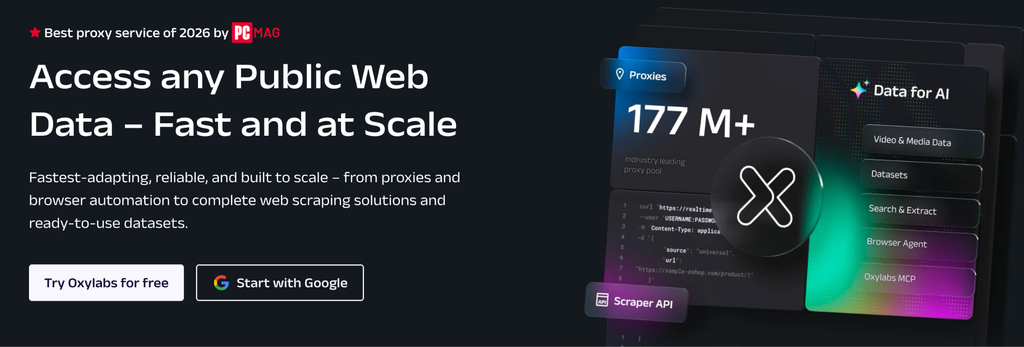
Oxylabs is a proxy and web data infrastructure provider suited to teams running high-volume AI training-data collection and reliability-focused data pipelines. Its network includes residential, ISP, mobile, and datacenter proxies, with broad geographic coverage and tools designed for large-scale collection.
Key Features:
- Oxylabs offers residential, ISP, mobile, and datacenter proxies, allowing teams to choose the connection type based on the target website and collection requirements.
- Its proxy network provides access to locations across multiple countries, which can support multilingual and region-specific datasets.
- Teams can rotate IP addresses during large collection jobs or use sticky sessions when a consistent IP is needed across multiple requests.
- Oxylabs is designed to handle a large number of simultaneous connections, making it suitable for data pipelines that need to process large volumes of requests.
- Its Web Scraper API provides a managed way to collect web data without requiring teams to build the entire scraping infrastructure themselves.
- The platform is built for large-scale use, with an emphasis on connection reliability, performance, and infrastructure suited to ongoing data collection.
Why Choose Oxylabs?
Oxylabs is a strong fit for teams where reliability and scale are important considerations. Its combination of multiple proxy types, geographic coverage, session controls, and high concurrency can support large AI data collection workflows without relying on a small pool of connections.
The Web Scraper API is also useful for teams that want managed data collection alongside proxy access. This makes Oxylabs a practical option for enterprises building ongoing AI data pipelines rather than running occasional, smaller-scale collection jobs.
4. Decodo
Decodo is a proxy and web data platform suited to teams building multilingual or geographically diverse AI training datasets. Its network includes residential, ISP, mobile, and datacenter proxies, with broad geographic targeting and session controls for different collection workflows.
Key Features:
- Decodo offers residential, ISP, mobile, and datacenter proxies, giving teams flexibility based on the websites and data they need to access.
- Its network provides access to locations across multiple countries, which can help teams collect data that reflects different regional markets and languages.
- Users can rotate IP addresses for larger collection jobs or maintain a sticky session when several requests need to use the same IP.
- A broad residential IP pool can help support collection across different locations while reducing reliance on a limited number of addresses.
- Decodo also provides a Web Scraping API for teams that want a managed way to collect web data without building every part of the scraping infrastructure themselves.
Why Choose Decodo?
Decodo can be a useful option when geographic diversity is an important part of the dataset. A multilingual AI model, for example, may need training data from different countries, languages, and regional versions of websites. Geographic targeting makes it easier to collect that data from the locations most relevant to the dataset.
Its combination of proxy types, session controls, and scraping infrastructure also gives teams flexibility as collection requirements grow beyond simple proxy access.
5. SOAX
SOAX is a proxy provider suited to teams with varied AI training-data collection requirements. It offers residential, mobile, ISP, and datacenter proxies, along with geographic targeting and session controls. This range of options can be useful when different data sources require different types of connections.

Key Features:
- SOAX provides residential, mobile, ISP, and datacenter proxies, allowing teams to choose the option that best fits each collection workflow.
- Its network supports location-based targeting, which can help teams collect data from specific countries, regions, or other target locations.
- Teams can rotate IP addresses for broader collection or use sticky sessions when a consistent connection is needed across multiple requests.
- Different sources can have different access requirements, so having multiple proxy types allows teams to use residential proxies for some websites and ISP or datacenter proxies for others.
- The range of proxy options can support teams as their data collection expands across different sources, locations, and workloads.
Why Choose SOAX?
SOAX is a practical choice for teams that do not want to rely on a single proxy type across their entire AI data pipeline. A project may require residential IPs for one source, ISP proxies for another, and datacenter connections for higher-volume collection. Having these options within the same platform can simplify proxy management.
Its geographic targeting and session controls add further flexibility for teams collecting data across multiple markets. This makes SOAX a good fit for varied collection requirements where the right proxy type can differ depending on the source, location, and scale of the workflow.
Proxy Considerations by Dataset Type
The type of training data you are collecting can also influence the proxy setup you need. Some datasets require geographic diversity or high-volume collection, while others may not require proxies at all.
| Dataset requirement | Proxy consideration |
| Multilingual text | Geographic targeting can help collect data from different language markets. |
| Product/catalog data | High-volume residential or datacenter proxies may be useful depending on the source. |
| Region-specific content | Country or city-level targeting can help access location-specific data. |
| Dynamic web content | Session management and managed scraping infrastructure may be useful. |
| Public research data | Proxies may not be necessary if the data is openly available for collection. |
Which Proxy Type Should You Use for AI Training Data?
| Proxy type | Best suited for |
| Residential | Web sources with stronger IP restrictions and broad web-data collection |
| ISP | Stable, longer-running sessions |
| Mobile | Mobile-specific sources or particularly restrictive environments |
| Datacenter | Public, low-defense sources where speed and cost matter |
| Rotating | Large-scale collection requiring IP diversity |
| Sticky | Multi-page or session-dependent collection |
How to Choose a Proxy for AI Model Training Data
| Question to ask | What to consider |
| 1. What kind of data are you collecting? | Consider whether you are collecting text, images, product data, multilingual content, research data, or other types of web information. Different sources may have different access requirements. |
| 2. Where is the data coming from? | Open datasets and low-defense websites may not require residential proxies. More restrictive sources may benefit from residential, ISP, or mobile proxies. |
| 3. Does geography matter? | Country or region-level targeting can be important when building multilingual datasets or collecting data that varies by market. |
| 4. Do you need persistent sessions? | If your scraper needs to maintain state across multiple requests or pages, sticky sessions or ISP proxies may be more suitable. |
| 5. How much data will you collect? | Compare providers based on actual bandwidth costs, concurrency limits, and successful requests rather than headline pricing alone. |
| 6. Are you building the scraping layer yourself? | If you are managing your own crawlers and collection infrastructure, raw proxy access may be enough. If not, managed scraping infrastructure or APIs may be a better fit. |
Are Proxies Necessary for AI Model Training Data Collection?
No, not always. Proxies only provide network routing and do not grant permission to access or use website content.
Public datasets such as Common Crawl and open government or academic datasets may not require proxy infrastructure at all. If the data is already available for legitimate collection and use, a direct collection may be sufficient.
Proxies become more relevant when collecting additional web data at scale, particularly when geographic access, IP limits, rate limits, or session management become concerns.
The goal should be to use the simplest proxy setup that works for the source, rather than defaulting to expensive residential or mobile proxies for every collection workflow.
Best Proxies for AI Model Training Data by Use Case
| AI training data use case | Provider | Proxy type to consider | Why |
| Large-scale, cost-conscious collection | DataImpulse | Residential / Datacenter | Suitable for teams that want flexible proxy infrastructure without a fixed commitment |
| Enterprise-scale data collection | Bright Data | Residential / ISP / Datacenter | Offers multiple proxy types alongside managed data collection infrastructure |
| High-volume, reliability-focused pipelines | Oxylabs | Residential / ISP / Datacenter | Designed for large-scale collection with high concurrency and broad infrastructure |
| Multilingual and region-specific datasets | Decodo | Residential / ISP | Broad geographic targeting can support data collection across different markets and languages |
| Mixed-source AI data collection | SOAX | Residential / Mobile / ISP / Datacenter | Multiple proxy types make it easier to match the connection type to different sources |
The best proxy for AI model training data depends on the source, scale, geography, and collection requirements. Datacenter proxies may be enough for open, low-defense sources, while residential or ISP proxies can be useful for more restrictive or location-specific collection.
The providers covered offer different combinations of proxy types, geographic coverage, session controls, and scalability. The right choice is ultimately the one that meets your collection requirements without adding unnecessary cost or infrastructure.
Explore our other guides:
- Static Residential vs Rotating Residential Proxies: Which Should You Choose?
- Best YouTube MCP Servers for Claude in 2026: Which One Should You Use?
- How to Build a Competitor Price Monitoring System Using Proxies and AI
FAQs
Not always. If the data is openly available and can be collected without IP or geographic restrictions, a direct connection may be sufficient. Proxies become more useful when collecting web data at scale or from restricted sources.
Yes. A standard cloud or server connection may be enough for public, low-defense sources with moderate collection requirements. Proxies become more relevant when you need IP diversity, geographic targeting, or more persistent sessions.
It depends on the source. Datacenter proxies are often more economical for public, low-defense websites, while residential proxies can be useful when IP reputation, geographic access, or stricter restrictions are factors.
ISP proxies can be useful when you need a more stable, persistent connection while still using IPs associated with internet service providers. They can be a practical option for longer-running or session-dependent collection.
Not usually. Mobile proxies are more specialized and make sense when collecting from mobile-specific sources or environments where other proxy types face particularly restrictive access conditions.
Disclosure – This post contains some sponsored links and some affiliate links, and we may earn a commission when you click on the links, at no additional cost to you.