Free proxies remain one of the easiest ways to unblock a site or mask your IP without paying anything. We verified server locations, encryption, pricing, and active status for each proxy below directly against current provider pages and third-party reviews rather than carrying over older claims, since two proxies from earlier versions of this list have since shut down or changed business models entirely.
Table of Contents
What Is a Proxy and How Does It Work?
A proxy acts like a middleman between you and the websites you visit. When you send a request online, the proxy takes it first, passes it on to the site, and delivers the response back to you. The website only sees the proxy’s information, not yours, which helps hide your real location and adds a layer of privacy to casual browsing.
Quick Answer: Best Free Proxies
Whoer Web Proxy, best for simple, anonymous browsing with WebRTC leak protection built in.
ProxySite, best for instant, no-login unblocking of sites like YouTube or Facebook.
CroxyProxy, best for unblocking video and social platforms without breaking the page.
Hide.me Proxy, best for users who want a proxy backed by an established privacy-focused VPN company.
4everproxy, best for switching between server locations to view a site from a specific country.
VPNBook, best for a free proxy and manually configured VPN in one service.
ProxFree, best for long-running, no-frills unblocking with over a decade of uptime.
MegaProxy, best for users who might outgrow a free proxy and want an easy upgrade path.
Methodology: How We Verified These
For each proxy, we checked whether the service is still online and actively maintained, what server locations and encryption it currently offers, whether the free tier has changed since it was last covered, and what recent user reviews say about reliability and privacy practices. Two proxies from an earlier version of this list did not make the cut: KProxy has ceased operations and is no longer available, and Plain Proxies has moved away from the free, browser-based model this list covers and now operates as a paid B2B residential and datacenter proxy provider. CroxyProxy and Hide.me Proxy take their places below.
Comparison Table
| Tool | Server Locations | Encryption | Pricing | Best For |
| Whoer Web Proxy | Netherlands (free) | WebRTC leak protection | Free; paid from $3.90-$9.90/mo | Casual anonymous browsing |
| ProxySite | US, Europe | SSL | Free, ad-supported | Quick unblocking of one site |
| CroxyProxy | Multiple, browser-based | SSL | Free; Premium ~$3-3.50/mo | Video and social unblocking |
| Hide.me Proxy | Netherlands, Germany, Finland | No-log claim | Free proxy; paid VPN tiers separate | Privacy-focused casual browsing |
| 4everproxy | Multiple countries | HTTPS | Free, unlimited | Location switching |
| VPNBook | US, Canada, Germany, France, Poland | AES-256 (VPN) | Free (donation/ad funded) | Free VPN-plus-proxy combo |
| ProxFree | US, Europe, Asia | SSL | Free only | Long-running, no-frills use |
| MegaProxy | Global network | SSL VPN (paid tier) | Free tier; paid from $1.99-$2.99/GB | Free-to-paid upgrade path |
1. Whoer Web Proxy
Whoer Web Proxy is a browser-based tool that lets you surf the web without revealing your real IP address. It needs no extra software or configuration, and it’s built by the team behind the Whoer.net IP and anonymity checker, so it leans into privacy diagnostics as much as unblocking.
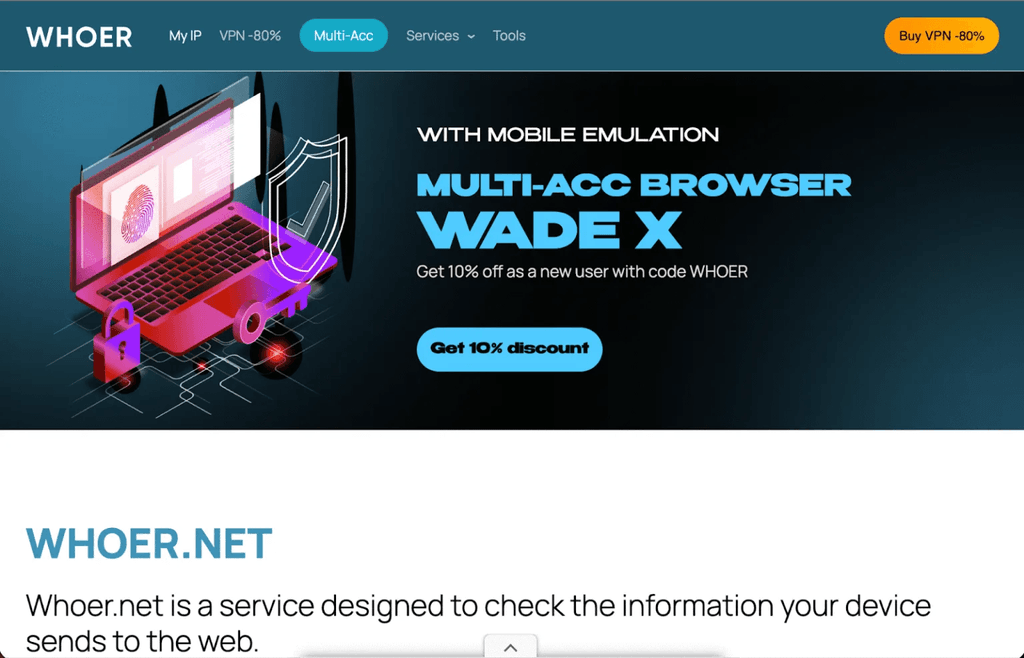
Key features: masks your real IP, blocks WebRTC leaks that would otherwise expose your location, offers a browser extension for faster connecting, and includes unlimited bandwidth on the free tier.
Pricing: free with one server location in the Netherlands. Paid plans start at $9.90/month (or $3.90/month on the annual plan) and unlock more server locations and stronger privacy features. Some users report the paid tiers feel expensive for what they add.
Choose it if you want the simplest possible way to mask your IP without installing anything and don’t need to switch locations.
2. ProxySite
ProxySite is one of the longest-running, most-used free web proxies online. You paste a blocked URL into the site and start browsing immediately, no account or software required, which is why it’s often the default answer when people search for a free proxy.
Key features: SSL-encrypted connection to the proxy, multiple US and EU server options, no account or installation needed, and support for popular unblocking targets like YouTube and Facebook.
Pricing: free, no paid tier, supported by ads. Servers slow down under heavy shared load and the logging policy isn’t clearly disclosed.
Choose it if you want the most well-known, zero-friction option for unblocking a single site right now.
3. CroxyProxy
CroxyProxy is a free, browser-based proxy built to handle modern, JavaScript-heavy pages, especially video and social platforms, better than most free proxies manage. It replaces KProxy in this list after KProxy shut down.
Key features: strong handling of embedded video and social media pages that most free proxies break, SSL encryption even on sites without HTTPS, and a mobile and tablet-friendly interface.
Pricing: free tier available. Premium runs roughly $3 to $3.50/month and removes ads, adds unlimited bandwidth, and improves HD streaming stability. Exact pricing isn’t published and varies by source.
Choose it if the sites you need to unblock are video-heavy or social platforms that other free proxies tend to mangle.
4. Hide.me Proxy
Hide.me Proxy is the free web proxy arm of the established Hide.me VPN service. It replaces Plain Proxies in this list, and being backed by a known VPN provider gives it more credibility on privacy claims than most standalone free proxy sites.
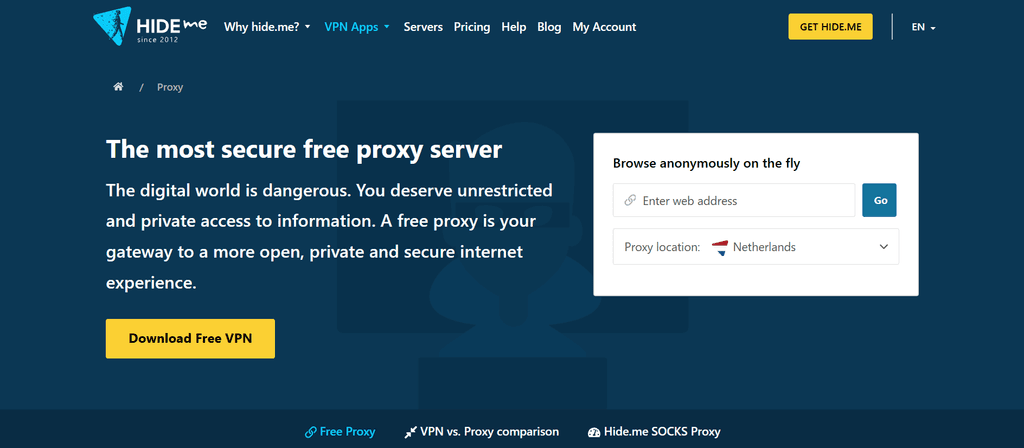
Key features: three free server locations (Netherlands, Germany, Finland), a no-logging claim on those servers, a simple type-a-URL interface, and backing from an established VPN provider.
Pricing: the web proxy itself is free. Hide.me’s paid VPN product is priced separately and adds full-device encryption, which the free proxy doesn’t cover.
Choose it if you’d rather trust a proxy tied to a known privacy-focused company than a standalone free proxy site.
5. 4everproxy
4everproxy is a free, browser-based proxy whose standout feature is letting you choose which country your traffic appears to come from, a level of control most free web proxies don’t offer.
Key features: choice of server location across multiple countries, HTTPS encryption on sessions, and no signup or software required.
Pricing: free with unlimited usage. Encryption is basic and speeds drop when shared servers get busy.
Choose it if you specifically need to view a site as it would appear from a different country.
6. VPNBook
VPNBook combines a free web proxy with manually configured VPN access, funded entirely by ads and donations rather than a subscription model. It’s a hybrid option rather than a pure browser proxy.
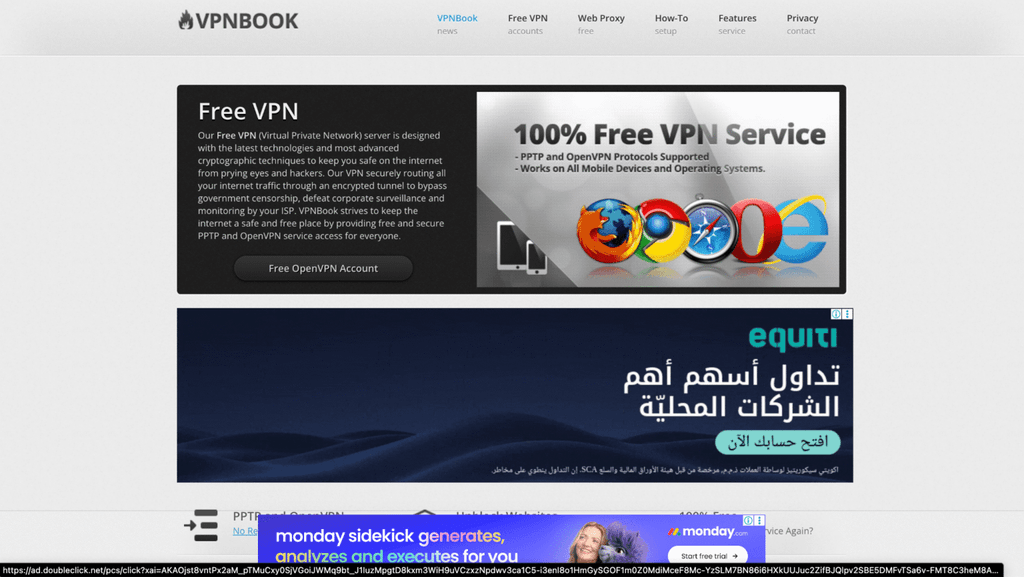
Key features: OpenVPN and PPTP protocol support, AES-256 encryption on the VPN side, five server countries, and no bandwidth cap.
Pricing: free, funded by ads and donations, no paid tier. There’s no dedicated app, so setup means manually loading configuration files into a third-party client. Independent 2026 reviews flag DNS leak issues, no kill switch, and speeds cut by as much as 90% under load.
Choose it if you’re comfortable manually configuring a VPN client and only need it occasionally, not as your main privacy layer.
7. ProxFree
ProxFree is a no-signup web proxy that’s been online for over a decade, making it one of the more established names on this list despite its bare-bones interface.
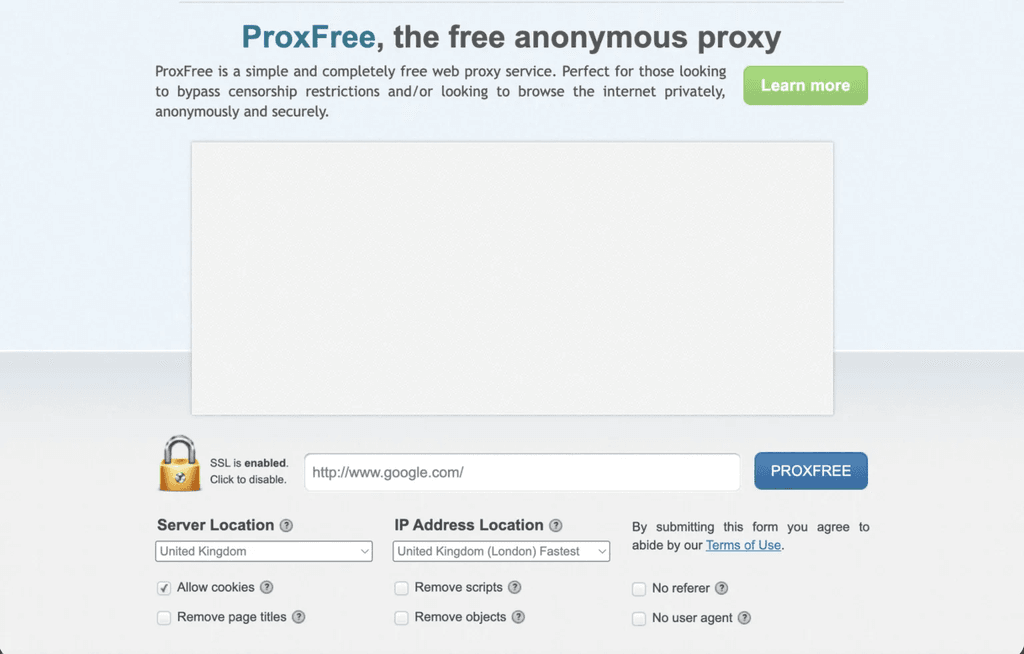
Key features: servers across the US, Europe, and Asia, SSL encryption on both secure and non-secure target sites, quick server switching, and no registration required.
Pricing: free only, no paid tier. Slower under heavier browsing or streaming, and logging transparency is limited.
Choose it if you want a proxy with a long track record for basic, occasional unblocking.
8. MegaProxy
MegaProxy pairs a free anonymous web proxy with paid SSL VPN and residential proxy products, making it more of an on-ramp to a fuller privacy or scraping stack than a standalone free tool.
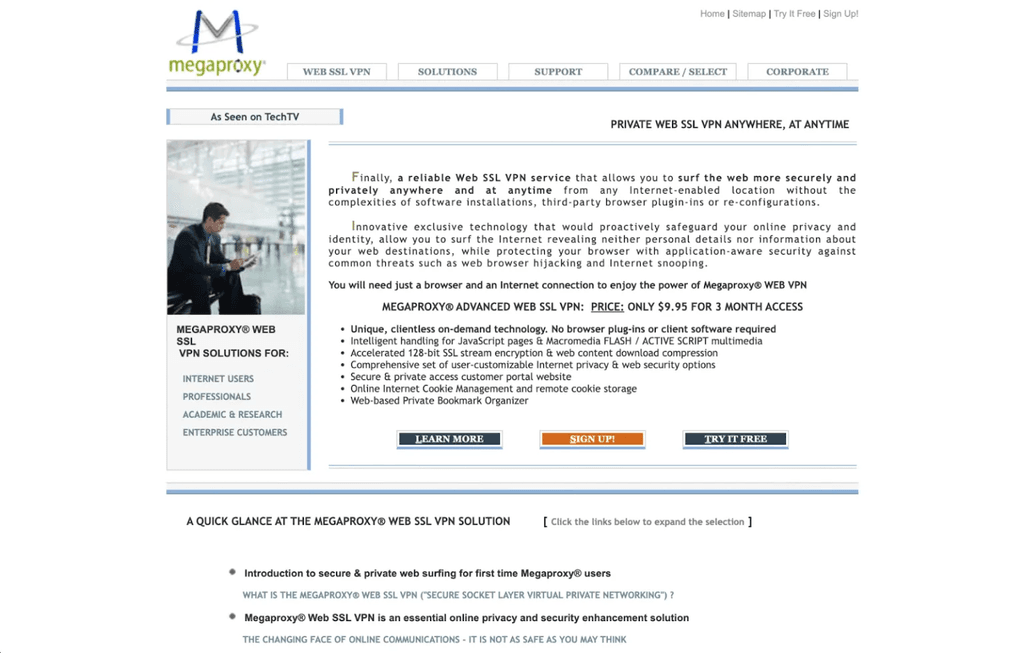
Key features: global server network, free tier for basic anonymous browsing, a paid SSL VPN tier for stronger encryption, and a clear upgrade path to residential and datacenter proxies.
Pricing: free tier for basic use. Paid SSL VPN and residential proxy plans start around $1.99 to $2.99/GB. The free tier is limited in speed and features, and some usage data is logged.
Choose it if you want a free proxy today with a straightforward paid upgrade later.
Which Proxy Should You Choose
Choose Whoer Web Proxy or Hide.me Proxy if privacy and a clean, no-ad interface matter more to you than location variety.
Choose CroxyProxy or 4everproxy if you need to unblock video, social platforms, or view a site from a specific country.
Choose ProxySite or ProxFree if you just need the most straightforward, no-signup way to open one blocked page right now.
Choose VPNBook or MegaProxy if you want a free proxy today but expect to move to a paid VPN or proxy plan later.
Avoid all of these if you’re handling banking, payments, business scraping, or anything where a leak or logging policy actually matters, free proxies are for low-stakes, occasional use.
Safety Tips for Using Free Proxies
Avoid sharing sensitive information. Never enter passwords, credit card details, or personal information when using free proxies, since many lack proper encryption and may log your activity.
Always use HTTPS websites. That encryption protects your communication even if the proxy operator or someone on the same network is watching.
Check proxy reliability before relying on it. Free proxies are often overloaded or go down without notice, as this list’s KProxy removal shows.
Rotate proxies if one gets blocked. Free proxies get blacklisted by sites quickly. If one stops working, switch to another from this list.
Be aware of legal and privacy risks. Free proxies often log data and may share it with third parties. Read the privacy policy where one exists, and don’t rely on free proxies for anything business-critical.
FAQs
Yes, using free proxies is legal in most places. The key is not breaking laws or platform rules while using them. Always follow the rules of the websites you visit and your country’s laws.
No. Free proxies are not safe for sensitive activities like banking or shopping, since they often don’t protect your data well. Use a trusted VPN or paid proxy for anything involving personal or financial information.
Free proxies get crowded because many people share the same servers, which slows things down or drops the connection. Try a different proxy from the list, clear your browser cache, or consider a paid service for better reliability.
Free proxies hide your IP address, but they don’t make you fully anonymous. Sites can still track you through cookies or browser fingerprinting. For stronger anonymity, look at dedicated tools built for that, like Tor or a reputable VPN.
A proxy typically reroutes traffic for a single browser tab or app and rarely encrypts your full connection, while a VPN encrypts all traffic from your device. Services like VPNBook and MegaProxy blur this line by offering both, but a dedicated VPN generally provides stronger, more consistent protection.
Related Blogs
- Best Proxy Websites for Private, Unblocked Browsing
- Proxy vs VPN: What Should You Choose?
- Best Free Proxy Checkers Online
- Best Proxy Servers for Gaming
- Top Proxy Service Providers
Disclosure: This post contains sponsored and affiliate links, and we may earn a commission when you click on them, at no additional cost to you.