As online privacy becomes more valuable and digital restrictions grow, private proxies stand out as essential tools.
In 2025, they will provide safe, fast, and flexible connections that keep your identity hidden while unlocking geo-blocked content.
Private proxies are key to tasks like web scraping, ad verification, and managing multiple online accounts.
They help both businesses and individuals avoid bans, improve performance, and maintain online anonymity.
Choosing the right private proxy service opens doors to a smoother and more secure internet experience.
What are Private Proxies?
Private proxies are special servers that give you an exclusive IP address.
Unlike shared or public proxies, they are used by only one person or organization at a time. This means your internet traffic routes through a unique address, hiding your real location and boosting privacy.
Because they are dedicated to you, these proxies offer better speed and reliability. They keep your activities anonymous and reduce the chance of being blocked while browsing, automating, or collecting data online.
Why You Need Private Proxies in 2025
- Strong Online Privacy: Mask your real IP to keep your identity and location private.
- Access Geo-Restricted Content: Use IPs from different countries to view blocked websites easily.
- Reliable and Fast Internet: Enjoy stable connections that don’t slow down due to shared use.
- Lower Chance of Getting Banned: Dedicated IPs reduce the risks linked to heavy or multiple account use.
- Perfect for Complex Tasks: Support seamless web scraping, market research, and account management.
Key Features to Look for
- Large and Diverse IP Pool: Access many unique IP addresses worldwide to fit your needs.
- Fast and Stable Connections: Choose proxies with high uptime and quick response speeds.
- Strong Anonymity and Security: Ensure your proxy fully hides your IP and protects your data.
- Easy Management Tools: Look for simple dashboards and APIs for controlling proxies.
- Variety in Proxy Types: Pick from residential, datacenter, or mobile proxies depending on what fits you best.
Table of Contents
| 1. Oxylabs |
| 2. Bright Data |
| 3. Decodo |
| 4. NetNut |
| 5. SOAX |
| 6. IPRoyal |
| 7. Webshare |
| 8. PrivateProxy |
Best Private Proxies in 2025
1. Oxylabs
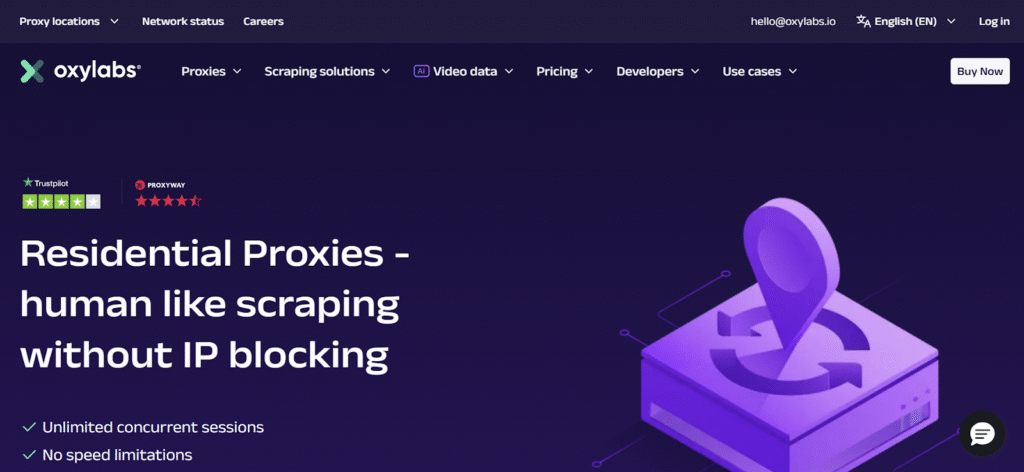
Oxylabs is a top-tier private proxy provider well-known for its vast and diverse proxy network. It combines residential and datacenter proxies, offering both privacy and speed for demanding users. The network spans millions of IPs worldwide and supports businesses in data scraping, ad verification, and market research with high success rates and reliability. Oxylabs provides user-friendly dashboards and APIs for easy proxy management and monitoring. Its infrastructure is designed for scalability, meeting the needs of enterprises and large-scale operations.
Key Feature
- Extensive IP Network: Access millions of private IP addresses from regions all over the globe for wide-reaching proxy coverage.
- High-Speed Connections: Stable and fast connections allow smooth data flow and reduced latency, ideal for heavy web operations.
- Residential and Datacenter Options: Choose residential IPs for high anonymity or datacenter proxies for affordability and speed.
- User-Friendly Management: Advanced dashboard and APIs make monitoring and controlling proxies simple and efficient.
Pros
- Highly reliable with superior uptime and speed.
- Wide geographic coverage is suited for various industries.
- Supports large volume and diverse proxy needs.
Cons
- Pricing can be on the higher side for smaller users.
- Complex pricing structures may confuse newcomers.
- Limited or no free trials available.
2. Bright Data
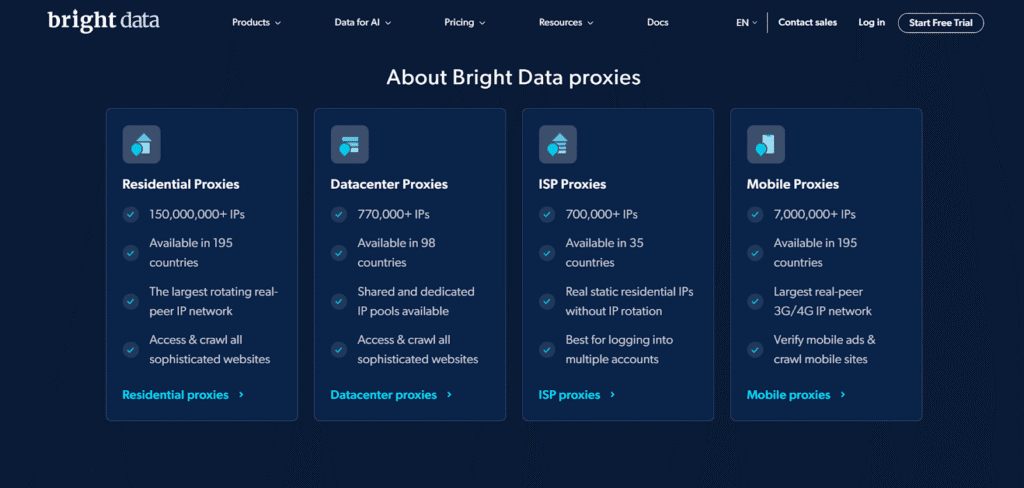
Bright Data is one of the largest private proxy providers globally, with a comprehensive range of proxy types, including residential, datacenter, and mobile IPs. It emphasizes smart proxy routing mechanisms that optimize proxy selection based on location, ISP, or connection speed. Bright Data commits to ethical proxy use with strong privacy compliance, including GDPR. Its platform offers powerful filtering and management tools, supporting enterprises that demand scale and flexibility in proxy solutions.
Key Features
- Massive Proxy Pool: Over a hundred million IPs from residential, datacenter, and mobile networks worldwide.
- Smart Proxy Selection: Advanced filtering based on country, city, ISP, and speed for precise targeting.
- Privacy and Compliance: Focus on legal and ethical usage compliant with international data laws.
- Robust Management Interfaces: Easy-to-use dashboard and APIs for large-scale proxy deployment and monitoring.
Pros
- Largest proxy network with a vast choice of IP types.
- Strong commitment to privacy and legal compliance.
- Advanced filtering enhances targeting precision.
Cons
- Higher cost compared to many competitors.
- Interface complexity may overwhelm beginners.
- Customer support response can sometimes be slow.
3. Decodo
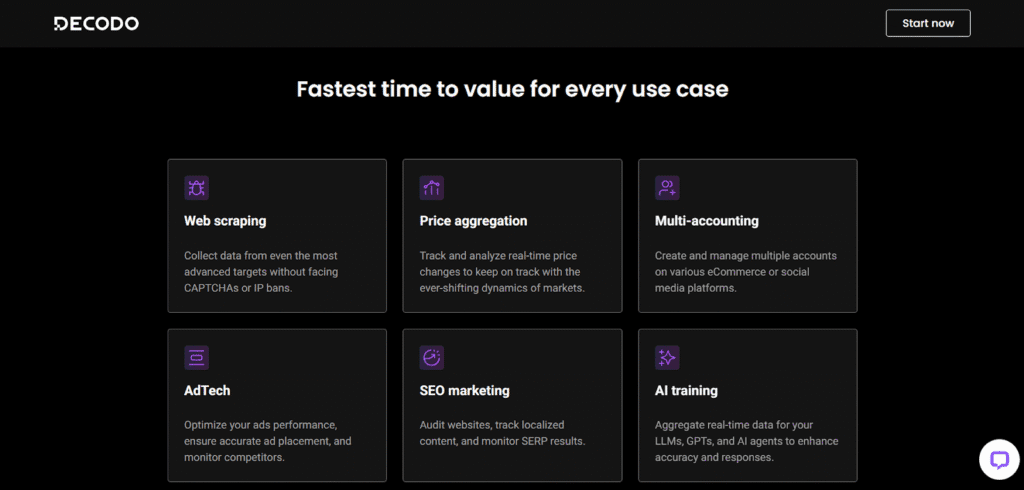
Decodo focuses on private residential proxies offering high levels of anonymity and rotation features to maintain undetectability. Its proxies appear as normal users to websites, making them excellent for sensitive tasks such as brand protection and social media management. Decodo ensures IP rotation to avoid bans and offers global coverage that supports businesses operating worldwide. Setup is straightforward, and customer support is responsive, making it a preferred choice for businesses needing secure private proxies with minimal hassle.
Key Features
- High Anonymity Residential IPs: Private residential IPs that closely mimic real users to prevent detection.
- Automatic IP Rotation: IPs change automatically at set intervals or per request to keep sessions fresh.
- Global Reach: Extensive proxy server coverage across multiple countries and regions.
- Simple Setup and Support: User-friendly interfaces paired with responsive support teams.
Pros
- Strong privacy and undetectability features.
- Automated IP rotation minimizes blocking issues.
- Easy for businesses to configure and maintain.
Cons
- Smaller proxy pool than larger providers.
- Limited proxy types are primarily focused on residential.
- May not handle extremely high-volume scraping efficiently.
4. NetNut
NetNut offers a private proxy solution with a unique direct ISP connection that improves speed and reduces the risk of IP blacklisting. Its residential proxy network is reliable and performs consistently, making it a great choice for companies engaging in data gathering, market intelligence, and ad verification. NetNut boasts a wide global presence with proxy servers in key locations worldwide. The platform supports easy API access and integration, allowing businesses to scale and customize proxy use to their specific requirements.
Key Features
- Direct ISP residential Proxies: Proxies are blacked by direct ISP partnerships for cleaner and faster IPs.
- Reliable Speed and Uptime: Consistently high-speed connections with minimal downtime.
- Broad Geographic Coverage: Proxy servers are distributed globally, allowing access to local content.
- Easy API and Integration: APIs designed to integrate seamlessly with software and workflows.
Pros
- Fast and stable due to ISP-backed IPs.
- Good option for large-scale enterprise use.
- API simplifies management and scaling.
Cons
- It can be expensive for smaller or casual users.
- Proxy type range mainly focused on residential IPs only.
- Less control for niche or specialized proxy filtering.
5. SOAX
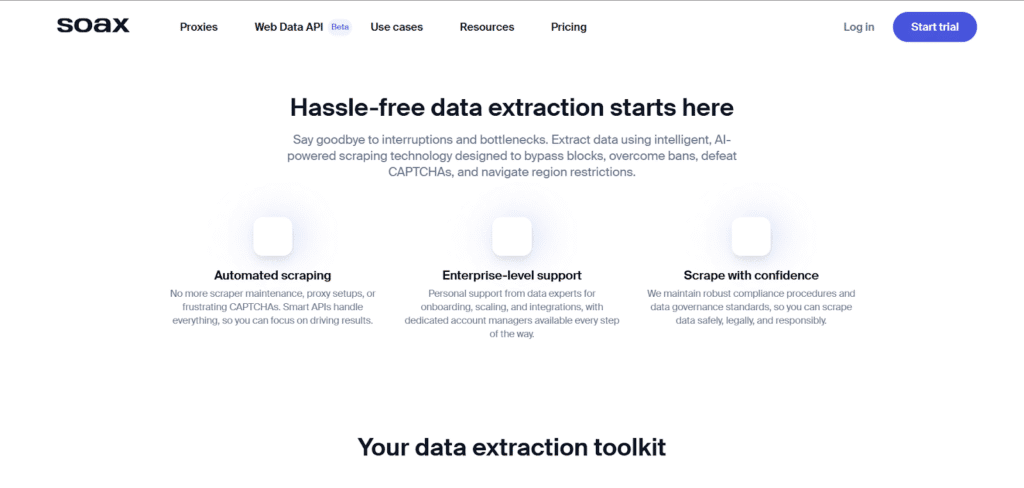
SOAX is a private proxy provider known for its clean and fresh residential IPs sourced directly from real users. It offers a large network of rotating private proxies with global coverage designed for tasks like web scraping, sneaker copping, and managing social media accounts. SOAX’s easy-to-use control panel offers geo-targeting, IP filtering, and flexible proxy rotation settings. The platform supports mobile-friendly proxies and provides reliable uptime, making it a trusted choice for businesses and individuals needing secure, high-quality proxies.
Key Features
- Rotating Residential IPs: Fresh residential IPs change automatically to reduce the chance of detection.
- Global IP Coverage: Access proxies from numerous countries and cities worldwide.
- Geo-Targeting and Filtering: Choose proxies based on location and apply filters for precise use.
- Mobile and Static Proxies: Supports mobile IPs and offers static proxies for steady connections.
- User-Friendly Dashboard: Simple interface to manage proxies, rotation, and filtering easily.
Pros
- Wide network of real residential IPs.
- Flexible proxy rotation and filtering options.
- Suitable for various tasks from scraping to social media management.
Cons
- Higher cost for mobile proxies.
- Occasional slower speeds in some regions.
- Limited datacenter proxy options.
6. IPRoyal
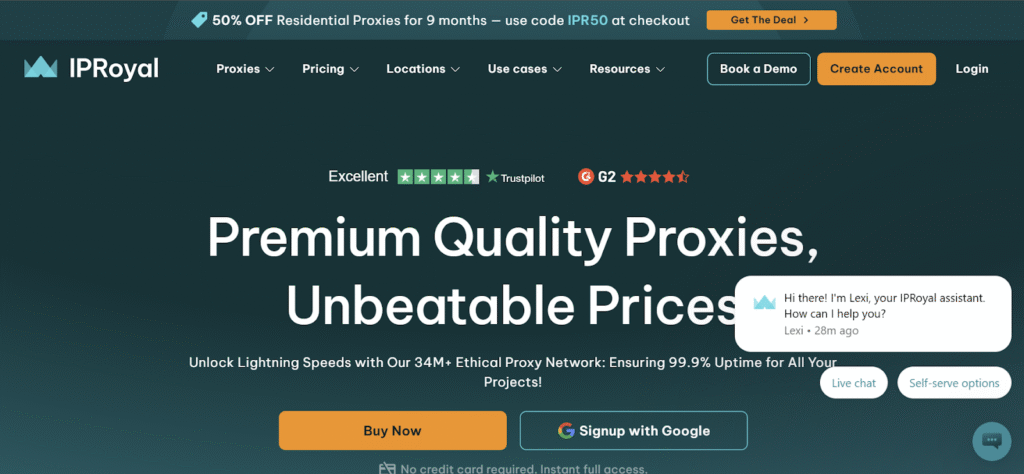
IPRoyal is a rapidly growing private proxy provider offering residential, datacenter, and mobile proxies with transparent pricing and easy access. Its residential proxy network is sourced from real users, ensuring high anonymity and undetectability. IPRoyal focuses on affordability without sacrificing quality, ideal for web scraping, ad verification, and SEO monitoring. The platform features a straightforward dashboard and API, making it accessible for both beginners and advanced users alike.
Key Features
- Residential and Datacenter Proxies: Offers a mix of residential IPs for stealth and datacenter IPs for performance.
- Mobile Proxy Support: Provides mobile IPs sourced from mobile carriers for better reach.
- Transparent Pricing: Clear and competitive pricing with pay-as-you-go options.
- Intuitive Management Tools: User-friendly platform with API support for easy proxy control.
- Global Proxy Pool: Access IPs from many countries with good geographic diversity.
Pros
- Affordable plans with transparent pricing.
- Good selection of proxy types, including mobile.
- Easy to use with a helpful dashboard and API.
Cons
- Smaller network compared to top-tier providers.
- Mobile proxies can be costly.
- Customer support can be slow during peak periods.
7. Webshare
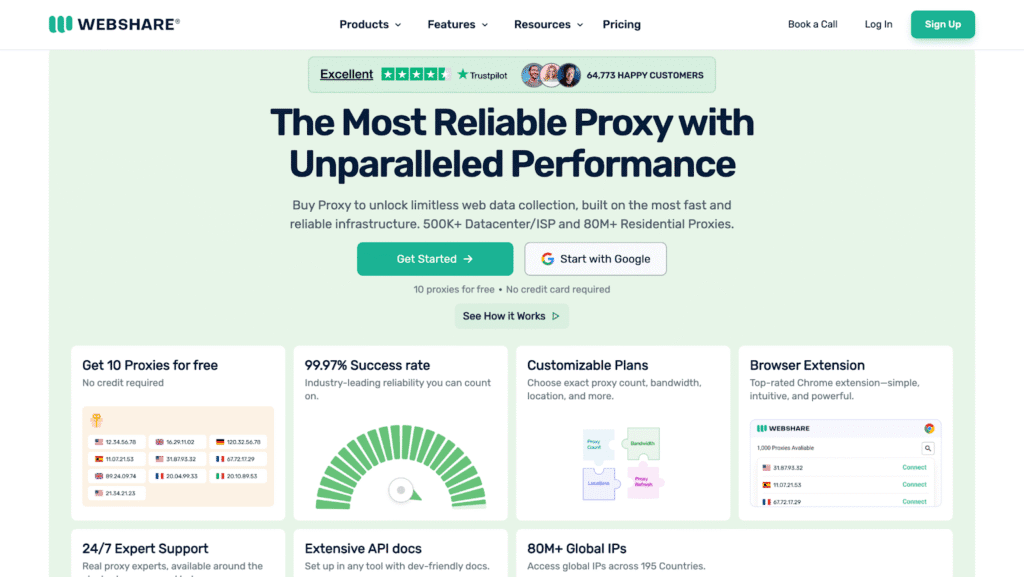
Webshare offers private residential and datacenter proxies focusing on speed, reliability, and wide geographic spread. It is recognized for providing both rotating and static proxies suitable for web scraping, account management, and testing. Webshare’s proxies are easy to configure, and the platform provides a functional dashboard with proxy management tools. It appeals to users needing a balance of performance and affordability.
Key Features
- Rotating and Static IPs: Choose between IPs that rotate regularly or remain fixed for stable sessions.
- Wide Geographic Distribution: Large proxy pool with IPs from multiple countries worldwide.
- Simple Setup and API: Easy to start with, and an API is available for automated proxy management.
- High Speed and Availability: Optimized to deliver fast response times and high uptime.
- User Dashboard: Manage proxies, monitor traffic, and control settings in one place.
Pros
- Competitive pricing with reliable performance.
- Flexible proxy rotation options.
- Clean IPs that work well for scraping and automation.
Cons
- Smaller proxy pool than premium providers.
- Limited advanced features.
- Support response can be slow occasionally.
8. PrivateProxy
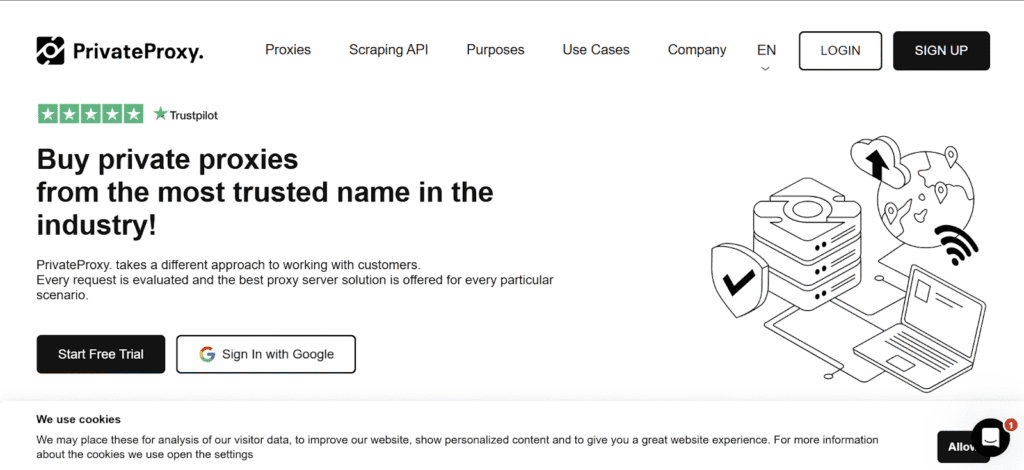
PrivateProxy specializes in providing high-quality private datacenter proxies designed for security and speed. Its proxies are popular among users needing dedicated IP addresses for gaming, social media, and private browsing. PrivateProxy offers multiple locations worldwide with fast and stable servers. The platform focuses on delivering proxies that ensure anonymity and reduce the risk of blocking while maintaining quick connection speeds and low latency.
Key Features
- Dedicated Datacenter Proxies: Exclusive private IPs without sharing to ensure privacy.
- Multiple US and EU Locations: Servers located in various countries to optimize access and speed.
- High Bandwidth and Low Latency: Designed for fast connections suitable for gaming and browsing.
- Easy Proxy Management: Simple setup process and responsive customer support.
- Anonymity and Security: Protects users with reliable anonymous IP addresses.
Pros
- Fast and stable datacenter proxies.
- Dedicated IPs reduce the risk of bans.
- Good support and quick setup.
Cons
- No residential or mobile proxies offered.
- Smaller global presence compared to large competitors.
- Less ideal for tasks needing residential IPs.
Private Proxies vs Shared Proxies
| Aspect | Private Proxies | Shared Proxies |
| Speed and Performance | Faster due to exclusive use of IP | Slower as bandwidth is shared with others |
| Security | More secure, lower risk of IP bans | Higher risk of IP bans caused by other users |
| Reliability | More stable with dedicated resources | Can be unstable due to multiple users |
| Cost | More expensive due to exclusivity | Cheaper as the cost is shared across users |
| Use Cases | Ideal for sensitive, high-volume tasks like data scraping or multi-account management | Best for budget-friendly, low-risk browsing or simple tasks |
| Risk of Blocking | Lower because IP is used by one user | Higher because of the “bad neighbor” effect |
Common Mistakes to Avoid
- Using Free or Unverified Proxies: Free proxies often come with a poor reputation, unstable connections, and security risks. Avoid these to prevent bans, data leaks, and unreliable performance.
- Wrong Proxy Location Choice: Selecting proxies far from your target server or region can expose your use of proxies, raise latency, and cause access issues. Always choose proxies close to the intended locations.
- Mixing Proxy Types Improperly: Using the same proxy for different tasks without matching the proxy type (residential, datacenter, mobile) can cause inefficiencies and increase the risk of blocks. Use each proxy type as designed.
- Overloading Servers with Requests: Excessive or too-fast requests signal suspicious behavior, causing IP bans. Limit request rates and respect target site restrictions to stay under the radar.
- Poor Proxy Rotation Management: Rotating IPs without a strategy can disrupt sessions or cause faster detection. Use controlled rotation aligned with task requirements to maintain anonymity and performance.
Conclusion
Private proxies offer faster, more secure, and reliable access compared to shared proxies, making them ideal for tasks requiring privacy and stability.
They reduce the risk of bans and provide dedicated resources, but come at a higher cost. Shared proxies are budget-friendly and suit simple tasks but risk slower speeds and IP blocking due to multiple users sharing the same IP.
Choose wisely based on needs: private for sensitive or heavy use, shared for lighter or cost-conscious use. Proper proxy selection and management ensure efficient, safe, and uninterrupted online activities in 2025.
Check out our other blogs for more such informative content:
FAQs
Private proxies generally provide faster and more consistent speeds because the IP address and bandwidth are dedicated to a single user. Shared proxies may experience slowdowns when multiple users consume bandwidth simultaneously, causing variable speeds and potential lag.
Private proxies reduce the risk of IP bans significantly since the IP is used exclusively and is less likely to be flagged for suspicious activity. However, improper use, such as sending too many requests too quickly, can still result in bans.
Basic understanding of networking concepts, proxy setup, and authentication is often sufficient. For high-volume or complex tasks, skills in scripting, IP rotation management, and handling proxy integration with software can be required.
Shared proxies suit budget-conscious users performing low-risk activities like casual browsing, limited social media access, or basic web scraping, where speed and exclusivity are less critical. Private proxies are preferred for sensitive, high-volume, or secure operations.
Disclosure – This post contains some sponsored links and some affiliate links, and we may earn a commission when you click on the links, at no additional cost to you.