In 2026, the question is no longer “Do you need proxies?”, it’s “Which proxy actually works?”
As anti-bot systems continue to evolve, scraping and automation have become significantly more challenging. What worked even a year ago is now far less reliable.
At the same time, cheap proxies are failing more often than ever. Frequent blocks, CAPTCHAs, and inconsistent performance have made them a risky choice for serious use cases.
Today, success rate matters far more than cost per GB. It’s no longer about how cheap your proxies are. It’s about whether they actually get the job done.
And that’s where the battle between mobile proxies and residential proxies becomes critical.
Table of Content
What are Mobile and Residential Proxies?
Residential Proxies
Residential proxies use IP addresses assigned by real home Internet Service Providers (ISPs). This means the traffic appears as if it’s coming from everyday users browsing from their homes, making it highly reliable for most standard use cases.
They also come with large IP pools, often in millions, which allows for better rotation and lower chances of detection. In terms of pricing, they usually fall into the moderate range compared to other proxy types.
Mobile Proxies (4G/5G)
Mobile proxies use IPs provided by real mobile carriers, operating over 4G and 5G networks. What makes them unique is how these networks handle IP allocation, where thousands of users share the same IP address at any given time.
Because of this shared environment, mobile IPs carry an extremely high trust score. Blocking them outright can risk affecting legitimate users, which makes them significantly harder for anti-bot systems to flag or restrict.
Why This Comparison Matters Now
In the current times, anti-bot systems have become far more advanced than simple IP blocking. These systems look at:
- IP reputation
- TLS fingerprinting
- Behavior patterns
- Session consistency
This means that just having a proxy is no longer enough. The type and quality of proxy you use directly influence whether your requests succeed or get blocked.
The stronger defenses get, the more proxy quality impacts cost and success rate.
Mobile vs Residential Proxies: Head-to-Head Comparison
| Metric | Residential Proxies | Mobile Proxies |
| Success Rate | 75-90% | 85-95% |
| Cost | $5-15/GB | $4-12/GB |
| Latency | ~80ms | ~45ms |
| Trust Level | High | Very High |
| Anti-Bot Bypass | Medium | Highest |
| Pool Size | 10M-70M+ | 2M-72M+ |
| Best For | General scraping | Protected targets |
Why Mobile Proxies Win (Technically Explained Simply)
1. CGNAT Advantage
Mobile proxies operate on Carrier-Grade Network Address Translation (CGNAT), where a single IP address is shared by thousands of real users at the same time.
This creates a unique challenge for websites. If they block one mobile IP, they’re not just stopping a bot; they risk blocking a large number of legitimate users on the same network.
2. Higher Trust Scores
Modern anti-bot systems assign reputation scores to entire IP ranges, not just individual requests. IPs from mobile carriers consistently rank among the safest because they are associated with real users on legitimate networks.
As a result, traffic coming from mobile proxies is far less likely to be flagged or challenged compared to other proxy types.
3. Real Device Fingerprints
Mobile proxy traffic naturally aligns with real-world usage patterns. This includes:
- Device behavior
- Network characteristics
- TLS signatures
Because everything from the network layer to the device signals matches genuine user activity, mobile proxies blend in far more effectively.
The result is traffic that looks authentic across multiple detection layers, not just at the IP level.
Why Residential Proxies Still Make Sense
Residential proxies still have a clear role in 2026, especially when the target isn’t heavily protected.
Best Use Cases:
1. e-Commerce scraping (moderate protection)
Tracking product prices, stock availability, and competitor listings across marketplaces. Most eCommerce platforms have protection, but not always aggressive enough to justify the higher cost of mobile proxies.
2. Search engine scraping
Collecting SERP for data keywords, featured snippets, and ranking positions. Residential proxies are widely used here because they offer enough trust while keeping costs manageable at scale.
3. Content aggregation
Pulling articles, listings, or data from multiple websites to build feeds or databases. These targets typically rely on lighter defenses, making residential proxies a practical choice.
4. SEO tracking
Monitoring keyword ranking, backlinks, and site performance across regions. Residential IP rotation helps simulate real user searches without triggering frequent blocks.
Why They Still Work:
Residential proxies strike a strong balance between scale and cost. They’re more affordable for handling large volumes of data, offer massive IP pools for rotation, and are stable enough to handle mid-level anti-bot defenses without constant failures.
If your target isn’t aggressively protected, residential proxies are still efficient.
Where Mobile Proxies Clearly Win
Mobile proxies stand out when you’re dealing with platforms that actively invest in strong anti-bot systems. These environments are designed to detect and block automation quickly, which is where mobile IPs make a noticeable difference.
Use Cases:
1. Sneaker Sites
Limited drops and high-demand launches are heavily protected. Mobile proxies help maintain access during peak traffic without getting blocked instantly.
2. Ticketing Platforms
From concerts to events, these platforms use strict anti-bot measures to prevent bulk purchases. Mobile proxies improve success rates when accessing listings or availability.
3. Social Media
Automation, account management, and data extraction often trigger detection systems. Mobile proxies reduce flags by blending in with real user traffic.
4. Travel Aggregators
Flight and hotel data scraping involves dynamic pricing and aggressive protection. Mobile proxies help maintain consistent access across sessions.
5. Real Estate Portals
Large-scale listing extraction and frequent queries can lead to blocks. Mobile proxies handle repeated requests more reliably.
6. Marketplace
High-volume scraping across product listings, reviews, and pricing requires stable sessions, something mobile proxies handle better under strict defenses.
Why They Win:
- Bypass advanced anti-bot systems more effectively
- Fewer retries due to lower block rates
- Higher overall success rate on protected targets
Cost vs Success Rate: The Real Equation
For years, the assumption was simple: the cheapest proxy is the best option. Lower cost per GB meant better efficiency, or at least that’s how it used to work.
But in 2026, that thinking doesn’t hold up anymore.
Old Thinking:
- Cheapest proxy = best option
New Thinking:
- Cost per successful request = the real metric
When proxies fail, they don’t just waste bandwidth; they increase retries, slow down workflows, and reduce overall efficiency. That hidden cost adds up quickly.
Example:
- Residential proxies: $5/GB, ~70% success rate
- Mobile proxies: $6/GB, ~92% success rate
At first glance, residential proxies look cheaper. But once you factor in failed requests and retries, the actual cost per successful request can be higher.
Smart Strategy: Don’t Choose One, Combine Both
A tiered proxy strategy allows you to balance cost, performance, and success rate by routing traffic based on how aggressively a target is protected.
Best Practice:
Datacenter Proxies —–> Low-Protection Sites
Fast and cost-effective, ideal for targets with minimal anti-bot measures.
Residential Proxies —–> Mid-Level Protection
A reliable middle ground for platforms with moderate defenses.
Mobile Proxies —–> High-Protection Targets
Best suited for platforms with advanced detection systems where the success rate matters most.
Instead of overpaying for mobile proxies everywhere or risking failures with cheaper options, this layered approach ensures optimal efficiency across use cases.
Where Decodo Fits
Instead of managing multiple providers and setups separately, platforms like Decodo simplify how teams implement a hybrid proxy strategy.
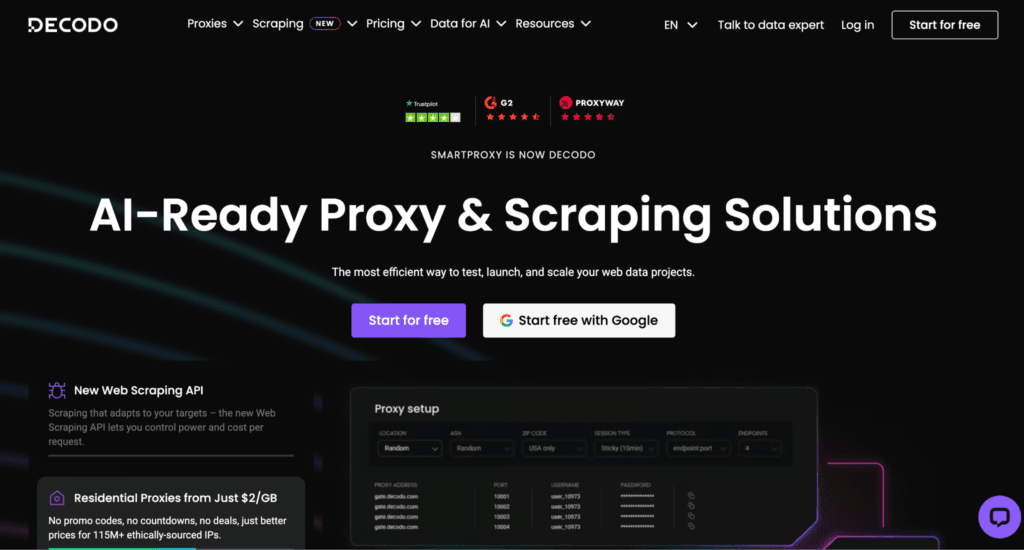
Infrastructure Layer
Platforms like Decodo provide access to both residential and mobile proxy networks within a single infrastructure layer, making it easier to switch between proxy types based on use case.
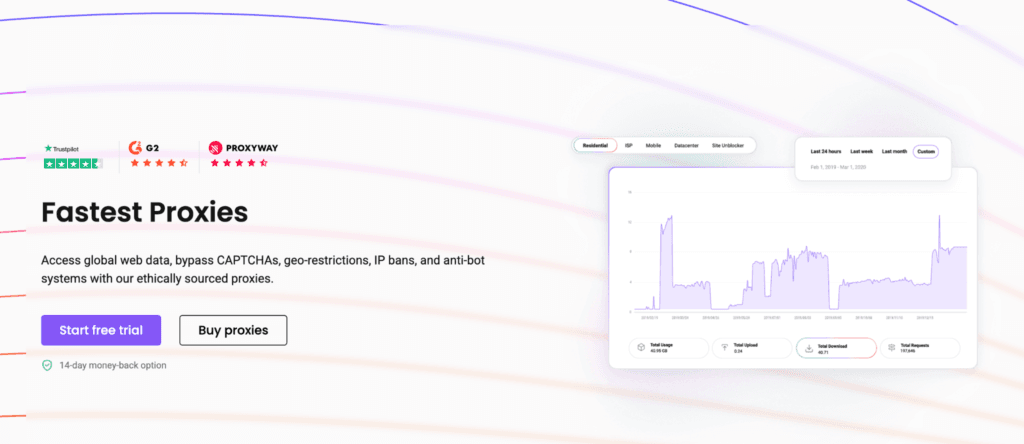
Performance Angle
For teams struggling with inconsistent success rates, solutions like Decodo help balance performance and cost by routing traffic dynamically based on target difficulty.
Scaling Angle
As scraping operations grow, tools like Decodo become essential for handling rotation, retries, and proxy selection, without adding unnecessary operational complexity.
Anti-Bot Systems: Who Wins?
| System | Residential | Mobile | Winner |
| Cloudflare | Challenged | Passes reliably | Mobile |
| DataDome | Often blocked | High success | Mobile |
| Akamai Technologies | Moderate | High success | Mobile |
| HUMAN Security (PerimeterX) | Challenged | Passes reliably | Mobile |
Final Verdict: Who Wins in 2026?
In 2026, the answer isn’t as simple as choosing one proxy type over the other. It depends on what you’re optimizing for.
- If you want to scale cheaply —–> Residential proxies
- If you want to scale reliably across protected targets —–> Mobile proxies
- If you want the best of both —–> Hybrid strategy
Each option serves a different purpose, and the right choice comes down to your specific use case, target difficulty, and performance expectations.
Check out our other expert guides on proxies:
- 12 Best Residential Proxy Providers for Reliable Data Scraping
- Top Mobile Proxy Service Providers: The Best Mobile Proxies for Speed, Security, and Anonymity
- Best Free Proxies to Use
FAQs
Use a tiered setup where requests start with residential proxies and automatically switch to mobile proxies if blocks or CAPTCHAs are detected. This can be handled through proxy rotation tools or smart routing systems.
Rotate IPs based on request volume and target sensitivity. For high-protection sites, frequent rotation or session-based rotation works best, while for stable targets, slower rotation is more cost-efficient.
Use sticky sessions to maintain the same IP for a set duration. This helps simulate real user behavior and avoid triggering anti-bot systems due to sudden IP changes.
Both matter, but in 2026, fingerprints (browser, TLS, behavior) are just as important as IPs. A clean IP alone isn’t enough; your traffic must look realistic across all layers.
Disclosure – This post contains some sponsored links and some affiliate links, and we may earn a commission when you click on the links, at no additional cost to you.